For serious crafters and professionals, choosing an industrial embroidery sewing machine means balancing speed, power, and stitch versatility. This guide highlights five capable models that blend embroidery features with robust, industrial-level performance. Whether you’re stitching thick fabrics, running repetitive embroidery designs, or combining sewing and decoration, these machines offer durable builds, efficient controls, and reliable results. Explore models from Brother, VEVOR, SINGER, and a dedicated embroidery-focused option to compare capabilities side-by-side.
| Product | Brand | Key Strength | Embroidery Capability |
|---|---|---|---|
| Brother SE700 Sewing And Embroidery Machine | Brother | Wireless transfer, multiple built-in designs | Yes |
| VEVOR Industrial Sewing Machine | VEVOR | Heavy-duty servo motor, high speed | Partial (sewing-focused, some embroidery features via accessories) |
| SINGER Heavy Duty 4452 | SINGER | High-speed, solid frame | Minimal embroidery features |
| Brother Sewing and Quilting Machine XR9550 | Brother | Extensive stitch library, wide table | Limited embroidery (sewing-focused) |
| Smartstitch S-1001 Upgraded Embroidery Machine | Smartstitch | Multi-needle, commercial embroidery capabilities | Yes |
Brother SE700: Sewing And Embroidery Machine
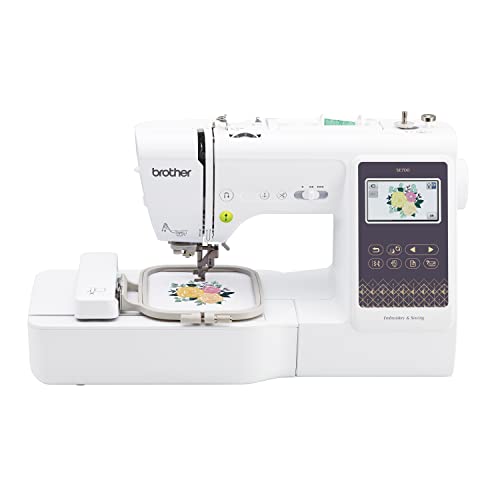
The Brother SE700 combines sewing and embroidery into a single compact unit. It offers wireless LAN file transfer via Design Database Transfer, a built-in USB port, and ArtSpira mobile app compatibility for creating or importing embroidery patterns. With 135 built-in designs and 103 stitches, users can switch quickly between creative tasks while enjoying a 4″ x 4″ embroidery area and a 3.7″ touchscreen display. Eight presser feet are included to support diverse projects.
Key features include seamless wireless pattern transfer, an intuitive interface, and a broad design library. The machine is designed for hobbyists and professionals who need reliable embroidery alongside traditional sewing capabilities, enabling efficient production of customized garments and fabric decor.
VEVOR Industrial Sewing Machine

The VEVOR industrial sewing machine is built for heavy-duty use, featuring a 550W servo motor and a sturdy metal body. It delivers up to 5000 stitches per minute with strong piercing power, suitable for multiple fabric layers. The machine supports precise control via an LCD display, including adjustable speed, direction, needle position, and start-stop functionality. It emphasizes efficiency and reliability for upholstery, denim, and thick materials where consistent results are essential.
With a clear control panel and energy-saving capabilities, this model targets users who prioritize industrial reliability, reduced vibration, and straightforward operation during long sewing sessions. It suits workshops and professional environments requiring durable performance in high-volume tasks.
SINGER Heavy Duty 6700C Computerized Sewing Machine
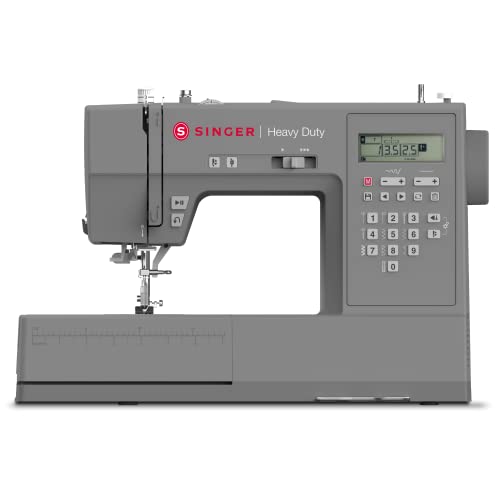
The SINGER HD6700C provides 411 stitch applications and a full metal frame for durability. It includes an LCD screen for easy selection, an extensive accessory kit, and enhanced piercing power for handling thicker fabrics. The machine supports a variety of projects—from garment construction to home decor and monogramming—through a mix of basic, decorative, and stretch stitches, plus a one-step buttonhole.
Built for versatility and steady performance, this model emphasizes user-friendly features and a robust build. It is well-suited for studios or small shops where a wide stitch repertoire and reliable performance across different fabrics are required.
SINGER Heavy Duty 4452 High-Speed Sewing Machine

Designed for speed, the SINGER 4452 offers enhanced piercing power and 110 stitch applications. Its sturdy metal frame supports rapid sewing without sacrificing stitch quality. The machine includes a one-step buttonhole and LED lighting for precise visibility on thick or layered fabrics, making it a strong option for demanding projects where speed and reliability matter.
This model targets users who need a durable, high-speed machine capable of handling a wide range of fabrics—from lightweight to heavy denim—while maintaining consistent stitching and easy maintenance in a small-to-medium shop setting.
Brother XR9550 Sewing and Quilting Machine

The Brother XR9550 is a computerized sewing and quilting machine offering 165 stitches, including utility, decorative, and alphanumeric options, plus an automatic needle threader and a drop-in top bobbin. A wide table and multiple included presser feet support quilting and complex sewing projects. This model emphasizes versatility, ease of use, and a solid set of features for home studios and small shops that occasionally require quilting alongside embroidery.
While not a dedicated embroidery machine, its comprehensive stitch library and user-friendly enhancements make it a practical choice for mixed sewing tasks, enabling reliable decoration and garment construction with consistent results.
Buying Guide: Key Purchase Considerations For Industrial Embroidery And Heavy-Duty Sewing
Embroidery capability and needlework complexity
Assess embroidery area size, needle control, multi-needle availability, and software compatibility. For large logos or dense designs, larger embroidery fields reduce rethreading and repositioning time. Multi-needle options can speed up production by running several threads simultaneously.
Motor power and stitching speed
A robust motor supports consistent stitch quality, especially on thick fabrics. Look for high stitch-per-minute (SPM) ratings and servo motors with adjustable speed for precise control in production environments.
Durability and build quality
Industrial machines typically feature metal frames and heavy components. A stable base minimizes vibration and improves precision during long runs. Consider maintenance access and the availability of spare parts in your region.
Feed system, presser feet, and fabric handling
A strong feed mechanism and a variety of presser feet help manage multiple fabric types. Features like slow-start, automatic lift, and needle-down positioning can improve accuracy when handling crowded seams, quilting layers, or leather.
Controls, ease of use, and support
LCD panels, intuitive threading paths, and software compatibility reduce setup time. Favor machines with clear manuals, online tutorials, and responsive customer support to minimize downtime in a workshop setting.
Portability and space requirements
Industrial machines vary in footprint. Ensure the workspace accommodates the machine’s height, throat space, and table options. Some models offer standalone tables or extension tables to optimize layout.
Accessory ecosystem and consumables
Check included feet, bobbins, needles, and covers. A robust accessory kit saves time and ensures you can start projects immediately. Availability of compatible embroidery threads and hoop sizes also matters for ongoing production.
Software and connectivity
Wireless transfer, USB compatibility, and embroidery pattern libraries can streamline workflow. Confirm whether patterns can be imported from common formats and whether companion apps or design software are required or optional.