Choosing the right indexable end mill for aluminum can boost productivity and finish quality. This guide highlights five strong options well-suited for aluminum alloy workpieces, emphasizing insert life, surface finish, and ease of use. Each option includes durable carbide inserts and thoughtful design to maximize cutting efficiency. Whether you’re finishing components or tackling aluminum alloys in a home shop, these picks offer reliable performance and broad compatibility.
| Product | Inserts | Size Range | |
|---|---|---|---|
| WEN DB003E 3-Piece Set | WEN | APKT1003 carbide inserts | |
| Jerax Tools R8 Shank End Mill | Jerax tools | Replaceable carbide inserts (1-1/2″ diameter) | 1-1/2″ diameter |
| Accusize 3/4″ 90 Degree Square Shoulder | Accusize Industrial Tools | APKT11T3 carbide inserts | 3/4″ diameter |
| OSCARBIDE 3/4″ Shank End Mill | OSCARBIDE | APKT11T3 carbide inserts | 3/4″ diameter, 3-1/2″ length |
| Accusize 2″ Diameter Square Shoulder | Accusize Industrial Tools | APKT1604 carbide inserts | 2″ diameter |
WEN 3-Piece Indexable Carbide End Mill Set
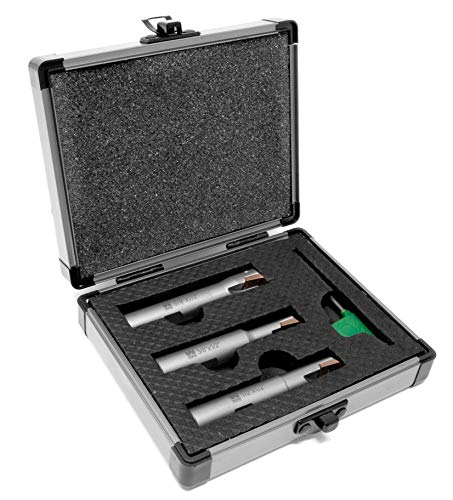
The WEN DB003E set provides 3/8, 1/2, and 5/8-inch end mills with indexable APKT1003 carbide inserts. A protective aluminum storage case simplifies transport and organization. Reversible carbide inserts double the cutting lifespan, supporting longer run times between changes. This kit is suitable for aluminum workpieces, offering predictable performance for hobbyists and light commercial projects alike.
Jerax Tools R8 Shank End Mill with Replaceable Inserts

The Jerax tools end mill features a 1-1/2″ diameter with a durable tungsten carbide insert and a high-speed milling cutter design. It’s suitable for materials ranging from low to high carbon steels and stainless, but it also handles aluminum alloys, brass, and rigid plastics. Its 4-flute, positive-rake 90-degree design reduces insert wear and helps maintain efficient material removal, making it a versatile choice for adaptive aluminum machining.
Accusize 3/4″ 90° Square Shoulder End Mill
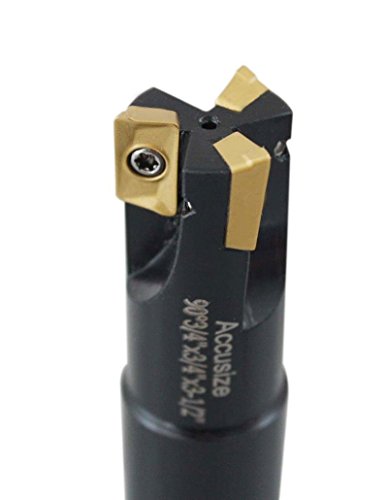
Accusize’s 3/4″ square shoulder end mill uses APKT11T3 carbide inserts and features a 90-degree cutting angle with screw-down inserts. The tool’s negative radial rake angle and positive axial rake angle balance cutting forces for reliable aluminum machining and high-depth-of-cut performance. This option is appropriate for face, shoulder, and slot milling on alloyed steels and aluminum alloys alike.
Accusize 4 Pc 90 Deg Set With APKT11T3 Inserts

This four-piece set includes 1/2″, 5/8″, 3/4″, and 1″ cutter diameters with 90-degree cutting angles. Nickel-plated bodies, screw-down inserts, and a -10° radial rake with a +7° axial rake optimize cutting conditions across steel variants and aluminum alloys. The set accepts APKT11T3/APKT style inserts, enabling flexible alloy machining with robust edge life.
OSCARBIDE 3/4″ Shank Indexable End Mill

The OSCARBIDE 3/4″ shank end mill offers a 3-1/2″ overall length with APKT11T3 carbide inserts. The indexable design enables rotating inserts to extend tool life, helping reduce downtime in aluminum milling operations. Built for heavy-duty milling, this option suits demanding aluminum and alloy work where consistent edge life is essential.
Accusize 3/4″ Cutting Diameter 90° Square Shoulder

Equipped with 10° positive rectangular inserts, this end mill supports high-depth-of-cut and improved feed per tooth. It is designed for square shoulder face milling, side milling, and full-slot milling across steels, stainless, cast irons, and aluminum alloys. The tool’s versatile geometry makes it a solid choice for aluminum machining in mixed-material environments.
Buying Guide: Key Purchase Considerations For Aluminum Milling
When selecting an indexable end mill for aluminum, consider insert material and geometry, shank compatibility, and the milling tasks you perform most often. Carbide inserts (typically APKT/APKT-style) provide durability and heat resistance, essential for maintaining edge life in aluminum. Evaluate the number of flutes and rake angles: more flutes increase finish quality but may reduce chip clearance; positive rake angles improve chip evacuation for aluminum, reducing built-up edge. Shank diameter and overall length influence rigidity and reach—R8 shanks and longer tools suit deeper pockets but require careful setup to prevent deflection. Lastly, verify compatibility with your machine’s spindle type and collet size, and appraise whether a kit with multiple diameters or a fixed-diameter option better fits your project mix.
To maximize tool life and performance on aluminum, match insert grade and geometry to your alloy type and cutting parameters. For softer Al alloys, standard APKT11 or APKT11T3 inserts provide good life with a balance of cost and performance. For harder or reinforced aluminum alloys, consider inserts with wear-resistant coatings and higher hardness ratings. Replacing or rotating inserts as dull edges appear can dramatically extend tool life. Storage and handling also matter; protective cases, as seen with some sets, help prevent damage to carbide inserts and maintain edge quality between jobs.
Practical setup tips include ensuring proper workholding to minimize vibration, selecting a suitable feed rate and spindle speed for the material, and combining coolants or flood coolant to improve surface finish and chip control. For mixed-metal work, verify that the chosen end mill’s construction tolerances align with your machine’s precision requirements, and consider a modular set to cover a range of diameters without sacrificing rigidity.
In summary, the five recommended options provide a blend of beginner-friendly kits and more specialized inserts designed for aluminum milling. Consider your typical workpiece size, desired finish, and maintenance plan when selecting the best indexable end mill for aluminum in your shop.