Choosing the right ceramic fiber board for high-temperature applications involves reviewing maximum use temperatures, density, and inorganic composition. The following selections focus on boards designed to withstand extreme heat, fire resistance, and structural durability. All options are suitable for wood stoves, furnaces, kilns, and other high-heat environments, offering rigid performance and reliable insulation.
Summary of Selected Products
| Product | Brand | Dimensions | Max Temperature | Notes |
|---|---|---|---|---|
| BXI Ceramic Fiber Thermal Insulation Board (2732F) 0.8″ | BXI | 12″ x 8″ x 0.8″ | 2732°F | Inorganic, flame retardant |
| Lynn Manufacturing Universal Baffle Board | Lynn Manufacturing | 21″ x 11-3/4″ x 1/2″ | 2100°F | Ceramic fiber alternative |
| BXI Ceramic Fiber Thermal Insulation Board 0.4″ | BXI | 12″ x 8″ x 0.4″ | 2732°F | Inorganic |
| SIMOND STORE Ceramic Fiber Insulation Board 2300F 1/2″ | SIMOND STORE | 1/2″ x 19.7″ x 39.4″ | 2300°F | High density, rigid |
| Sasylvia Ceramic Fiber Insulation Board 12″ x 8″ x 0.4″ | Sasylvia | 12″ x 8″ x 0.4″ | Heat resistant | Two-pack |
BXI Ceramic Fiber Board — 12x8x0.8

The BXI board measures 12″ by 8″ and 0.8″ thick, with a density around 600 kg/m3. It uses aluminosilicate ceramic fibers and is rated for a long-term service temperature near 2552°F (1400°C) and a maximum use temperature of 2732°F (1500°C). Thermal conductivity sits at 0.082 W/(m·K), and the board provides an R-value around 0.24 m2·K/W. As an inorganic option, it offers improved rigidity, strength, and reduced smoke compared with many organic fibers.
Applications include high-temperature insulation for stoves, furnaces, kilns, and other heat-intensive systems. The board’s Class A1 fire resistance supports safe operation in demanding environments. It is suitable where durable insulation is needed with minimal off-gassing during heating. The inorganic construction contributes to longevity and structural stability under repeated thermal cycling.
Lynn Universal Baffle Board

Designed as a replacement baffle board for wood stoves, the Lynn Manufacturing option is a high-temperature ceramic fiber alternative. It measures 21″ by 11-3/4″ by 1/2″ and is intended to fit a wide range of wood stoves and inserts. The board can be cut with a knife or hacksaw to match original dimensions, making it a versatile choice for DIY stove maintenance and upgrades. While not providing the extreme 2732°F rating of some ceramic fiber boards, it supports reliable performance in typical wood stove operations up to around 2100°F.
Its rigid construction helps maintain flame path integrity and heat containment within the stove cavity. This accessory is ideal for users seeking a durable replacement with straightforward tailoring to non-standard stove interior layouts. As with other ceramic fiber products, proper handling and installation are advised to minimize dust exposure during cutting and fitting.
BXI Ceramic Fiber Board 0.4″
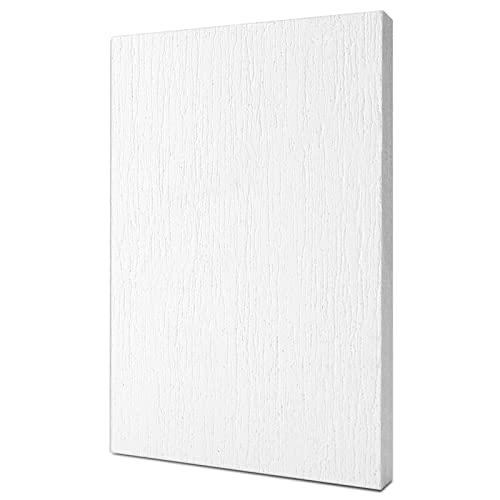
This variant offers the same inorganic composition and high-temperature performance as the 0.8″ board, but with half the thickness. It measures 12″ by 8″ by 0.4″ and provides a thermal conductivity of 0.082 W/(m·K) with an R-value of 0.12 m2·K/W. It shares the Class A1 fire resistance and the high-temperature tolerance, making it suitable for space-constrained installations or applications requiring thinner insulating panels without sacrificing high-temperature capability.
With its inorganic formulation, this board minimizes smoke, odor, and discoloration during heating. It is appropriate for lining interior cavities, fireboxes, or around combustion zones where robust, dimensionally stable insulation is essential. The compact size makes it convenient for cut-to-fit work, especially in retrofit projects or damaged-stove interiors.
SIMOND STORE Ceramic Fiber Insulation Board — 1/2 Inch

The SIMOND STORE option provides a 1/2 inch ceramic fiber board sized near 19.7″ by 39.4″. With a maximum use temperature near 2300°F and a high density range of 20–24 lb/ft³, this board delivers strong compressive strength (about 78 PSI at 25% deformation) and a controlled shrinkage of up to 3.5% after 24 hours at high heat. LOI at 1832°F falls in the 4–7% range, indicating good flame resistance. This board is well-suited for larger applications such as stoves, furnaces, kilns, and pizza ovens where thin yet durable insulation panels are required.
Its vacuum-cast ceramic fiber composition optimizes rigidity and thermal performance. The board’s dimensions and density support stable installation in demanding environments, reducing heat transfer while maintaining structural integrity under long-term use. It is a practical choice when affordability and effective insulation are prioritized for high-temperature equipment.
Sasylvia Ceramic Fiber Insulation Board — 12x8x0.4

This two-piece set from Sasylvia measures 12″ by 8″ by 0.4″ per board. The ceramic fiber composition provides flame retardancy and heat resistance suitable for wood stoves, fireplaces, pizza ovens, and kilns. The dual-piece package offers ample coverage for typical retrofit or repair projects, with boards designed to be cut to fit using standard knives or saw blades. The material’s lightweight yet sturdy nature supports easy handling and installation in tight spaces while maintaining effective insulation against high temperatures.
Use cases include lining, backing, or insulating firebox interiors and other high-heat surfaces. The boards emphasize safety and simplicity, allowing for efficient customization without specialized tools. They provide a balance between thermal protection, ease of installation, and compatibility with common heating appliances.
Buying Guide: Key Purchase Considerations For Ceramic Fiber Boards
- Maximum use temperature: Identify the operating temperature of your appliance or structure. Choose boards rated above that temperature to ensure long-term safety and performance.
- Density and rigidity: Higher density boards generally offer better thermal stability and mechanical strength, which is important in load-bearing or structurally demanding applications.
- Material composition: Inorganic aluminosilicate boards typically offer lower smoke, odor, and higher fire resistance compared with some organic alternatives. Consider Class A1 fire resistance ratings where applicable.
- Dimensional fit and thickness: Thicker boards provide greater insulation, but installation space can constrain choices. Look for boards that can be cut to fit easily with standard tools.
- Thermal conductivity and R-value: Lower thermal conductivity and higher R-value indicate better insulation performance. Compare values to select the most efficient option for your setup.
- Size compatibility: Check if the board dimensions suit your stove, kiln, or furnace interior. Large boards can be trimmed to fit, while very small sizes may require multiple pieces.
- Handling and safety: Ceramic fiber dust can irritate eyes and lungs. Wear protective equipment during cutting and installation, and follow manufacturer safety guidelines.
- Durability and lifecycle: Inorganic boards tend to maintain structural integrity under repeated heating cycles. Consider long-term performance for high-use environments.
- Cost vs. performance: Balance upfront material cost with expected lifespan and performance characteristics to determine value for your application.
- Availability of accessories and compatibility: Some boards are intended as replacement sections or baffle components; ensure compatibility with your specific stove or kiln model.
Overall, the best choice depends on your specific heat exposure, installation space, and maintenance expectations. For high-temperature, high-durability needs, inorganic ceramic fiber boards that endure up to 2300–2732°F offer robust protection and longevity, while thinner or more flexible boards can suit retrofit projects and smaller interiors.