Discover top high pressure test pumps that deliver reliable pressure testing for plumbing, HVAC, and automotive applications. This guide highlights five durable options, outlining their capabilities, build quality, and practical use cases. Each product is evaluated on performance, ease of operation, and longevity to help professionals choose the right tool for accurate leakage and pressure checks.
| Product | Brand | Key Strength | Approx. Capacity / Pressure |
|---|---|---|---|
| Rothenberger TP 25 Manual Pressure Test Pump | Rothenberger | Durable DURAMANT coating; precise up to 25 bar | 25 bar |
| IRONWALLS Hydrostatic Pressure Tester | IRONWALLS | High capacity tank; robust copper body | 0-50 Bar; 2 gallon tank |
| PDOOTD Common Rail Pump Plunger Tool Set | PDOOTD | High pressure test capability; versatile applications | Up to 2500 bar |
| Garosa 1000 PSI Manual Hydraulic Test Pump | Garosa | Ergonomic leverage; durable iron construction | Up to 1000 PSI |
| IRONWALLS Hydraulic Manual Test Pump | IRONWALLS | Sturdy tank and gauge; convenient hose fittings | 0-50 Bar; 3 gallon tank |
The following sections profile each option with a concise overview, notable features, and context on where the tool excels. A multi-perspective Buying Guide follows to assist with comparison across use cases, materials, and maintenance needs.
Rothenberger TP 25 Manual Pressure Test Pump

The Rothenberger TP 25 is designed for precision in pressure-testing up to 25 bar (360 PSI). Its steel tank features a corrosion-resistant DURAMANT coating, improving durability in challenging job-site conditions. The pump operates with a controlled 16 ml per stroke, delivering steady pressure buildup to support accurate test results for plumbing, heating, and industrial systems. This combination of rugged construction and predictable performance makes it suitable for repeated use in professional settings where reliability is critical.
In practice, workers benefit from the pump’s straightforward manual operation and consistent stroke volume, which helps minimize fluctuations during test cycles. The 7-liter capacity provides ample volume for typical test scenarios without frequent recharging. Users may appreciate the coating’s resistance to wear, contributing to a longer service life in environments with moisture, dust, or minor chemical exposure.
Consider this option when you need a high-capacity, high-pressure hand pump with robust construction. Its strength lies in dependable performance, modest complexity, and material choices that resist corrosion on busy job sites.
IRONWALLS Hydrostatic Pressure Tester

The IRONWALLS hydrostatic tester combines a copper pump body with a stainless steel tank to resist rust and corrosion over time. It offers a working range up to 50 Bar with a 16 ml flow per stroke and a 2-gallon tank capacity, enabling efficient testing of larger plumbing and industrial lines. The large, glycerin-filled gauge provides clear readings, while the ergonomic plunger and foam grip reduce operator fatigue during extended test sessions.
Key design elements focus on durability and readability. The 1/4″ to 76″ hose and a secure outlet configuration streamline connecting and testing various systems. This model is well-suited for steady, long-duration tests where visibility of pressure trends and a reliable plunger action are essential. Its combination of rugged materials and practical details supports frequent, professional use in field or shop settings.
For workflows requiring a robust, mid-to-high pressure tester with a metal construction and straightforward operation, this IRONWALLS unit offers a balanced mix of strength and practicality.
PDOOTD Common Rail Pump Plunger Tester Kit

The PDOOTD set targets high-pressure testing in common rail systems, featuring a piston pump plunger pressure test with a valve to limit pressure. It is designed for engine-related tests, including starting and running pressure checks, regulator tests, and injector verification. The kit’s high-pressure capability—up to 2500 bar—supports rigorous assessment of rail pressure and related components when paired with the appropriate gauges and hoses.
Operational use emphasizes accuracy and compatibility across diesel injection contexts. The kit’s included adapters and fittings expand its reach across various engine models, aiding mechanics who perform both diagnostic testing and component validation. While the extremely high pressure rating is favorable for thorough checks, users should ensure proper gauge selection and safety practices to manage the risk associated with high-pressure testing.
In environments requiring versatile high-pressure testing for modern fuel systems, the PDOOTD kit provides a strong balance of reach, precision, and adaptability, especially for professional automotive workstreams.
Garosa 1000 PSI Manual Hydraulic Test Pump

The Garosa manual hydraulic test pump prioritizes leverage and durability. Its long handle provides ample leverage to reduce hand fatigue during high-pressure testing tasks. Built from high-quality iron with a protective paint finish, this pump is designed for corrosion resistance and long service life. It suits a range of pressure-testing needs for pipes, valves, and hydraulic systems, offering a practical option for technicians who require a straightforward hydraulic pump with reliable performance.
Users note the pump’s suitability for testing various vessels and fittings, combining durability with a simple control scheme. The unit is well-suited for shop benches or field service where a robust tool that minimizes effort and maximizes control is advantageous. While it may lack some advanced features, its core strengths are strength, endurance, and ease of use in everyday testing tasks.
IRONWALLS Hydraulic Manual Water Pressure Pump
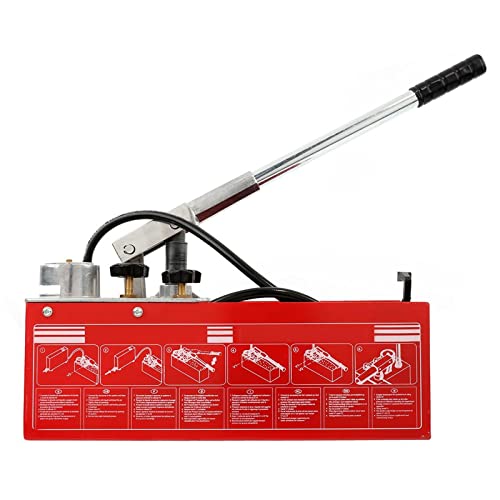
This IRONWALLS model combines a 3-gallon tank with a 0-50 Bar working range and a 0.726 PSI gauge rating, delivering solid performance for water pressure testing and leak detection tasks. The product includes a 1/4″ x 53″ hose and a 1/2″ female NPT outlet, along with a lockable arm and double-acting needle valves for precise control. A glycerin-filled gauge and a stainless steel tank contribute to readability and durability, while a lubricated plunger and ergonomic grip support repetitive testing operations.
Professionals may choose this unit for its balance of capacity, gauge clarity, and a reliable hose configuration. It is a solid choice for projects requiring steady, repeatable pressure tests in plumbing or industrial piping, where a sturdy manual pump and clear readings are critical for identifying leaks and validating system integrity.
Buying Guide: Key Considerations For Choosing A High Pressure Test Pump
- Pressure range: Match the pump’s maximum pressure to the system you test. Plumbing and HVAC applications often require up to 25–50 bar, while some automotive contexts may demand higher bench tests with specialized kits.
- Tank capacity: Larger tanks reduce the need for frequent recharging during extended tests. Consider whether 2–3 gallons or similar is appropriate for your typical workflow.
- Build quality and materials: Look for corrosion-resistant coatings, copper or stainless steel components, and a robust gauge. These features extend life in moist or chemically active environments.
- Ease of operation: A long lever, smooth plunger action, and clearly readable gauges improve efficiency and reduce operator fatigue during repetitive tests.
- Gauge readability: Glycerin-filled or well-marked dials help ensure accurate readings under varying temperatures and vibration on job sites.
- Hose and fittings: Ensure hose length and connector types (1/4″ NPT, 1/2″ NPT, etc.) align with your system interfaces. Secure fittings reduce leakage during tests.
- Safety considerations: High-pressure testing requires proper safety practices and protective equipment. Understand the risk profile of the maximum test pressure and never exceed rated limits.
- Maintenance: Check plunger seals, lubrication needs, and coating integrity. Regular maintenance preserves accuracy and extends tool life.
- Application scope: Distinguish between dedicated automotive test kits and general-purpose hydraulic or hydrostatic testers to ensure compatibility with your use cases.
When evaluating options, weigh durability and precision against price and availability. For professional shops, a slightly higher upfront investment often translates to longer service life, more consistent readings, and less downtime. For field technicians, portability, ease of use, and clear gauges can be decisive factors. Consider whether you need high-pressure capability, larger tank capacity, or enhanced resistance to corrosion based on your typical testing environments.