High pressure lab reactors, also known as autoclaves or pressure vessels, enable controlled chemical reactions under elevated temperatures and pressures. This guide reviews five relevant models drawn from popular Amazon listings, focusing on sealing quality, material durability, and ease of use. Whether you’re conducting digestion, synthesis, or material testing, these options balance performance with practical features for lab environments in the United States.
| Product | Brand | Capacity | Max Pressure | Max Temp |
|---|---|---|---|---|
| HNZXIB 1L Laboratory Chemical High Pressure Reactor Autoclave | HNZXIB | 1 L | 22 MPa | 350°C |
| Labfeng Autoclave Reactor MAX 350°C, 22 MPa | LABFENG | Various | 22 MPa | 350°C |
| Jacketed Reactor 3L, Glass Jacketed | HuaShuani | 3 L | Not specified | Room to high |
| HNZXIB 200ML Laboratory High Pressure Reactor Autoclave | HNZXIB | 200 mL | 22 MPa | 350°C |
| HNZXIB Lab Jacketed Reactor 1L-100L | HNZXIB | 1 L to 100 L | Not specified | Not specified |
Below, each product is explored with key features, performance notes, and practical considerations for researchers and technicians evaluating high pressure reactors.
HNZXIB 1L Laboratory High Pressure Reactor Autoclave
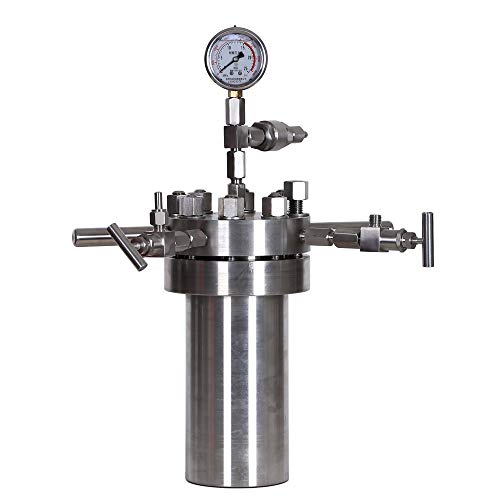
The 1 L autoclave from HNZXIB uses a stainless steel body and cover designed for high-temperature and high-pressure operation up to 22 MPa and 350°C. It emphasizes a gasket-based seal that relies on precise contact surfaces for a tight seal, with no O-ring required. The unit can be customized in 316 stainless steel and other capacities, catering to laboratories needing scalable pressure vessels. The combined fixing ring and base seal improve leak resistance while simplifying maintenance.
Key considerations include material customization for corrosive chemistries and the practical aspects of gasket-line contact sealing. For labs prioritizing sealing reliability at elevated pressures, this model offers a straightforward approach with robust stainless construction and configurable capacity.
Labfeng Autoclave Reactor MAX 350°C, 22 MPa

The Labfeng autoclave offers a compact yet capable design with a maximum pressure of 22 MPa and temperatures up to 350°C. Like the HNZXIB unit, it features a fixed-ring seal system to form a tight seal without an O-ring, and uses 304 stainless steel with options for 316 or other capacities. It emphasizes a secure seal and consistent contact pressure as working pressure increases, which is important for reproducible high-pressure digestion and synthesis processes.
Practical notes include the importance of matching vessel material to reactants and ensuring proper seal tightening. The ability to customize capacity helps researchers scale experiments from micro-lab to bench-top scales while maintaining safety margins.
HuaShuani Jacketed Reactor 3L

This 3 L jacketed glass reactor from HuaShuani combines a double-layer design with a copper motor-driven mixer delivering up to 90 W at speeds up to 680 RPM. The apparent strength lies in its glass-on-stainless configuration, offering clear observation of reactions and effective heat transfer via the jacketed interlayer. The unit supports heating or cooling using circulating fluids, such as hot oil or coolant, and includes an LCD display for temperature monitoring. A large PTFE discharge valve aids cleaning and sample handling.
Important considerations include compatible solvents with borosilicate glass and corrosion resistance of internal components. The combination of glass and jacketed cooling makes this suitable for reaction distillation, crystallization, and heat-sensitive processes where visual monitoring matters.
HNZXIB 200ML High Pressure Autoclave
The 200 mL version mirrors the 1 L model’s sealing approach and pressure capabilities, offering compact high-pressure operation in a smaller footprint. It shares the gasket and surface-contact sealing strategy, with stainless steel construction and customization options for capacity and materials. This size is well-suited for glovebox-style work or rapid screening experiments where space is at a premium but high-pressure capability is still required.
Researchers should assess the vessel’s thermal mass and heating rate alongside the 22 MPa maximum pressure and 350°C maximum temperature. The model provides a balance of portability and performance for quick iteration cycles in synthesis or digestion workflows.
HNZXIB Lab Jacketed Reactor 1L-100L

This jacketed glass reactor line from HNZXIB spans 1 L to 100 L, designed for flexible lab-scale to pilot-scale experiments. It combines a double-layer glass design with a digital display and a large discharge valve for convenient operation. The jacket allows heating or cooling via circulating fluids, enabling precise temperature control during exothermic or endothermic reactions. The 110V electrical setup is common in American labs and supports reliable operation of integrated temperature monitoring tools.
Considerations include the compatibility of glass with aggressive solvents and the desirability of an integrated temperature readout for process control. This family is particularly useful when heat transfer needs to be tuned across a range of reaction scales without changing vessels.
Buying Guide: Key Purchase Considerations And Practical Comparisons
- Materials and corrosion resistance: Stainless steel (304/316) is common for autoclaves and high-pressure reactors. For corrosive chemistries, consider PTFE linings or glass-lined options to reduce degradation risks.
- Pressure and temperature capabilities: Match max pressure and temperature to your planned reactions. A 22 MPa / 350°C rating covers many digestion and synthesis tasks, but verify if you need higher thresholds or faster heating.
- Sealing design: O-ringless systems with gasket or conical/seal-line contacts reduce leakage risk but require careful tightening and maintenance. Consider maintenance schedules and replacement seal availability.
- Scaling and capacity: If you foresee expanding from micro-scale to pilot-scale, choose models offering 1 L to 100 L ranges or clearly scalable configurations without compromising safety.
- Temperature control: Jacketed reactors and digital displays improve temperature regulation. Ensure your lab has compatible cooling or heating fluid loops (hot oil, water, or glycol) and proper instrumentation.
- Observability and handling: Glass-jacketed units allow visual monitoring of reactions, which can aid troubleshooting. This might trade off durability versus fully metal vessels in some environments.
- Maintenance and safety: Check valve corrosion resistance, sealing integrity under cycling conditions, and compliance with local safety standards. Regular inspection of gaskets, seals, and fasteners is essential.
- Cost-to-value: Balance upfront cost with long-term utility, durability, and the ability to customize material and capacity as research needs evolve.
In summary, the selected models provide a range of high-pressure capabilities, materials, and configurations suitable for diverse American research settings. When choosing, researchers should consider solvent compatibility, required pressure/temperature thresholds, and whether visual monitoring or scalable capacity is a priority for their workflows.