When choosing heat resistant welding gloves, you want protection that covers the hands and forearms without sacrificing dexterity. The gloves below are designed for high temperatures, abrasion resistance, and long wear, making them suitable for welding, forge work, wood stoves, ovens, grills, and heavy-duty crafts. Each option offers about 16 inches of forearm protection, a layered construction, and reinforced stitching for reliability in demanding environments.
Summary of Selected Products
| Product | Brand | Key Feature | Amazon Link |
|---|---|---|---|
| WZQH 16 Inches Leather Welding Gloves | WZQH | Up to 932°F with 16″ forearm protection | View |
| TICONN 16 Inch Welding Gloves | TICONN | 1000°F heat resistance, reinforced Kevlar stitches | View |
| RAPICCA Welding Gloves Fire Heat Resistant | RAPICCA | 932°F protection, extra-long sleeves | View |
| TOPDC Welding Gloves 16 Inches | TOPDC | 932°F protection, reinforced stitching | View |
| YESWELDER 23.6 Inches Leather Gloves | YESWELDER | 60 cm forearm protection, Kevlar stitching | View |
WZQH 16 Inches Leather Welding Gloves
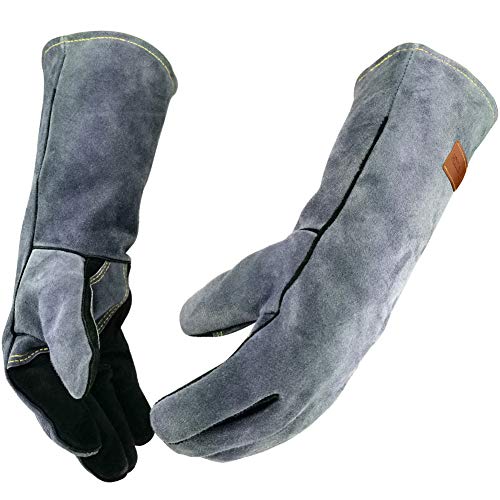
These gloves use a 1.2mm thick shoulder split cowhide leather outer layer with a laminated aluminum foil and flame retardant cotton middle layer, plus a soft insulated cotton lining. They resist extreme heat up to 932°F (500°C) and feature flame retardant stitching. The long 16-inch sleeve protects hands and forearms from hot coals, open flames, and sparks. They are suited for Stick welding (SMAW), MIG welding (GMAW), FCAW, forging, and other high-temperature tasks.
TICONN 16 Inch Welding Gloves

TICONN’s gloves feature a three-layer design: a 2.4mm heat-resistant cowhide outer layer, an insulating aluminum foil middle layer, and a soft flame retardant cotton lining. They withstand up to 1000°F (538°C). Key stress points are reinforced with Kevlar stitches for durability. The 16-inch length includes extra-long forearm protection, and a cuff with an adjustable elastic band keeps gloves secure during use.
RAPICCA Welding Gloves Fire Heat Resistant
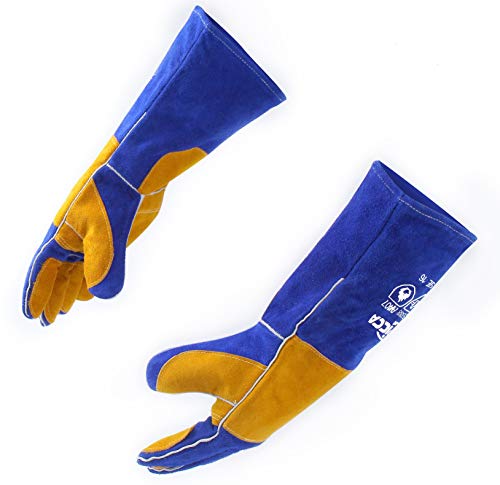
RAPICCA gloves use a fireproof leather exterior with an insulating aluminum foil layer and a flame retardant cotton liner. They include double leather-reinforced padding on fingers, palms, elbows, and backs, delivering protection up to 932°F (500°C). The 16-inch design provides forearm protection against welding sparks, wood-fire embers, hot steam, and sharp debris, making them suitable for welding, forging, and fire pit use.
TOPDC Welding Gloves 16 Inches
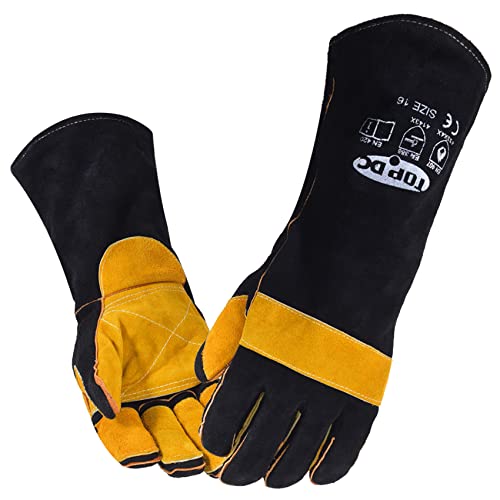
TOPDC gloves emphasize reinforced Kevlar and double leather stitching across fingers, palms, elbows, and backs. A fully lined interior provides durable heat resistance against daily exposure to flames and sparks. They resist temperatures up to 932°F (500°C) and combine natural cowhide leather with stress-point reinforcement for abrasion, tear, puncture, and oil resistance, along with a breathable interior for comfort during extended wear.
YESWELDER 23.6 Inches Leather Welding Gloves

YESWELDER offers an extended 23.6-inch length for maximum forearm protection. The gloves are built from premium leather with a soft cotton liner and Kevlar thread stitching in key stress areas, designed to withstand temperatures up to 932°F (500°C). Extra reinforcement at fingers, palm, wrist, and back aims to preserve grip and dexterity while providing robust protection for welding, forge work, grilling, and fireplace use.
Buying Guide: Choosing the Right Heat Resistant Welding Gloves
When evaluating heat resistant welding gloves, consider these factors to balance safety and usability:
- Heat resistance rating: Gloves with ratings around 932°F (500°C) or higher are suitable for most welding tasks, forge work, and fire-related activities. Check the maximum temperature and ensure it matches your typical use.
- Forearm coverage: Longer sleeves (14–16 inches or more) protect the forearms from sparks, hot air, and radiant heat. Some models extend beyond 18 inches for additional safety.
- Materials and construction: A leather outer layer, insulated middle layer (often aluminum foil), and a soft cotton lining offer a balance of heat resistance and comfort. Reinforced stitching or Kevlar stitching improves durability under stress.
- Grip and dexterity: A gloves’ flexibility affects handling of tools and materials. Look for gloves with tapered fingers, reinforced stress points, and a lining that doesn’t overly restrict motion.
- Fit and adjustability: Cuffs with elastic bands or adjustable closures prevent slipping and keep hot materials from entering the glove. Ensure the size fits your hand and allows comfortable wrist movement.
- Comfort and breathability: A breathable interior and sweat-absorbing lining help reduce fatigue during long sessions. A soft lining can also reduce hand irritation.
- Care and maintenance: Some gloves are easier to clean and maintain. Consider leather care requirements and whether the insulation materials hold up after washing or exposure to heat and oil.
- Use-case versatility: If you need gloves for welding, grilling, oven work, and blacksmithing, prioritize models with longer forearms and robust protection across multiple heat sources.
Across these options, buyers should align gloves with their typical tasks—welding method (MIG, TIG, SMAW, FCAW), forearm protection needs, and the level of dexterity required for precise work. The listed models provide strong protection profiles, varied forearm lengths, and durable stitching suitable for both industrial and home shop environments.