Choosing the right gloves for handling corrosive chemicals involves balancing chemical resistance, dexterity, and comfort. This guide highlights five highly capable options designed to shield hands from acids, alkalis, solvents, and related hazards. Each product is evaluated on material strength, grip, fit, and practical versatility for labs, industrial sites, and cleaning tasks.
style=”display:none;”>Product Overview
| Product | Material | Key Benefit |
|---|---|---|
| ThxToms Chemical Resistant Nitrile Gloves | Nitrile | High chemical resistance; puncture protection; textured grip |
| ROYAKI Chemical Resistant Gloves (Latex) | Latex | Excellent elasticity and grip; broad chemical protection |
| HONYITO Short Chemical Gloves | Latex / Cowhide back | Strong acid/alkali resistance; durable back |
| ThxToms Heavy Duty Latex Gloves | Natural latex | Tear and chemical resistance; good tactile feel |
| Inspire Black Nitrile Gloves | Nitrile | Durable, exam-grade and industrial use versatility |
ThxToms Chemical Resistant Nitrile Gloves

These nitrile gloves provide strong chemical resistance and puncture protection. With a 15-mil thickness, they balance durability and tactile control for precise tasks. A textured palm and fingers offer enhanced slip resistance, making them suitable for handling liquids, solvents, and oils without sacrificing dexterity.
Ideal environments include laboratories, automotive shops, and cleaning operations where exposure to strong chemicals is possible. The latex-free design helps reduce allergen risk for sensitive users.
ROYAKI Chemical Resistant Latex Gloves (Large)
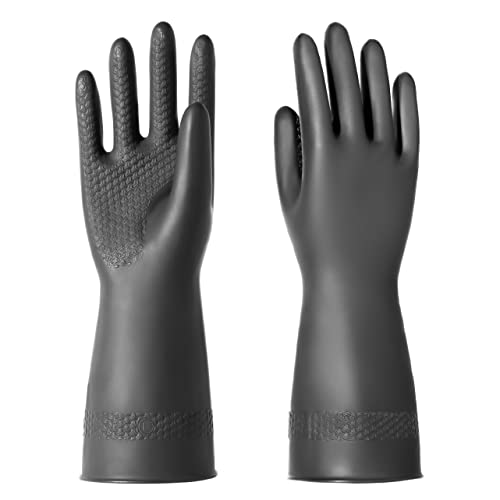
Latex gloves offer elasticity and wear resistance, with a diamond pattern that enhances grip. The gloves provide protection against alkalis, alcohols, and acetone, making them a versatile choice for cleaning, chemical handling, and industrial tasks where flexibility matters.
They are well-suited for tasks requiring finer motor control, such as handling small parts, assembling components, or laboratory prep work where a snug fit improves precision.
HONYITO Short Acid And Alkali Resistant Gloves
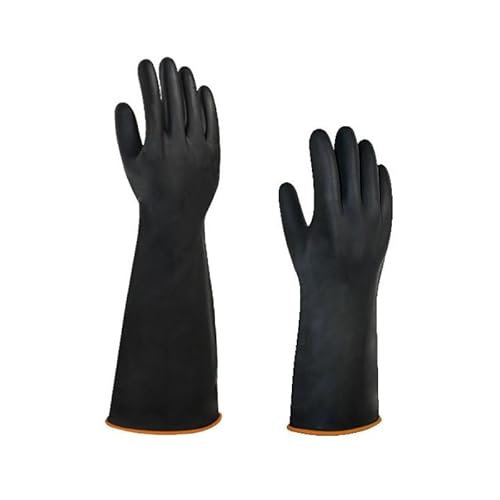
The palm is made of high-density latex, offering excellent flexibility and strong acid/alkali resistance. The thicker back improves wear resistance and tear resistance, supporting use in chemical plants, laboratories, and construction sites while protecting hands from exposure.
These gloves prioritize a balance between protection and mobility, making them suitable for repetitive tasks that require steadiness and grip in challenging environments.
ThxToms Heavy Duty Latex Gloves

These latex gloves emphasize chemical resistance and puncture protection with a rugged, durable build. The extra-large size and smooth finish optimize grip for both industrial cleaning and handling slick or small objects, while maintaining tactile sensitivity for precise work.
Suitable for heavy-duty tasks, industrial cleaning, and gardening where chemical exposure is possible, while still allowing comfortable long wear sessions.
Inspire Black Nitrile Gloves (Heavy Duty)

Inspire nitrile gloves provide rugged protection for medical and industrial use. The 6-mil thickness offers a balance between barrier protection and tactile control, making them versatile for healthcare, laboratories, and general cleaning tasks that require reliable performance against chemicals.
They are designed to deliver strong puncture resistance and secure fit, supporting tasks that demand dexterity without compromising safety.
Buying Guide: Key Purchase Considerations
When selecting gloves for corrosive chemicals, consider the following factors to align with your tasks and safety standards:
- Material and chemical resistance: Nitrile generally performs well against oils, solvents, and many acids, while latex offers elasticity but may be less compatible with certain chemicals. Evaluate specific chemical resistance charts if available.
- Thickness and dexterity: Thicker gloves provide better protection but reduce tactile feedback. Choose a thickness that matches task precision needs and exposure level.
- Texture and grip: Textured palms and fingers improve grip on wet or slippery items, reducing the risk of accidents during handling of hazardous substances.
- Allergen considerations: Nitrile is latex-free and preferred for users with latex allergies. Latex gloves can offer superior comfort for some, but allergy risk must be assessed.
- Length and cuff design: Longer gloves protect forearms in splash-prone environments. Ensure cuffs are comfortable and easy to don/doff with PPE layering.
- Fit and sizing: Proper fit reduces fatigue and improves control. If possible, choose a brand offering multiple sizes to achieve the best cuff seal and grip.
- Application context: Lab work, industrial maintenance, cleaning, and gardening each have distinct requirements. Prioritize gloves designed for your primary setting.
- Storage and disposal: Store away from direct heat and sunlight. Follow manufacturer guidance on disposal and reuse after inspection, if permitted.