This guide spotlights compact generator motors and wind-turbine kits ideal for DIY projects, education, and small-scale power experiments. Each option balances portability, ease of assembly, and measurable output to help you compare performance and choose the right kit for wind or manual-driven power generation.
Summary of selected products:
| Product | Brand | Voltage Range | Approx. Rated Speed | Notes |
|---|---|---|---|---|
| EUDAX Mini Generator Motors 3V-12V DC | EUDAX | 3V / 4.5V / 12V | 1,500 – 6,500 RPM | Compact motor kit for wind or hand-crank power |
| Sntieecr 6 Set Mini Generator Motors | Sntieecr | 3V / 4.5V / 12V | 1,500 – 6,500 RPM | Beginner kit with mounts, props, and brackets |
| EUDAX 6 Set Mini Generator Motors | EUDAX | 3V / 4.5V / 12V | 1,500 – 6,500 RPM | Multi-kit for wind, solar, and LED projects |
| Small Wind Turbine Generator 36W (BUBUQD) | BUBUQD | 12-24V DC | Noted around 40W class performance | Dual-purpose turbine with multiple gears |
| SWONVI 2 Pcs DC Micro Turbines | SWONVI | 0.1V-5.5V (DC) / 5.5V output | 5.5 m/s rated wind speed equivalent | DIY wind power demonstration kits |
EUDAX Mini Generator Motors 3V-12V DC

The EUDAX mini generator motor set provides clear voltage stepping across 3V, 4.5V, and 12V, with rated speeds from 1,500 to 6,500 RPM. The compact motor body diameter is 24 mm, height 22.21 mm, and shaft size 8.25 x 2.0 mm. Its included features make it suitable for wind-driven or hand-cranked experiments, demonstrations, and simple educational projects.
Sntieecr 6 Set Mini Generator Motors
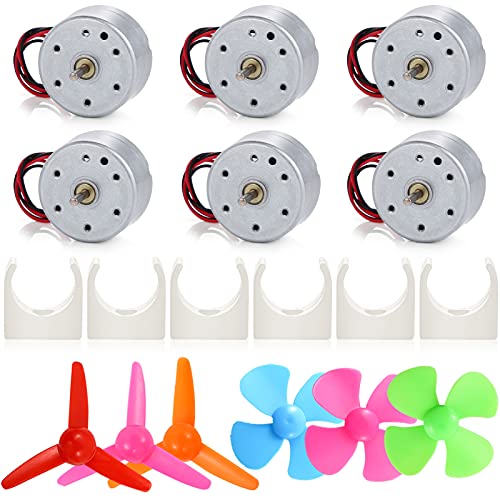
This beginner kit bundles six mini DC motors with mounting brackets and multiple propeller configurations. Each motor supports voltages of 3V, 4.5V, and 12V, matching speeds from 1,500 to 6,500 RPM. The gearless design enables two-way energy conversion: wind or manual input can generate electricity to light LEDs or power small devices, fostering hands-on physics learning.
EUDAX 6 Set Mini Generator Motors

This multi-functional beginner kit mirrors the 3V/4.5V/12V voltage ranges and 1500-6500 RPM speeds, with six motors and various gear options. It emphasizes wind, solar, and battery-driven experiments, offering a broader platform for learners to explore energy conversion from kinetic to electrical forms through simple, scalable builds.
Small Wind Turbine Generator 36W (BUBUQD)
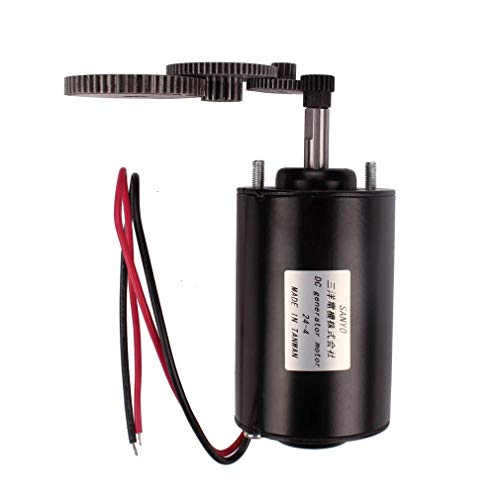
This wind turbine generator claims a 36W output capability with DC 12-24V operation and multiple gears for varied torque. It is described as low-noise, portable, and suitable for integrative power projects, educational demonstrations, or small electrical devices power generation. The kit emphasizes stability under load with overdrive protection against motor burnout.
SWONVI 2 Pcs DC Micro Turbines

These micro vertical wind turbines are designed for DIY wind power demonstrations. They operate over a range of DC outputs (0.1V to 5.5V) with a rated wind speed around 5.5 m/s. They are ideal for classrooms, maker projects, and kid-friendly experiments to visualize energy conversion in a compact form factor.
Buying Guide: Key Purchase Considerations
When selecting a generator motor for a wind turbine, consider output goals, installation constraints, and education value. A balanced kit should offer clear voltage scales (3V, 4.5V, 12V), achievable RPM ranges, and sturdy mounting hardware. For classroom or hobby use, kits with multiple propeller options and easy linkage to LED or small-load devices enhance understanding of energy conversion.
- Voltage and speed alignment: Ensure the motor’s voltage tiers and RPMs suit your turbine design and load expectations. Higher RPM can generate more electricity but may require sturdier gearing.
- Physical size and mounting: Check motor diameter, height, and shaft dimensions to match your turbine frame and propeller hub.
- Durability under load: Look for designs that tolerate overload or binding without burning wind resistance or motor windings.
- Propeller compatibility: Kits with changeable vanes or multiple prop configurations enable testing of torque and efficiency under different wind conditions.
- Learning resources: Beginner-friendly kits with clear manuals and LED/low-load demonstrations help users visualize concepts quickly.
For wind-powered experiments, combining these motors with small fan blades or propellers provides a controlled environment to measure output. When using higher voltage configurations, consider safe handling, proper insulation, and protective housings. If your goal is classroom demonstration, opt for kits that emphasize assembly, repeatable measurements, and straightforward data collection.