The following article highlights top backpack sprayers suitable for professionals and DIY enthusiasts tackling large lawns, farms, or crop protection tasks. We evaluate gas-powered options alongside strong battery-powered companions to help you choose based on runtime, pressure, capacity, and comfort. Each pick includes key features and real-world considerations to guide your purchase.
| Product | Brand | Power | Capacity | Key Benefit |
|---|---|---|---|---|
| Tomahawk 5 Gallon Gas Power Backpack Sprayer | Tomahawk Power | Gas | 5 gal | High pressure, quick coverage |
| Invatech Italia Mosquito Fogger Model 870 | Invatech Italia | Gas | Unknown (tank size) | Heavy misting with powerful engine |
| KASEI Backpack Fogger Machine | KASEI | Gas | 3.7 gal | Wide spray coverage, versatile use |
| Field King 190515 Professionals Battery Powered Sprayer | Field King | Battery | 4 gal | Efficient battery powered option |
| PetraTools Battery Powered Backpack Sprayer 4 Gallon | Petra | Battery | 4 gal | Long battery life, comfort |
Tomahawk 5 Gallon Gas Power Backpack Sprayer

The Tomahawk Power backpack sprayer delivers a high-capacity 5-gallon tank and a powerful 450 PSI pump, designed for rapid coverage across large areas. Its gas-powered engine ensures consistent output, enabling users to spray up to an acre efficiently. This unit targets professionals needing dependable pressure on expansive lawns and agricultural plots, with a focus on maximizing spraying speed. Operators should monitor fuel usage and perform regular maintenance to sustain peak performance.
Key Considerations
Gas-powered models typically offer higher continuous pressure and longer operation without recharging, but require fuel handling, maintenance, and startup effort. Look for pump compatibility, nozzle options, and ease of transport given the weight when full. Noise levels and emissions may also influence suitability for residential settings.
KASEI Backpack Fogger Machine

The KASEI gas backpack fogger is designed for cartridge-style misting with a 3.7-gallon tank. It spreads liquids and particles over wide fields, making it suitable for farmlands, parks, and orchards. The model emphasizes broad spray coverage and flexible application, with a nozzle setup enabling horizontal or vertical misting. Mass application efficiency is a standout feature for large outdoor spaces.
Key Considerations
Gas foggers provide robust coverage but require fuel management and proper ventilation during use. Ensure you understand maintenance needs, start-up procedure, and any safety measures for handling fuel and exhaust in work environments.
Invatech Italia Mosquito Fogger Model 870

The Invatech Italia 870 Mister Duster is a lightweight gas backpack fogger designed for crop protection and pest control. It features a robust engine and is built for ease of handling, with padded straps for comfort during extended use. The unit is suitable for professionals needing powerful misting for field applications and dense pest control tasks.
Key Considerations
When evaluating foggers, consider engine power, tank capacity, and portability. The ability to maintain a steady release rate is important for uniform coverage, and fuel efficiency can reduce operating costs over time.
Dewalt 190681 20V Max Cordless Backpack Sprayer

Though not gas-powered, the Dewalt 20V Max cordless backpack sprayer is a compact option with cordless versatility. It features a heavy-duty hose, Variflo flow control, and a triple-filtration system to minimize clogging. This model is relevant for comparisons when considering alternative power sources for residential and small-to-medium landscaping tasks.
Field King 190515 Professionals Backpack Sprayer
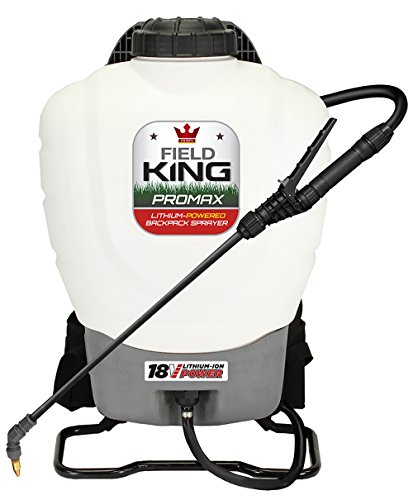
The Field King 190515 is a professional backpack sprayer with a 4-gallon capacity and an interchangeable battery system. While primarily battery-powered, it is included here as a reference model for comparisons against gas-powered units. It offers up to four hours of spray duration with supported nozzles and a quick-charge capability for field work.
Buying Guide: Gas-Powered Backpack Sprayers And Alternatives
- Power source and runtime: Gas-powered units provide longer operation between refueling under heavy workloads, whereas battery-powered units require recharge cycles. If you’re treating large tracts without convenient power access, gas may be preferable.
- Tank capacity and pressure: Larger tanks and higher PSI allow faster coverage and better performance on tough vegetation. Consider the typical area size and spray targets to determine the necessary capacity and pressure.
- Weight and comfort: Gas units tend to be heavier when full. Look for padded straps, back supports, and balanced harness designs to reduce fatigue on long days in the field.
- Maintenance and safety: Gas models require fuel handling, regular maintenance, and safe storage practices. Ensure you follow manufacturer guidelines for startup, cleaning, and storage to maximize longevity.
- Nozzle variety and application: Flexible nozzles and adjustable spray patterns improve efficiency and reduce chemical waste. Check compatibility with the liquids you plan to use and ensure proper cleaning between sessions.
- Cost of ownership: Account for fuel consumption, replacement parts, maintenance intervals, and warranty terms when assessing total cost of ownership across multiple seasons.
- Alternatives: For smaller tasks or residential use, cordless electric backpack sprayers offer quiet operation, easier maintenance, and simple charging, though they may require more frequent recharging for large jobs.