Calibration gas regulators and flow control devices are essential for maintaining accurate readings on portable and pumped gas detectors. This article reviews five reliable options that pair well with widely used monitors from BW Technologies, ISC, MSA, RAE, and RKI. It covers fixed and demand flow regulators, material compatibility, and suitability for reactive or non-reactive gases. Buyers can compare features at a glance and choose devices that fit their calibration workflows.
Summary of chosen products
| Product | Brand | Focus | Link |
|---|---|---|---|
| 0.5LPM Fixed Flow Calibration Gas Regulator | Generic | Fixed flow up to 0.5 L/min; compatibility notes | Amazon Link |
| BW Technologies REG-0.5 Calibration Gas Regulator | BW Technologies | 0.5 L/min flow control for BW detectors | Amazon Link |
| Calibration Gas Cylinder for BW Monitors | ISP INDUSTRIAL SAFETY PRODUCTS | Certificate of Analysis; NIST-traceable | Amazon Link |
| MSA 467896 RP Fixed Flow Regulator | MSA | Exact, low-flow calibration for pumped instruments | Amazon Link |
| Demand Flow Calibration Regulator (Pumped Detectors) | Ideal Calibrations | Nickel-plated brass; 0.1–3.0 LPM | Amazon Link |
0.5 LPM Fixed Flow Regulator (Generic)

This fixed-flow regulator is designed to calibrate diffusion gas monitors. With a nominal output of 0.5 L/min, it provides a stable flow for routine calibration checks. The nickel-plated brass build offers reasonable durability while remaining cost-effective for routine labs and field kits. Suitable for non-reactive calibration tasks where high-precision flow control is not required for reactive gases.
Consider compatibility with your detector line and calibration gas cylinders. While it supports diffusion monitors, verify that the regulator’s fittings and thread size align with your specific cylinder and detector ports. It is not recommended for highly reactive gases due to material and seal considerations.
BW Technologies REG-0.5 Cal Gas Regulator
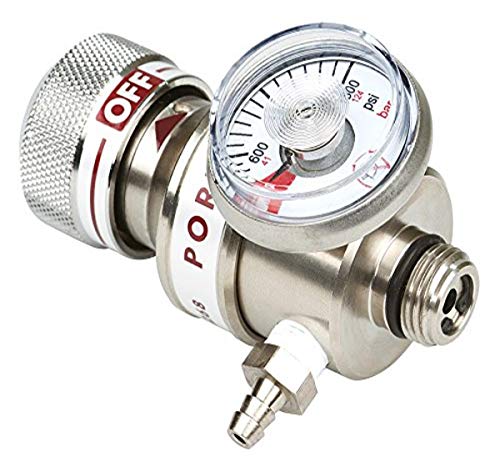
The BW REG-0.5 regulator is designed to control calibration gas flow for BW detectors and gas monitors. It supports up to 0.5 L/min, aligning with common calibration procedures. This regulator is sold as part of a calibration ecosystem, typically paired with BW calibration gas and related detectors. For pumped or diffusion instruments, confirm the recommended regulator style with your device model before purchase.
Key considerations include regulator maintenance, compatibility with existing gas cylinders, and whether your calibration workflow benefits from a fixed or adjustable flow. If your detectors are BW-branded, this regulator can streamline setup by matching expected flow characteristics and fittings.
Calibration Gas Cylinder for BW Monitors

This cylinder provides a curated calibration mix (including methane or other target gases) with a Certificate of Analysis to NIST-traceable standards. It is designed for use with BW monitors and related calibration accessories, and includes MSDS documentation for safety and compliance. A calibration gas recycling program is mentioned, which can be beneficial for non-profit or educational facilities looking to reduce waste and costs over time.
When selecting a cylinder, verify gas composition, pressure, and compatibility with your regulator setup. The presence of an Individual Certificate of Analysis helps ensure traceability and consistent calibration results across instruments.
MSA RP Fixed Flow Regulator

MSA’s RP fixed-flow regulator is designed for pumped calibration instruments. The design emphasizes accuracy and simplicity, enabling automatic delivery at the required rate for calibration without manual valve adjustments. A notable feature is the potential to use a lower-flow rate (as low as 0.25 LPM) for cost-efficient testing across certain MSA detector families.
Consider whether your workflow uses pumped devices and whether you prefer fixed-flow accuracy or the flexibility of a “Gas Miser” style demand regulator. The MSA option can help reduce gas consumption while maintaining reliable calibration performance.
Demand Flow Regulator, Pumped Detectors

The Demand Flow Regulator is compatible with BW, ISC, MSA, RAE, and RKI pumped detectors. It uses a nickel-plated brass body and a C10 fitting, handling flows from 0.1 to 3.0 LPM. This range supports a broad set of calibration scenarios, including those requiring higher flow for pumped systems or longer gas line runs. It is expressly intended for pumped instrument setups, where precise, automatic flow control matters.
When selecting this regulator, confirm the gas compatibility with your target calibration gas (non-reactive vs reactive). The C10 fitting and nickel brass construction help ensure durability in standard lab and field environments, while the flow range accommodates diverse pumping configurations.
Demand Flow Regulator Stainless Steel, C10

This stainless steel regulator features a C10 fitting and is designed for use with most calibration gas cylinders. The stainless construction supports highly reactive gases such as ammonia (NH3) and chlorine (Cl2) while maintaining compatibility with pumped instruments. It is intended for scenarios requiring robust materials and high durability in demanding environments.
Key considerations include gas compatibility, corrosion resistance, and whether the regulator’s flow range aligns with your instrument’s pumping rate. Ideal Calibrations’ stainless option is positioned for users handling reactive gases and demanding field conditions, offering dependable performance and longevity.
100 PPM Isobutylene Calibration Gas, 17 Liter Cylinder

This 17-liter steel cylinder provides 100 ppm isobutylene in balance air, suitable for calibrating a range of detectors. It is compatible with several preset and multiflow regulator series, offering versatile use with multiple instrument models. The cylinder comes from Norlab by Norco, a recognized calibration gas provider, and includes practical documentation for safety and traceability.
When choosing this gas, assess required gas concentrations, cylinder size for travel or fixed-site use, and regulator compatibility. Isobutylene is a common calibration gas for hydrocarbon monitoring, and this cylinder supports stable, repeatable calibration tests in varied environments.
Buying Guide: Key Purchase Considerations And Comparisons
- Gas compatibility: Verify whether the regulator materials (nickel-plated brass vs stainless steel) are suitable for reactive gases (e.g., NH3, Cl2) and for non-reactive calibration mixes.
- Flow range and control: For pumped detectors, consider demand-flow regulators with automatic flow delivery versus fixed-flow regulators for diffusion-based systems. Ensure the regulator’s LPM range matches your instrument’s pump rate.
- Fittings and compatibility: Check fitting types (C10, 0.5 L/min ports) and cylinder types to avoid mismatches. Confirm that the regulator threads align with your calibration gas cylinders.
- Certifications and traceability: COAs, NIST-traceable standards, and MSDS documentation support compliance and repeatable results across labs and fieldwork.
- Materials durability: Stainless steel and nickel-plated brass offer corrosion resistance and longer service life in challenging environments; weigh cost against longevity.
- Waste and cost considerations: Some systems offer lower flow rates (e.g., 0.25 LPM) to reduce gas consumption. Evaluate gas efficiency against calibration accuracy needs.
- System compatibility: Ensure the regulator works with your detector family (BW, ISC, MSA, RAE, RKI) and that the total setup aligns with your calibration workflow (diffusion vs pumped, fixed vs demand).
- Size and portability: For field calibrations, compact fixed-flow units or lighter regulators can ease transport, while larger stainless steel regulators may be preferred for fixed-site labs.