Shipping fragile items demands reliable insulation, sturdy construction, and thoughtful design. This guide highlights five foam-based shipping boxes that balance protection, durability, and practicality for a variety of contents—from laptops to perishable items. Each option brings its own strengths, whether it’s superior insulation, secure interior compartments, or recyclable materials. Use the buying insights below to compare features and choose the best foam box for your specific shipping needs.
| Product | Brand | Dimensions (L x W x D) | Key Benefit |
|---|---|---|---|
| Polar Tech 266C Thermo Chill Insulated Carton | Polar Tech | 19″ x 12″ x 16″ | Excellent insulation and durable construction |
| Yutrchey Laptop Shipping Box | Yutrchey | 17″ x 12″ x 4″ | Two-compartment interior for laptop and accessories |
| Loptan Laptop Shipping Box | Loptan | Up to 17.6″ laptops | Two-layer independent foam protection |
| EPE theBOXcold Insulated Box | EPE | Medium box size (general) | Reusable, PP-based insulation with dry-ice compatibility |
| Robin II EPS Foam Ice Chest | Robin II | Inside 21.37″ x 11.5″ x 12.75″ | Cold shipping with corrugate exterior |
Polar Tech 266C Thermo Chill Insulated Carton
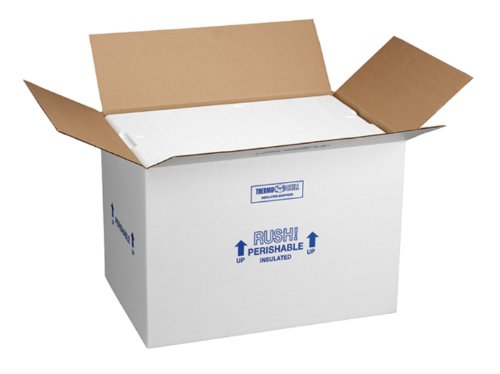
The Polar Tech 266C is an insulated carton with a foam shaper designed for shipping perishables or temperature-sensitive items. Its large interior accommodates substantial products while its foam inserts help limit movement. The carton features a recyclable design and an exterior profile that resists typical transit impacts. Inside dimensions measure 19″ x 12″ x 16″, with outside dimensions of 22″ x 15″ x 19″. This setup supports a balance of capacity and protection for mid-sized shipments.
Yutrchey Laptop Shipping Box with Foam Protection

This model from Yutrchey provides a dual-compartment interior—one for the laptop and another for chargers or cables. The outer shell uses strong corrugated cardboard, while interior foams cushion the device against vibrations and drops. Dimensions show a 17″ laptop fit with bottom foam around 15″ x 10.2″ and top foam around 7.9″ x 7.9″. The design emphasizes organization, reducing tangled cables and misplaced accessories during transit.
Loptan Laptop Shipping Box Cardboard Secure Mailer

Loptan’s system uses a two-layer independent foam approach to keep the laptop separate from adapters and cords. The box is made of recyclable kraft corrugated cardboard and includes high-density foam for impact protection. It is designed to accommodate laptops up to 17.6 inches. The separation preserves accessories from contact with the laptop, aiming to minimize surface damage and scratches in transit.
EPE theBOXcold Insulated Box

TheBOXcold by EPE uses polypropylene construction for improved durability and insulation. It supports multiple use cases, including pharmaceuticals, frozen foods, and breast milk shipments. The box is designed for 24-, 48-, or 72-hour timelines and is fully recyclable. It emphasizes reusability and eco-conscious packaging while maintaining reliable temperature control during transit.
Robin II EPS Foam Ice Chest

Robin II’s EPS foam ice chest combines a corrugate exterior with an interior liner designed for cold shipping. The outside dimensions suggest solid capacity for a variety of temperature-sensitive items, while the inner dimensions support a snug fit to reduce movement. This option is particularly suitable for lightweight, cold-sensitive shipments that require dependable insulation and carton integrity.
Buying Guide: Key Considerations for Foam Shipping Boxes
- Insulation performance: Assess foam thickness, insulating materials, and the overall seal to maintain required temperatures. Consider boxes designed for 24, 48, or 72-hour shipments.
- Interior configuration: Look for dual compartments or foam inserts that minimize item movement and protect exposed surfaces. Separate spaces help with organization and reduce risk of damage.
- Material sustainability: Check whether the carton is recyclable or reusable. Recyclability lowers environmental impact and aligns with eco-friendly packaging practices.
- Durability and handling: Favor boxes with rigid outer shells and high-density foam or inserts to resist punctures, compression, and vibration during transit.
- Laptop and electronics compatibility: For electronics, confirm maximum supported dimensions and compatibility with chargers, cables, and accessories to ensure a proper fit without forcing items.
- Size and weight efficiency: Choose a box that matches the product’s size to minimize unused space, reduce shipping costs, and improve protection.
- Security features: Consider two-layer designs with separate foam compartments or secure closures that prevent items from shifting or opening in transit.
- Reuse and sanitation: If reusing boxes, evaluate ease of cleaning and the feasibility of maintaining insulation performance after repeated use.
- Regulatory considerations: For medical or perishable shipments, ensure materials comply with applicable transport regulations and safety standards.
Selecting the right foam box depends on the contents, required temperature control, and logistics constraints. For laptops, dual-compartment designs and foam cushioning reduce impact risks and cable tangling. For perishable goods or temperature-sensitive items, robust insulation and a secure closure maintain product integrity throughout transit. When evaluating options, balance insulation performance, interior layout, environmental impact, and overall durability to identify the best foam box for your shipping needs.