When working with stainless steel, selecting the right flux is essential to prevent oxidation, improve wetting, and form strong, corrosion-resistant joints. This guide highlights top flux options designed for stainless steel surfaces, from soldering fluxes and pastes to flux-core welding wires. Each product features performance notes, ideal applications, and practical usage tips to help you choose the right flux for fabrication, repair, and professional metalworking tasks.
Product snapshot:
| Product | Brand | What It’s Best For | Format |
|---|---|---|---|
| Rubyfluid Stainless Steel Soldering Flux | Rubyfluid | Soldering stainless steel and hard-to-solder metals | Liquid flux, 1 Pint |
| BEEYUIHF Stainless Steel Flux Paste | BEEYUIHF | Soldering stainless steel, nickel, copper, iron | Flux paste, 30 mL |
| Stainless Steel Flux Fluid | Generic | General stainless steel fluxing for welding/soldering | Liquid flux |
| YESWELDER Stainless Steel Flux Cored MIG Wire | YESWELDER | Stainless steel MIG welding with flux core | 2 lb spool, wire |
| SONNLER E308LFC-O Flux Core Welding Wire | SONNLER | Flux-core welding for stainless steel in MIG | 2 lb spool |
Rubyfluid Stainless Steel Soldering Flux

Rubyfluid’s stainless steel flux is formulated to tackle surfaces that standard fluxes struggle with, including stainless steel, nickel, brass, and other challenging metals. This industrial-grade acid flux is designed to promote rapid wetting and uniform flow, helping to form high-strength, corrosion-resistant joints in demanding environments. The product is suitable for professional fabrication, repair, HVAC, and metalworking shop use where robust performance is essential. Applications include soldering stainless steel components, repair work on hard-to-solder metals, and assemblies requiring reliable bond formation in production settings. Proper handling and ventilation are recommended due to the acid-based formulation.
Key features include rapid action, strong bond formation, and durability under corrosion exposure. The flux is designed to enhance solder flow and minimize cold joints, making it a practical choice for manufacturers and skilled technicians working with stainless steel assemblies. For best results, follow manufacturer guidance on surface preparation, flux application thickness, and compatibility with solder alloys. This flux is most effective when used with appropriate solder alloys designed for stainless steel work and when paired with proper heat control to avoid overheating sensitive components.
BEEYUIHF Stainless Steel Flux Paste

BEEYUIHF’s flux paste provides a versatile option for soldering multiple metals, including stainless steel, nickel, copper, and iron. The paste is adjustable for temperature ranges typically between 250°C and 320°C (482°F–608°F), allowing users to tailor heat application to the specific metal being joined. This makes it suitable for electronics assemblies, battery connections, and metalwork that requires precise control of solder flow and wetting. While the paste supports stainless steel and other metals, it’s important to note that it is not intended for welding aluminum or its alloys.
Manufactured as a multi-metal flux paste, its use cases extend to hobby projects, aerospace component repair, model making, and industrial repair tasks. The paste can be applied with a brush or dabbed onto the joint area for controlled coverage. When working with stainless steel, ensure surfaces are clean and free of oils or oxides beforehand to maximize adhesion and minimize impurities. Storage in a cool, dry place helps preserve flux consistency and effectiveness over time.
Stainless Steel Flux Fluid

This liquid flux is marketed for stainless steel welding and soldering tasks, with claims of reducing oxidation and corrosion during the joint formation. The flux is designed to facilitate efficient wetting and to improve the durability of welded or soldered stainless steel joints. It emphasizes no-clean or minimal-clean requirements, depending on the alloy and application, which can save time in production environments. The product aims to be easy to control and apply, enabling steady dosage and predictable results across projects with stainless steel components.
Best practices include applying a thin, even layer to the joint before heating and avoiding excessive flux buildup that could trap debris or create sinks in weld beads. As with other fluxes, compatibility with your solder or filler metal and your welding process (MIG, TIG, or flux-core) is essential for optimal results. Consider stock rotation and shelf life when purchasing for frequent production use to maintain flux efficacy.
YESWELDER Stainless Steel Flux Cored MIG Wire

YESWELDER’s stainless steel flux-cored MIG wire integrates a self-shielding flux core that stabilizes the arc and protects the weld area without external shielding gas. This makes it a practical choice for outdoor work or windy environments where gas-shielded welding can be challenging. The E308LFC-O designation indicates suitability for all-position welding and a broad range of stainless steels, including 304 and 308-series alloys. Welders can expect a smooth arc, reduced spatter, and consistent weld beads with this wire, along with good arc performance in variable conditions.
When choosing flux-core wire, consider the welding machine’s Capabilities, amperage range, and wire diameter. The product is designed for outdoor use and portability, allowing for welding in locations without gas infrastructure. Proper storage to prevent moisture ingress and regular spool maintenance helps maintain wire performance. This option suits fabrication, repair work, or on-site welding tasks where quick setup and reliable arc stability are required.
SONNLER E308LFC-O Flux Core Stainless Wire

SONNLER’s 0.035-inch stainless steel flux-core welding wire is designed for a range of stainless grades, including 304, 304L, 308, 308L, 321, and 347. It provides a moisture-protected, vacuum-packed packaging to ensure wire integrity and performance. The product highlights minimal spatter and good slag coverage, contributing to cleaner welds and easier post-weld cleanup. It does not require shielding gas, making it convenient for sites lacking gas infrastructure, while delivering reliable weld formation across positions with consistent arc action.
Practical considerations include ensuring compatibility with your MIG welder’s drive rolls, gas settings (if used for backup shielding), and the intended stainless steel grade. This wire is positioned for productive outdoor or semi-outdoor welding tasks where stable performance and portability are pivotal. Regularly inspect the flux core consistency and store in a dry environment to prevent moisture-related defects.
ARCCAPTAIN Stainless Steel Flux Cored Wire E308LFC-O

ARCCAPTAIN’s E308LFC-O flux-cored stainless steel welding wire provides arc stability and a protective barrier through its internal flux core. It is designed for all-position welding and aims to minimize spatter while delivering reliable weld formation. The wire is compatible with common stainless grades like 304, 304L, 308, 308L, 321, and 347, and it is suitable for MIG welding without external shielding gas. This makes it appropriate for portable fabrication, repair work, and shop environments where gas delivery may be limited.
Welding considerations include ensuring your equipment can handle flux-core wire, matching the wire diameter to your welder’s capabilities, and selecting appropriate amperage for desired penetration. Proper joint preparation, clean metal surfaces, and post-weld inspection contribute to achieving strong, consistent stainless steel welds with minimum cleanup.
Special Flux in Solder Wire for Stainless Steel

This solder wire includes a special flux within the wire, designed to support soldering stainless steel, brass, copper plumbing joints, iron sheets, and related metals. It’s intended for multi-functional use where heat and alloy compatibility are key factors. The product notes that it is lead-free and emphasizes the need for a blowtorch or soldering iron of at least 60 watts for effective application. It can be a convenient option for plumbing repairs or household metalwork where quick, flexible soldering is required.
Practical use cases include repair work on brackets, fixtures, and plumbing components involving stainless steel or copper plumbing. For best results, follow the flux’s instructions for surface prep, flux distribution, and heat management. As with many flux-based products, verify compatibility with your solder alloy and local safety guidelines for lead-free materials.
Kapp CopperBond Flux
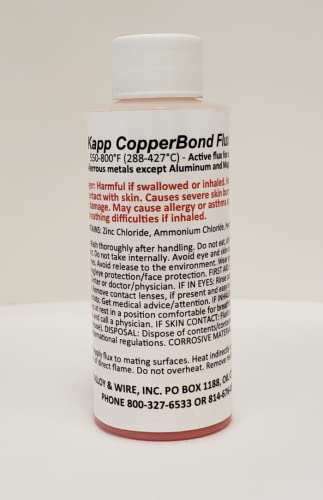
Kapp CopperBond Flux is a high-temperature flux designed for soldering copper, brass, and stainless steel. It is liquid-based, formulated to operate in a high-temperature range of 500-800°F (260-427°C), and is described as suitable for all common metals except aluminum. This product targets industrial, artisanal, and hobbyist applications where robust heat tolerance and consistent flux performance are needed. It supports wire and component joints that require strong, durable bonds under elevated temperatures.
When using high-temperature flux, control of heat is crucial to prevent warping or oxidation while ensuring thorough wetting of the joint. Always follow safety guidelines for handling hot metals and flux residues, and test compatibility with your chosen filler metal or solder alloy. Storage in a cool, dry place can extend the flux’s shelf life and readiness for use in demanding environments.
Buying Guide: Key Purchase Considerations
- Application type: Choose flux type based on soldering vs welding, metal alloys, and the environment. Flux pastes are versatile for tiny joints, while flux-core wires suit MIG welding, and liquid flux is common in shop soldering.
- Metal compatibility: Ensure the flux or wire is suitable for stainless steel grades you work with (e.g., 304, 304L, 308, 321, 347). Some products exclude aluminum and certain alloys.
- Heat and temperature range: High-temperature fluxes are needed for heavy-duty joints; lower-temperature options suit electronics or precision work.
- Ventilation and safety: Acid-based fluxes require good ventilation and protective gear. Lead-free flux options are preferable for household projects.
- Packaging and storage: Vacuum-sealed or moisture-protected packaging preserves flux core quality and wire performance; store liquids away from heat and direct sunlight.
- Ease of use: Paste fluxes offer precise application; liquids are quick to apply; flux-core wires simplify setups by eliminating shielding gas for certain welding tasks.
- Post-processing: Some fluxes require cleaning; others are no-clean. Consider downstream cleaning steps and corrosion resistance in the final joint.
- Cost and availability: For frequent work, select products with reliable supply and compatible equipment to minimize downtime.
In choosing among these options, consider your primary method (soldering vs MIG welding), work environment (indoor shop vs outdoor sites), and the stainless steel grades you most often encounter. A combination of a high-performance flux for soldering stainless steel (such as Rubyfluid or BEEYUIHF) and a reliable flux-core welding wire (like YESWELDER or SONNLER) typically covers most professional and hobbyist needs. Always follow manufacturer instructions and safety guidelines to maximize bond strength and joint longevity.