Forge welding benefits from flux-core wires that provide shielding in windy or outdoor conditions and deliver clean, strong welds on carbon steel. This guide highlights five top flux-core welding wires that excel for forge work, T-joints, butt welds, and outdoor repairs. Each option balances ease of use, slag removal, and compatibility with common welders. Use the buying guide below to compare slag coverage, spatter, and versatility across environments.
| Product | Brand | Key Strengths |
|---|---|---|
| ARCCAPTAIN Flux Core Welding Wire .030 | ARCCAPTAIN | Gasless, versatile for outdoor use; smooth arc, low splatter; works on rusty/dirty surfaces |
| WelderElite 0.035″ Flux Core MIG Wire | WelderElite | Wide material suitability; gasless; strong, durable welds; good for galvanized and stainless (note stainless may rust) |
| Blue Demon E71T-GS X .045” | Blue Demon | Gasless, all-position; easy slag removal; porosity-free welds |
| 4-Pack 0.035″ Flux Core Welding Wire (2 lb each) | YixangDD | Four spools; low spatter; high slag coverage; outdoor/windy environments |
| Blue Demon E71T-11 X .030 | Blue Demon | Gasless; versatile for carbon and galvanized steel; low spatter; easy slag |
ARCCAPTAIN Flux Core Welding Wire .030, E71T-GS

ARCCAPTAIN’s E71T-GS flux-core wire is designed for gasless MIG welding, delivering an easy arc with less splatter. The 0.030” diameter is well-suited for thin to moderately thick carbon steel and single- to multi-pass welds. It works across positions and excels in outdoor environments, making it a practical choice for forge work and date night repair projects. The flux core acts as a shielding agent to produce clean, presentable welds even without shielding gas.
- Gasless MIG welding wire, AWS E71T-GS 0.030″
- 2 lb spool; suitable for T-joints, butt, and lap welds
- Effective on rusty, dirty, or painted material; strong outdoors
Forney 37025 Aluminum Welding Flux

Forney’s flux is a cleaning agent that helps prevent oxides during welding and aids in maintaining a smooth molten pool. While primarily marketed for aluminum, flux types in forge welding contexts can assist in oxide control and slag management during metalworking tasks. This accessory supports cleaner surface preparation and reduces chances of slag inclusions during repair work.
- Oxide prevention during welding
- Molten pool cleaning agent; aids stability
- Compatibility with standard flux-based workflows
WelderElite 2-Pack Flux Core MIG Wire, .035
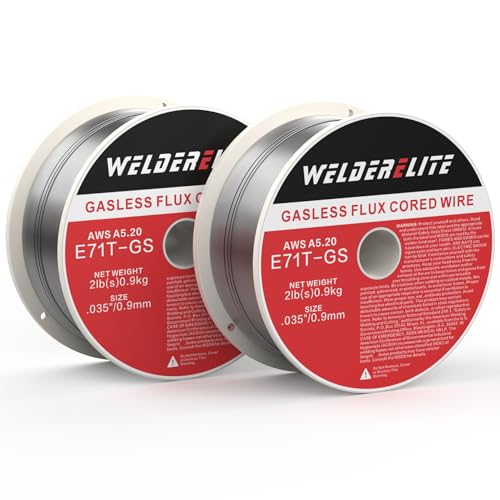
WelderElite’s 0.035″ flux-core MIG wire is designed for stronger, more substantial welds across mild steel, galvanized steel, and stainless steel projects. The gasless design makes it suitable for outdoor or windy conditions where shielding gas is impractical. While stainless steel welds may rust over time, this wire offers robust performance for forge-welding tasks that demand reliability in challenging environments.
- 0.035″ diameter; gasless flux-core MIG wire
- Broad material compatibility; galvanized and stainless included
- Outdoor-friendly; suitable for wind and field work
Blue Demon E71TGS X .045” Flux Core Wire

This Blue Demon option provides a robust gasless flux-core solution in a larger 0.045” diameter. It supports all-position welding and is formulated for porosity-free welds with easy slag removal. The heavier wire size is well-suited for thicker carbon steel sections and structural repairs where strong, deep welds are required, especially in forge-shop settings.
- E71T-GS gasless flux-core MIG wire
- All-position capability; easy slag removal
- Ideal for thicker carbon steel sections
4-Pack 0.035″ Flux Core MIG Wire, 2 lb Each

This 4-pack from YixangDD provides consistent flux-core performance across multiple spools, delivering low spatter and strong slag coverage. With 0.035″ diameter, the wire is versatile for welding mild carbon steel in various positions, making it a practical all-around option for forge work and outdoor repairs. The spools are built for durability and dependable performance across sessions.
- Four 2 lb spools of 0.035″ flux-core wire
- Low spatter; high slag coverage; easy slag removal
- Robust for outdoor and windy conditions
Buying Guide: Key Purchase Considerations
Understanding flux-core welding wires helps you choose options that deliver clean welds in forge environments. Consider the following factors when selecting wires for forge welding or outdoor repair tasks:
- Wire diameter: .030″, .035″, and .045″ are common. Thinner wires provide finer control on thinner metals, while thicker wires deposit more material for structural work.
- Flux-core type: Gasless wires enable welding without shielding gas, which is ideal for outdoor conditions but may produce more slag and spatter.
- Material compatibility: Most flux-core wires are designed for carbon steel. Some are more suitable for galvanized surfaces or mild stainless contexts, though stainless welds may require additional care to prevent corrosion.
- All-position performance: For forge work, wires that weld well in multiple positions are valuable to handle joints at different angles.
- Slag removal: Slag coverage and ease of removal affect cleanup time after forging and repairs.
- Outdoors and wind tolerance: Wires optimized for outdoor use are less sensitive to wind and air drafts that would otherwise disrupt shielding gas.
- Package and continuity: Multi-pack spools offer consistent performance for extended forge projects, reducing downtime.
In forge welding scenarios, choose a wire that balances dependable outdoor performance with clean slag control. If you work with rusty or painted steel, opt for flux-core options proven to handle surface contaminants. For thicker sections, heavier wire diameters can improve penetration and weld strength. Always follow the welder manufacturer’s recommendations for wire type and compatible voltage, wire feed speed, and drive rolls.