Choosing the right epoxy for high-temperature applications requires understanding cure times, strength, and heat tolerance. This guide highlights five leading options that perform under demanding conditions, from automotive repairs to industrial projects. Each product is evaluated for bond strength, temperature resistance, and usability, helping you pick the best epoxy for high-heat environments.
| Product | Brand | Temp Resistance | Best Use |
|---|---|---|---|
| J-B Weld HighHeat Epoxy Syringe | J-B Weld | Up to 550°F | Permanent metal repairs |
| J-B Weld 37901 ExtremeHeat | J-B Weld | Up to 1000°F | Iron/steel and metal repairs |
| AOJEL 2-Part Epoxy Metal Glue | AOJEL | Up to 392°F (200°C) | Multi-material bonding |
| J-B Weld Original Steel Reinforced Epoxy Syringe | J-B Weld | Up to 550°F | General high-strength repairs |
| MotorPower Care Power Bond Glue | MotorPower Care | Up to 600°F | Metal, plastics, ceramics |
J-B Weld HighHeat Epoxy Syringe, Dark Grey

J-B Weld HighHeat is a two-part epoxy designed for high-temperature repairs. It bonds permanently with a 1:1 mix and offers a tensile strength around 4730 PSI. The cured bond withstands up to 550°F and is resistant to chemicals and fuels. At room temperature, handling begins after about 1 hour, with full cure around 24 hours. Elevated temperatures accelerate cure time, enabling a 1-hour cure at 250°F. Suitable for automotive, engine, and metal repairs where heat is a concern.
J-B Weld 37901 ExtremeHeat High Temperature Paste

ExtremeHeat is formulated for repairs to metal components operating in extreme heat, up to 1000°F (537°C). This non-flammable paste contains no solvents or VOCs and is presented as a modern cold-weld alternative. It forms a bonded, permanent seal stronger than steel when fully cured. It’s ideal for cracks, gaps, seam connections, and holes in iron, steel, and other metal parts, with machinability after curing.
AOJEL 2-Part Epoxy Metal Glue – Heavy-Duty, High-Temp
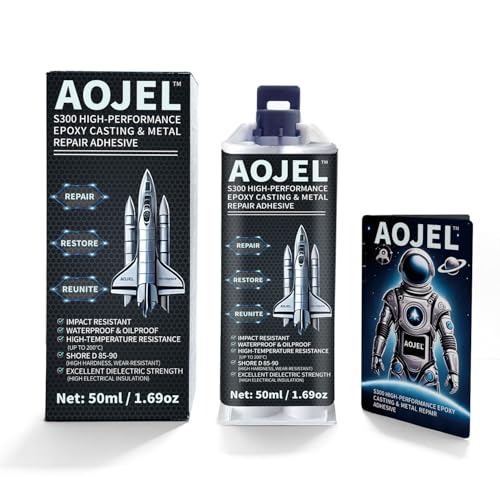
AOJEL’s two-part epoxy is engineered for professional performance, providing a robust bond that withstands up to 392°F (200°C). It bonds a variety of materials, including steel, aluminum, ceramics, and many plastics, making it suitable for automotive, plumbing, and construction repairs. Cure is controlled, with 3–4 hours initial set and 8–12 hours to gain maximum strength, particularly when processed at elevated temperatures (60°C).
J-B Weld Original Steel Reinforced Epoxy Syringe

The Original Steel Reinforced Syringe combines the reliability of J-B Weld’s classic cold-weld formula with a steel-reinforced bond. Mixed at a 1:1 ratio, it forms a durable, permanent joint that can be drilled, filed, sanded, or machined after curing. It reaches handling strength in 4–6 hours and full cure in about 15 hours, with temperature resistance up to 550°F. It’s a versatile option for metal-to-metal repairs, especially where long-lasting strength is essential.
Metal Repair Glue – Heavy Duty High-Temp Epoxy

This heavy-duty glue from KEWEIYOW is designed for metal, plastic, ceramic, and more, offering high-temperature resistance and a strong, durable bond. It complies with standard two-part 1:1 preparation and claims broad applicability for automotive, marine, and home repairs. The product emphasizes high adhesion, toughness, and the ability to restore critical components such as engine parts or structural metal joints.
MotorPower Care Power Bond Glue

MotorPower Care Power Bond Glue provides a high-temperature adhesive option for metal-to-metal, plastics, and ceramics. It is engineered to withstand temperatures up to 600°F, making it suitable for welding-like repairs in automotive and industrial contexts. The formula emphasizes versatility across materials such as steel, aluminum, copper, and concrete, with a focus on reliable, high-heat performance for load-bearing repairs.
Buying Guide
- Temperature rating: Match the epoxy’s max operating temperature to your project’s heat exposure. Higher ratings tolerate engines, exhaust, or industrial furnaces.
- Material compatibility: Look for epoxies that bond well to metal, ceramic, plastic, and composites relevant to your application.
- Cure time and handling: Consider whether you need quick handling or full cure for critical fittings. Some bonds cure faster with heat.
- Strength and durability: Check tensile strength (PSI) and claims about resistance to fuels, solvents, or moisture if used in harsh environments.
- Ease of use: Two-part systems with clear 1:1 mixing ratios reduce error. Syringes and applicators can speed up the process.
- Machinability after cure: If you plan to drill, file, or sand the repair, ensure the epoxy supports machining after curing.
- Application scope: For structural repairs, prefer products designed for load-bearing joints and long-term stability.
- Safety and VOCs: Non-flammable and low-VOC formulations are safer for indoor use and reduce odor exposure.
When selecting an epoxy for high temperatures, prioritize adhesion strength, heat tolerance, and practicality for your specific materials. The options above provide a range from excellent metal-focused bonds to multi-material compatibility for diverse repair scenarios.