Engine blocks and automotive components accumulate grease, rust, and dirt that can hinder performance. This article highlights top ultrasonic cleaners and degreasers designed to tackle engine blocks, blocks, DPFs, and related parts. Each selection balances power, capacity, and practical features to help workshop and hobbyist users achieve thorough cleaning without damage.
| Product | Brand | Type | Key Benefit |
|---|---|---|---|
| Tullker Industrial 45L Ultrasonic Cleaner | T TULLKER | Ultrasonic Cleaner | Compact 45L tank with 720W ultrasonic power, 3000W heating for parts like engine blocks |
| WD-40 Specialist Machine & Engine Degreaser | WD-40 Specialist | Foaming Degreaser | Foaming, low-residue formula penetrates crevices for engine cleaning |
| Tullker Ultrasonic Cleaner 264L | YHNNH | Ultrasonic Cleaner | Large 264L capacity with 40kHz/28kHz options and strong heating |
| A-Team Performance Ultrasonic Cleaner Solution | A-Team Performance | Cleaning Solution | Specialized ultrasonic solution for carburetors and engine parts |
| Tullker 61L Industrial Ultrasonic Cleaner | YHNNH | Ultrasonic Cleaner | Dual 61L tanks with 40/28 kHz options and substantial heating power |
Note: The following sections summarize five top picks most relevant to engine block cleaning, focusing on cleaning efficiency, material compatibility, and overall value for automotive maintenance and restoration tasks.
Tullker Industrial 45L Ultrasonic Cleaner

The Tullker 45L unit focuses on robust cleaning with 28 kHz ultrasonic frequency and 720W ultrasonic power, combined with 3000W heating. The 45L inner tank (19.7” x 11.8” x 11.8”) is crafted from durable 304 stainless steel and ships with a basket to keep engine blocks, DPFs, and other components in place. The design aims to balance capacity and speed for mid-sized automotive parts, PCB boards, and metal components without causing damage to delicate electronics or coatings.
- Ultrasonic frequency: 28 kHz
- Ultrasonic power: 720W; Heating power: 3000W
- 45L capacity; 304 stainless steel body
- Includes basket for organized cleaning
WD-40 Specialist Machine & Engine Degreaser Foaming Spray

This foaming degreaser is designed to tackle oil, grease, and grime on engines and machinery. Its water-based foaming formula penetrates deep into crevices, enabling thorough degreasing without excessive residue. It’s suitable for auto and truck engines, industrial equipment, and farm machinery, making it a versatile option for pre-wash prep or post-clean refreshment before repairs or assembly.
- High-degreasing formula; low residue
- Foaming action penetrates hard-to-reach areas
- Suitable for a wide range of engines and equipment
Tullker Ultrasonic Cleaner 264L
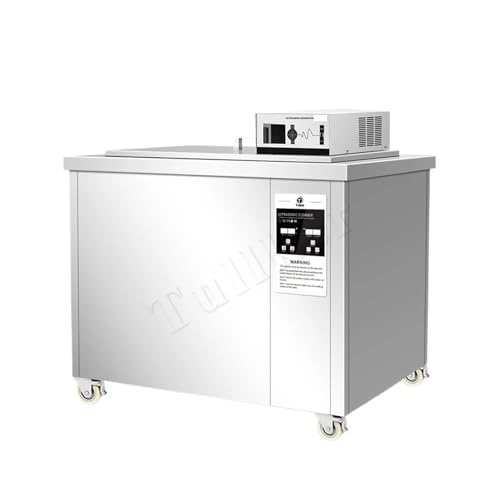
The 264L capacity model from YHNNH is built for large-scale parts cleaning, including engine blocks, heavy metal components, and DPF assemblies. It provides versatile ultrasonic options with 40kHz and 28kHz frequencies and a powerful heating system (up to 7500W combined heating capacity across multiple tanks). This setup is designed to deliver thorough degreasing, rust removal, and contaminant breakdown across sizeable batches.
- Large 264L capacity for heavy parts
- Frequency options: 40kHz and 28kHz
- Powerful heating and robust construction
A-Team Performance Ultrasonic Cleaner Solution

While not a cleaner unit itself, A-Team Performance’s ultrasonic cleaner solution is a critical component for carburetors, engine parts, and metal surfaces. The formula emphasizes precision cleaning and enhanced stain removal, leveraging ultrasonic action to reach narrow passages and tight gaps within engine components. This solution complements ultrasonic baths by improving effectiveness and protecting delicate metal surfaces during cleaning cycles.
- Designed for carburetors and engine parts
- Enhances stain removal and cleaning efficiency
- Optimizes ultrasonic cleaning outcomes
Tullker 61L Industrial Ultrasonic Cleaner

This dual-tank cleaner from YHNNH provides 61L capacity per tank and dual inner tanks, enabling simultaneous processing of multiple engine parts or separate cleaning and rinsing stages. With 40kHz/28kHz frequency options and 1500W heating per tank, it supports efficient removal of rust, oil residues, and stubborn grime from engines and hardware. The setup suits mid-to-large scale workshop environments requiring throughput and flexibility.
- Dual 61L tanks; 500x350x350mm per tank
- Frequency options: 40kHz/28kHz; 1500W heating per tank
- Ideal for engines, blocks, and metal components
Buying Guide: Engine Block Cleaning Considerations
When selecting equipment for engine block cleaning, consider capacity, cleaning method, material compatibility, and practical workflow. Engine blocks are heavy, and harsh media can damage sensitive coatings or threads. Ultrasonic cleaners excel at reaching crevices and porosities in metal parts, while specialized degreasers help prep and break down heavy grime.
- Capacity and size: Choose a unit that fits the largest parts you regularly clean. For blocks, 45L to 264L ranges cover most automotive components.
- Frequency and power: Higher power generally improves cleaning speed, but 28 kHz is common for metal parts without excessive cavitation. Larger units may offer multiple frequencies for versatility.
- Heating capability: Effective cleaning often requires elevated temperatures; confirm maximum heating to accelerate degreasing and rust removal.
- Corrosion resistance: Look for stainless steel tanks (304/316) and durable baskets to protect engine blocks and components.
- Chemistry and compatibility: Use suitable cleaning solutions or degreasers that won’t damage seals or coatings. Ultrasonic solutions should be chosen to match metal parts and contaminants.
- Workflow integration: Consider multi-tank configurations for sequential cleaning, rinsing, and drying steps to optimize throughput in shops.
- Safety and maintenance: Ensure adequate ventilation, safe handling procedures, and regular inspection of transducers, seals, and heating elements.
These selections balance capacity, cleaning power, and ease of use for professionals and enthusiasts aiming to restore engine components, remove rust, and prepare parts for assembly. Users should align equipment choice with typical part sizes, desired throughput, and the types of contaminants they frequently encounter in engine blocks and related hardware.