Ejector pins are critical for reliable mold operation, helping to push finished parts free without marring surfaces. The following selections represent sturdy, precision-focused options across common diameters and lengths. This guide highlights features such as material hardness, wear resistance, and straight-shank designs suitable for plastic and metal molds. Whether you’re maintaining a single-cavity mold or outfitting a multi-cavity system, these pins offer dependable performance with good machinability and long service life.
| Product | Brand | Diameter | Length | Material | Notable Traits |
|---|---|---|---|---|---|
| Utoolmart 2mm Dia Round Tip Steel Straight Ejector Pin Punch | Utoolmart | 2 mm | 150 mm | 65Mn | Long straight shank; good for extended use |
| uxcell 1mm Dia Straight Ejector Pins | uxcell | 1 mm | 100 mm | SKD61 | High hardness; good elastic limit |
| HARFINGTON 1/16″ Dia 250mm Long Ejector Pins | HARFINGTON | 1/16 inch | 250 mm | GCR15 | High wear resistance; long service life |
| JSMOUID SKD61 1/8″ Dia Pins | JSMOUID | 1/8 inch | 101.6 mm | SKD61 | High stability; good abrasion resistance |
| uxcell 1.5mm Dia Straight Ejector Pins | uxcell | 1.5 mm | 150 mm | 65Mn | Non-chipping; straight, durable |
Utoolmart 2mm Dia Round Tip Ejector Pin Punch
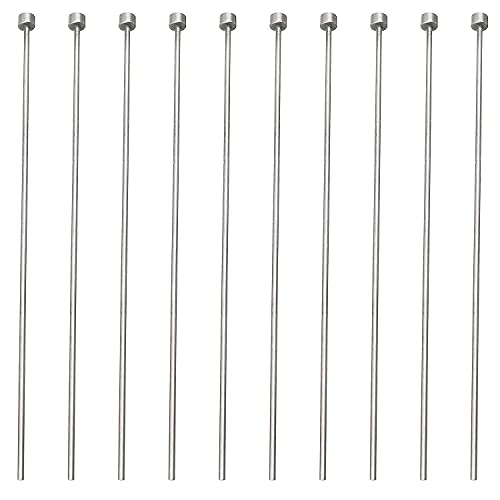
The Utoolmart ejector pin features a 2 mm shank and a 6 mm head diameter, with a total length of 150 mm. Made from 65Mn steel, it offers HRC around 48–50, delivering a balance of hardness and toughness for routine mold maintenance. The long, straight shank eases insertion and alignment in deep cavities, reducing the risk of bending during ejecting operations. This pin is suited for molds requiring consistent, moderate wear resistance with reliable recoil after actuation.
uxcell 1mm Straight Ejector Pins

uxcell’s set uses 1 mm shanks with SKD61 die steel, 100 mm long. The head is 6 mm in diameter with a 4 mm thick head, providing ample contact area for ejecting actions. SKD61 offers high hardness and good corrosion resistance, with a hardened and tempered surface and HRC around 55–58. These pins are designed to minimize bending and deformation under load and are well-suited for demanding mechanical maintenance tasks where precision and longevity matter.
HARFINGTON 4pcs 1/16 Inch Ejector Pins

These HARFINGTON ejector pins are 250 mm long with a 1/16″ shank, featuring GCR15 steel, hardness around HRC 55±5. The combination delivers high wear resistance and durability, making them suitable for molds that require robust performance in repetitive ejecting tasks. The pins’ smooth surface and precise head dimensions help prevent scratching and ensure stable alignment during operation. They are commonly used in plastic and die-casting molds where wear resistance is critical.
JSMOUID SKD61 1/8″ Ejector Pins

JSMOUID offers SKD61 pins at 1/8″ diameter and 101.6 mm length. SKD-61 manganese steel with hardened and tempered surfaces provides superior hardness and abrasion resistance relative to 65Mn. This makes it a strong option for molds requiring durable villain separation and support functions, especially in applications with higher wear demands. Their long service life and stability support consistent ejecting performance across cycles.
JSMOUID SKD61 1/4 Inch Diameter Pins

This JSMOUID set features SKD61 pins with larger shank and head dimensions for heavy-duty ejecting work. The 5″ length provides reach in longer cavities, while the 0.18″ (4.76 mm) shank facilitates robust guidance and alignment. The SKD-61 material ensures high stability and good abrasion resistance, making these pins a practical choice for molds that demand enduring performance under repetitive use.
JSMOUID SKD61 3/8″ Diameter Pins

These larger-diameter SKD61 ejector pins provide substantial pushing force for molds with thick or hard contact surfaces. With a 5″ length and about 0.62″ head diameter, they distribute ejecting pressure effectively, reducing localized wear. SKD-61’s hardness and wear resistance contribute to a longer service life in challenging molding environments, including those that involve high abrasion and frequent part ejection.
Buying Guide: Key Purchase Considerations
What to assess when selecting ejector pins for molds:
- Material and hardness: SKD61 and GCR15 offer high wear resistance and stability, while 65Mn provides a balanced option for cost-conscious projects.
- Diameter and length: Match shank diameter and overall length to your mold cavities. Long, straight pins simplify insertion in deep pockets and reduce bending risk.
- Head design and clearance: Head diameter and thickness affect contact area and ejecting force distribution. Ensure clearance avoids scratching finished surfaces.
- Surface treatment: Hardened and tempered surfaces improve longevity. Look for low roughness Ra on pins intended for precision work to minimize marking.
- Pack size and variety: Sets with multiple diameters enable flexible use across molds with different cavity sizes.
- Maintainability: Pins that resist bending or deformation under typical ejecting loads reduce downtime and component changes.
In practice, SKD61-based pins tend to outperform 65Mn under repeated cycles and tougher molding conditions, though cost and availability vary. For plastic and die-casting molds requiring high wear resistance and consistent ejecting performance, align material choice with your mold material and production cadence. Consider long pins for deeper cavities and ensure the head dimensions align with mold plate tolerances to prevent interference. Always handle pins with proper tooling to maintain straightness and surface integrity during installation.
Additional perspectives to consider:
- For budget-sensitive projects with moderate wear, 65Mn pins offer reliable service at a lower cost while still providing good strength.
- In high-volume environments, SKD61 pins may reduce downtime thanks to superior wear resistance and longer service life.
- When working with delicate surfaces, prioritizing a smooth, low-Ra pin finish helps prevent surface scratches during ejection.
- Compatibility with existing molds is crucial; verify shank diameters and head geometries to ensure proper fit and performance.
By selecting pins with appropriate diameter, length, and material, you can optimize mold reliability and part quality across diverse applications, balancing cost and durability to fit your manufacturing goals.