The world of dual extruder 3D printers blends color versatility with multi-material capability, ideal for makers who demand precision, speed, and efficient workflows. Below is a curated guide to top models that support dual extrusion, multi-color printing, or independent filaments, focusing on performance, reliability, and value for American hobbyists and small shops. Each entry highlights key features to help you compare at a glance.
Product Snapshot
| Product | Brand | Build Volume | Notable Feature |
|---|---|---|---|
| FLASHFORGE AD5X Multi-Color | FLASHFORGE | 220×220×220 mm | 4-color printing, 600 mm/s high-speed, auto leveling |
| FLASHFORGE Adventurer 5M | FLASHFORGE | 220×220×220 mm | Fully auto leveling, 600 mm/s, 3S nozzle changes |
| FLASHFORGE Adventurer 5M Pro | FLASHFORGE | 220×220×220 mm | 1-click auto printing, multi-nozzle options |
| Creality K2 Combo | Creality | 260×260×260 mm | Dual AI camera, CFS multi-color system |
| OLAPRIN Multi-Color Printer | OLAPRIN | 300×300×400 mm | Six color modes, dual extruder with single nozzle |
Flashforge AD5X Multi-Color 3D Printer

The FlashForge AD5X is designed for rapid, four-color capable output with a direct-drive extruder, enabling high-temperature materials up to 300°C. Its CoreXY architecture supports speeds up to 600 mm/s with aggressive acceleration, suitable for rapid prototypes and batch production. Auto leveling minimizes setup time and helps achieve consistent first layers across complex geometries. The four-color capability expands design possibilities from colorful figurines to multi-material functional parts. This model suits developers and makers who need color diversity without sacrificing print speed.
Key features include: vivid multi-color printing (up to 4 colors simultaneously), 1-click auto leveling for bed calibration, and ultra-fast 12x printing speed with stable CoreXY mechanics. The combination of a robust all-metal frame and high-temperature direct drive extruder enables a broad material range for precision parts and vibrant prototypes. Users benefit from simplified bed leveling and repeatable results, especially on multi-part assemblies or color-blocked models.
Flashforge Adventurer 5M 3D Printer

The Adventurer 5M series emphasizes speed and convenience for rapid production cycles. It features one-click automatic bed leveling to promote flawless first layers with minimal manual intervention. With a CoreXY all-metal structure and a peak travel speed of 600 mm/s, it is positioned for high-speed prototyping while maintaining print stability through 20,000 mm/s² acceleration. The 280°C direct extruder supports quick nozzle changes and fast warm-ups, while the dual-sided PEI platform simplifies post-processing. This model is ideal for teams needing reliable, fast multi-color experiments with lower labor overhead.
Notable aspects include quick 3-second nozzle changes, a high-flow nozzle option, a 35-second warm-up to 200°C, and flexible bed removal. The printer is designed for efficient color projects and robust performance across materials, making it a solid choice for education labs, design studios, and makers who prioritize speed without sacrificing quality.
Flashforge Adventurer 5M Pro

The Adventurer 5M Pro adds enhanced speed, nozzle versatility, and smart convenience. With a maximum travel speed of 600 mm/s and acceleration up to 20,000 mm/s², it delivers quick design realizations. The printer supports multiple nozzle sizes (0.25, 0.4, 0.6, 0.8 mm) to balance speed and detail, enabling precise parts with smoother finishes. An automatic bed leveling system, coupled with a dual-sided PEI platform, reduces setup time and enables easier model removal. These traits make the Pro a compelling option for professionals testing multi-color or multi-material workflows at scale.
Its all-metal Core XY frame enhances rigidity during high-speed movements, ensuring consistent layer alignment and reduced artifacts. The combination of auto-leveling, fast preheating, and flexible nozzle options positions the Adventurer 5M Pro as a versatile tool for engineers, educators, and advanced hobbyists chasing reliable, high-speed color-capable printing.
Creality K2 Combo 3D Printer
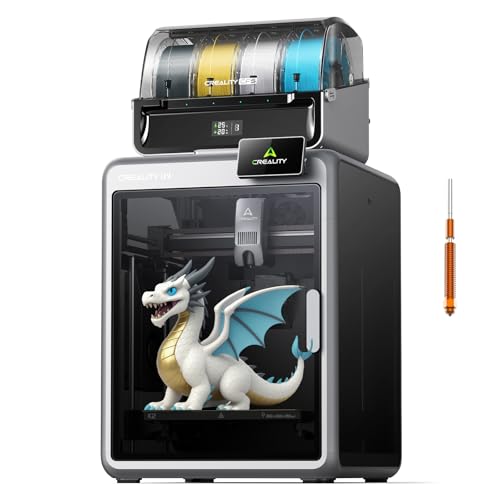
The Creality K2 Combo emphasizes rapid multi-color capability with an expandable CFS system that supports up to 16 colors. Its auto level and dual Z-axis setup contribute to stable first layers and consistent height across prints. A robust, aerospace-grade aluminum frame, combined with a steel X-axis rail, provides stability at higher speeds up to 600 mm/s. The printer pairs high-speed performance with reliable color transitions, essential for multi-material assemblies and display-ready models.
Features include automatic wire switching, multi-color transitions, and a large build volume of 260×260×260 mm. The dual AI camera support and direct drive extruder are designed to streamline workflows in creative studios and makerspaces, allowing for real-time monitoring and robust color experiments without frequent manual calibration.
OLAPRIN Multi-Color Printing Printer

The OLAPRIN model focuses on six-color modes with a dual extruder feeding into a single nozzle. Its upgraded extrusion and cooling systems enable rapid processing of multi-color materials, while a 60W hot end and a high-capacity cooling fan optimize layer formation and color stability. The printer supports gradient, segmented, and mixed-color modes, expanding the creative palette for models that demand nuanced color effects across large volumes—up to 300×300×400 mm. This setup is well-suited for detailed color studies, education, and small-scale production where color accuracy matters.
Users can explore six distinct color modes and the versatility of a single nozzle with multi-color capabilities. The modular design aims for quick assembly and faster startup, making it attractive for classrooms and design studios seeking a balance between print volume and color complexity.
Buying Guide: How to Choose a Dual Extruder 3D Printer
Key considerations when selecting a dual extruder 3D printer include print quality, speed, material compatibility, and system reliability. Dual extruders enable simultaneous use of multiple colors or materials, but the complexity of the extruder mechanism can affect ease of use and maintenance. Look for printers with:
- Auto bed leveling and easy calibration to reduce setup time and improve first-layer success across materials.
- Direct drive vs Bowden configurations. Direct drive is generally better for flexible filaments and precise retractions, while Bowden can reduce weight on the print head for speed.
- CoreXY or cartesian frame stability. CoreXY often provides higher speeds with consistent accuracy, but requires robust frame design.
- Multiple nozzle options or high-temp capabilities if you intend to print with materials like PETG, ABS, or carbon-fiber composites.
- Color and material workflows. Some systems offer independent filaments or four-color capabilities with automatic feeding, while others rely on dual extruders with a single nozzle.
- Build volume alignment with intended projects. Larger volumes enable bigger prototypes but may require more precise thermal management.
- Ongoing support and accessory ecosystem. Check for firmware updates, spare parts availability, and community tutorials.
In practice, users balancing speed and color fidelity should prioritize auto-leveling reliability, stable frame construction, and predictable extrusion behavior. For education or prototyping teams, ease of use and robust bed adhesion features can trump raw speed. If your work hinges on multiple materials, consider printers with direct-drive extruders and high-temp capabilities to maximize material compatibility and finish quality. Finally, assess total cost of ownership, including filament handling, replacement parts, and service options.