Choosing the right 55-gallon drum liners helps prevent leaks, tears, and messes while simplifying waste handling. This guide reviews top-rated, durable options designed for high-capacity bins, with features that balance strength, reliability, and ease of use. Below are five products selected for their performance, materials, and practical design, helping you pick liners that fit demanding environments—from industrial settings to large household cleanups.
Summary of Selected Products
| Product | Brand | Capacity | Material/Thickness | Notes |
|---|---|---|---|---|
| Ultrasac Heavy Duty Drum Liner | Ultrasac | 55-60 gal | 2 Mil | Thick, US-made, 90% recycled material |
| Member’s Mark Simple Tie Drum Liner | MEMBER´S MARK | 55 gal | Not stated | Tear- and leak-resistant; easy to tie |
| Husky True Tie 55-Gallon Drum Liners | Poly-America | 55 gal | 1 Mil | True tie design; 36″ x 56″ |
| Ultrasac 55 Gal Drum Liner | Ultrasac | 55 gal | Not stated | Durable, large capacity, 50-count |
| 55 Gallon Clear Drum Liners (IP) | IP | 55 gal | 4 Mil | Clear, food-grade option; perforated rolls |
Ultrasac Heavy Duty Drum Liner (2 Mil, 55-60 Gal)

Ultrasac’s 2 Mil drum liner is designed for demanding waste. The liners are thick enough to resist punctures, tears, and leaks, making them suitable for heavy loads. They are manufactured in the USA from 90% recycled material, aligning with sustainability goals while reducing landfill impact. Each bag is star sealed and individually folded to ensure even distribution when opened, which helps simplify bag placement inside large drums. This combination of durability and user-friendly design makes Ultrasac a strong choice for commercial and industrial waste handling.
Member’s Mark Simple Tie Drum Liner (55 gal, 80 Count)

Member’s Mark offers a simple tie drum liner designed for a 55-gallon drum. This option is marketed for improved tear resistance and leak resistance, with a focus on reliable containment for large waste loads. The 80-count package provides a steady supply for ongoing use in facilities or busy workspaces where drum liners need to be replaced routinely. While the exact thickness isn’t specified, the emphasis on tear and leak resistance suits general to heavy waste streams, making it a dependable, economical choice.
Husky True Tie 55-Gallon Drum Liners
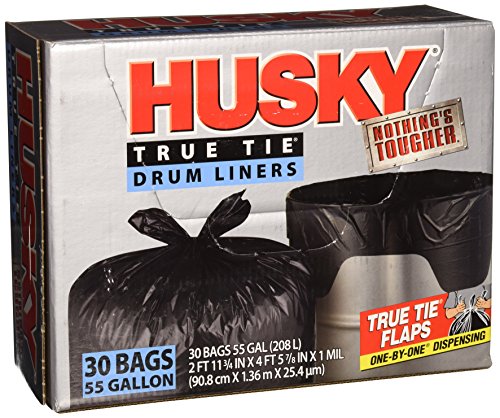
The Husky True Tie liners from Poly-America represent a practical option for users who prefer a true tie mechanism to seal the drum securely. At 1 mil thickness and sized at 36 by 56 inches, these liners balance strength with flexibility for tight drum environments. The true tie feature helps prevent spills when removing or transporting filled drums. This product is well-suited for routine or industrial waste management where quick, secure closure is essential and drum access is frequent.
Ultrasac 55 Gal Drum Liner (50 Count)

This Ultrasac option emphasizes durability with heavy-duty construction designed for 55-gallon drums. A 50-count package provides enough supply for bulk waste management without frequent restocking. The liners are sized to fit typical 55-gallon drums, and their rugged build supports large loads, reducing the risk of tearing during disposal or handling. For operations needing consistent performance across multiple drums, Ultrasac offers a practical balance of strength and value.
55 Gallon Clear Plastic Drum Liners (IP)

IP’s clear 55-gallon drum liners offer a food-grade, BPA-free LDPE option with a 4-mil thickness. The clear design allows quick content identification, an advantage in food processing or storage environments where visibility matters. The liners come in perforated rolls, enabling easy tearing and efficient restocking. While the 4-mil thickness indicates robust performance, the clear material also provides flexibility for lighter to mid-weight waste streams, making it a versatile choice for mixed-use facilities.
Buying Guide: Key Purchase Considerations
- Undertone of durability: For high-volume, heavy waste, prioritize liners with thicker material (1-2 Mil or higher), strong seals, and reinforced seams to prevent leaks and tears.
- Tie vs. open-top design: True tie and simple tie options offer reliable closure and spill prevention, especially when moving filled drums. Consider your workflow to decide if a tie feature is essential.
- Material and weight: Thicker LDPE or co-extruded films provide better puncture resistance. If chemical compatibility is a concern, check the liner’s material specifications and any certifications (such as food-grade status).
- Size accuracy: Confirm the liner dimensions (diameter and height) match your 55-gallon drum to avoid overhangs or sagging that can lead to spills.
- Environmental impact: Look for liners manufactured with recycled content or sustainable practices if reducing waste footprint is a priority.
- Quantity and storage: Packages should align with your usage rate. Consider liners that are star-sealed or folded to ease deployment in busy work environments.
- Cost-per-use: Compare price per liner, factoring in thickness, strength, and the number of units per pack to determine overall value.
- Regulatory considerations: For facilities handling food-grade materials or regulated waste streams, select liners that meet relevant standards and certifications.
In practice, the best choice depends on your specific drum waste profile. For heavy, puncture-prone loads, Ultrasac’s 2 Mil liners or Husky True Tie liners offer robust protection and secure closures. For frequent replacements and cost efficiency, a 50- to 80-count option from Ultrasac or Member’s Mark provides reliable performance without frequent restocking. If visibility of contents is important, a clear, 4-mil option from IP delivers content-identifying advantages while remaining strong enough for typical waste streams.