Double rod hydraulic cylinders are designed to provide synchronized, high-precision motion with balanced force in both directions. This article highlights top-performing double-acting tie-rod and welded cylinders from leading brands, helping you compare specifications, load capacities, and port configurations. Whether for machinery, presses, or material handling, these selections emphasize robustness, ease of maintenance, and compatibility with common standards.
| Product | Brand | Bore / Stroke | Ports | Pressure Range | Retracted / Extended Length |
|---|---|---|---|---|---|
| 2×10 Hydraulic Cylinder | AMRAP HYDRAULICS | 2″ / 10″ | 3/8″ NPT | 2500 PSI | 20.25″ / 30.25″ |
| Maxim TC Hydraulic Tie-Rod | Maxim | 2″ / 8″ | 3/8″ NPT | 2500 PSI | 18.25″ / 26.25″ |
| Chief TC3 Tie-Rod Cylinder | Chief | 2″ / 6″ | SAE 8 | 3000 PSI | 16.25″ / 21″+ |
| 3×16 Hydraulic Cylinder | AMRAP HYDRAULICS | 3″ / 16″ | 1/2″ NPT & SAE #8 | 3000 PSI | 26.25″ / 42.25″ |
| 1.5×16 Hydraulic Cylinder | AMRAP HYDRAULICS | 1.5″ / 16″ | SAE #4 | 3500 PSI | 24″ / 40″ |
These selections cover a range of bore sizes, stroke lengths, and port configurations to fit common industrial applications. Each option emphasizes reliable performance under high pressures and durable construction suitable for demanding environments.
2×10 Hydraulic Cylinder – Double Acting Tie Rod

Brand: AMRAP HYDRAULICS. This double-acting tie-rod cylinder features a 2″ bore (OD 2.38″), 10″ stroke, and a 1″ pin diameter. Retracted length is 20.25″ and extended length is 30.25″. It uses 3/8″ NPT ports and is rated for 2500 PSI, with a column load capacity of 7850 lbs. Tie-rod style cylinders are commonly used in presses, machine tools, agricultural machinery, and material handling systems due to their robustness and ease of maintenance.
Maxim TC Hydraulic Tie-Rod Cylinder

Brand: Maxim. This double-acting tie-rod cylinder uses a 2″ bore and 8″ stroke, with a 1″ pin and 1.125″ rod diameter. Retracted length is 18.25″ and extended length is 26.25″ (center-to-center pins). It supports 2500 PSI and 7850 lb column load, with 3/8″ NPT ports. Designed for rugged agricultural, industrial, and commercial applications, it is NFPA-compliant for quick installation and compatibility with other tie-rod cylinders.
Double Acting Universal Hydraulic Cylinder
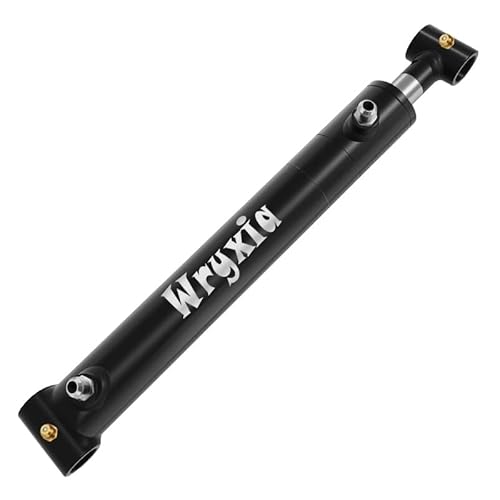
Brand: Wryxia. This double-acting cylinder features a universal design compatible with various industrial equipment. It is built with a sturdy welded construction and chrome-plated piston rod for rust resistance. Working pressure ranges up to 2900 PSI, with a maximum allowable pressure of 3600 PSI, offering strong performance in demanding environments and reduced risk of leakage over time.
Chief TC3 Tie-Rod Cylinder

Brand: Chief. Specifications include a 2″ bore, 6″ stroke, 1″ pin, and 1.125″ rod diameter with a 9420 lb column load. Retracted length is 16.25″. It uses SAE 8 port sizing and weighs 16.12 lb. The cylinder is designed for reliable performance in double-acting applications and features improved swing with a 2″ extendable base end, facilitating easier hookups in agricultural and compact construction settings.
Double Acting Universal Hydraulic Cylinder

Brand: Wryxia. This option mirrors versatile usage with a 2,900–3,600 PSI capacity and a chrome-plated piston rod for corrosion resistance. It emphasizes universal applicability across various industrial equipment and machinery, offering durability and dependable performance under high-pressure operation.
3×16 Hydraulic Cylinder
Brand: AMRAP HYDRAULICS. This double-acting tie-rod cylinder has a 3″ bore and 16″ stroke, with 1″ pin and 1.25″ rod diameter. Retracted length is 26.25″ and extended length is 42.25″ (center-to-center pins). Ports include 1/2″ NPT and SAE #8, rated at 3000 PSI and a substantial 15,160 lb column load. It is widely used in hydraulic presses, machine tools, and heavy material handling systems as a robust solution for high-load scenarios.
1.5×16 Hydraulic Cylinder

Brand: AMRAP HYDRAULICS. This welded double-acting cylinder features a 1.5″ bore, 16″ stroke, 1″ rod, and 3/4″ pin holes. Retracted length is 24″ and extended length is 40″. It uses SAE #4 ports and is rated at 3500 PSI, with a 5,300 lb column load. The all-welded design delivers durability, high strength, and resistance to corrosion in outdoor or harsh environments.
Buying Guide: Key Considerations For Double Rod Hydraulic Cylinders
Choosing the right double-acting cylinder requires balancing load requirements, space constraints, and system compatibility. Consider bore size and stroke length to match the reach and force needed for your application. Tie-rod cylinders typically offer easy maintenance and modularity in larger machines, while welded cylinders excel in compact or highly integrated assemblies where space is at a premium.
- Operating pressure and duty cycle: Ensure the cylinder’s PSI rating aligns with your hydraulic system and workload. Higher pressure usually implies greater force but may demand more robust mounting and seals.
- Port configuration: NPT vs. SAE ports, and the port size, affect hose selection and connections. Check compatibility with existing hoses or adapters.
- Mounting and end hardware: Tie-rod cylinders use standardized end configurations for quick replacement, while welded designs require precise mounting points and alignment.
- Load capacity: Column load ratings indicate how much force the cylinder can sustain without buckling or bending. Match this to your application’s peak loads.
- Material and corrosion resistance: Chrome-plated rods and welded housings improve durability in outdoor or dirty environments, reducing maintenance needs over time.
- Mounting space and stroke: Ensure the retracted and extended lengths fit within available space, including clearance for movement and accessories.
In practice, many users pair a mid-range bore and stroke with a standard port setup to maximize compatibility with off-the-shelf hoses and NFPA-compliant components. For operations with frequent changes in load direction, double-acting configurations provide balanced force and smoother cycling, while tie-rod assemblies offer straightforward field servicing when seals or mounts wear out. Always verify compatibility with hydraulic fluid type and temperature to ensure seal longevity and consistent performance.