Brewing quality depends on precise sugar readings to manage fermentation, flavor development, and consistency. Digital refractometers offer quick, accurate Brix and specific gravity measurements critical for beer, wine, and other brews. The following selections prioritize accuracy, temperature compensation, and ease of use for home and professional brewers alike. Read on to compare top models and find the right refractometer for your brewing workflow.
| Product | Scale | ATC | Best For |
|---|---|---|---|
| Tiaoyeer Brix Refractometer | Brix 0-32% / SG 1.000-1.130 | Yes | Beer, wine, and juice sugar readings |
| aichose Brix Refractometer | Brix 0-32% / SG 1.000-1.120 | Yes | Home brewing and winemaking basics |
| LOHAND 3-in-1 Digital Refractometer LH-T95 | Brix 0-95% / RI | Yes | Multi-sugar testing for various brews |
| SmartRef Digital Refractometer by Anton Paar | Brix (±0.04) / Wort & ABV related readings | Yes | Professional-grade brewing and winemaking |
| MILWAUKEE MA871 Digital Brix Refractometer | 0-85% Brix | Yes | Fast, rugged field use for brewers |
Note: All models featured here provide ATC (Automatic Temperature Compensation) and aim to deliver reliable readings under typical brewing conditions. When comparing devices, consider measurement range, precision, ease of use, and how the instrument fits into your existing workflow.
Tiaoyeer Brix Refractometer With ATC
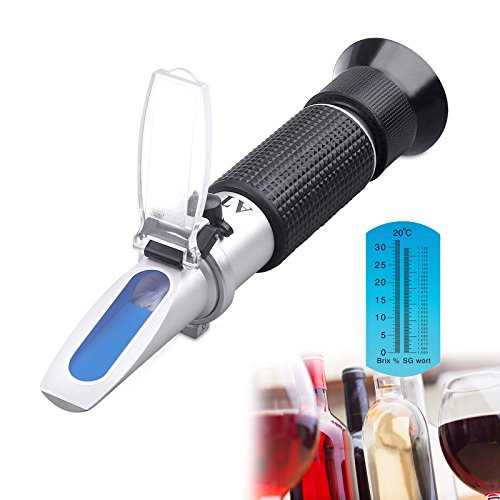
The Tiaoyeer Brix refractometer provides dual-scale measurements suitable for brewing wort and general sugar testing. Its specifications include a Brix range of 0-32% with ±0.2% accuracy and a Specific Gravity range of 1.000-1.130, also calibrated to ±0.2%. The instrument features advanced Automatic Temperature Compensation (ATC) for 10°C to 30°C environments, reducing the impact of ambient temperature on readings. Usage is straightforward: place a wort drop on the prism, illuminate, and read the scale through the eyepiece. It is designed for quick, in-field checks of sugar content in beer, wine, or juice. This model emphasizes accuracy and speed, making it a solid choice for hobbyists and small-batch brewers alike.
Key features include ATC-enabled temperature compensation, compact handheld design, and a two-scale readout that helps align sugar concentration with fermentation planning. The device typically requires only a small sample, and its reliance on a prism-based optical system ensures a rapid reading cycle, enabling frequent adjustments during mashing, boil, or fermentation monitoring.
Pros: Fast results, ATC for consistent measurements, dual-scale outputs. Cons: Requires proper cleaning and sample prep to avoid cross-contamination; eyepiece readability may vary with lighting conditions.
aichose Brix Refractometer With ATC
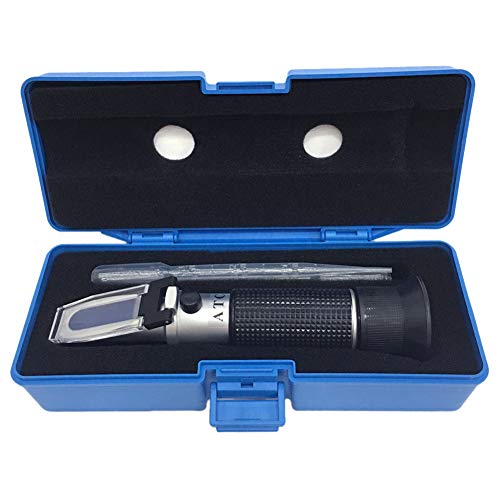
The aichose refractometer is designed for testing sugar content and specific gravity, making it suitable for home brewing and winemaking. It features a Brix range of 0-32% and SG range of 1.000-1.120, with ATC to adjust automatically to ambient temperatures. The device emphasizes straightforward operation and reliable readings in a compact form factor. Breweries and hobbyists can use it for quick checks during fermentation planning and to gauge potential alcohol yield based on sugar content. The dual-scale approach helps correlate sugar levels to fermentation expectations and wine must metrics.
Benefits include user-friendly operation, robust optical components, and a focus on accurate readings across common brewing scenarios. Potential drawbacks include the need for careful sample handling and ensuring the prism is clean for consistent results.
LOHAND 3-in-1 Digital Brix Refractometer LH-T95

LOHAND’s LH-T95 blends Brix, refractive index (RI), and ATC into a single device. It is marketed for testing sugar content in honey, fruits, juices, and beverages, with a stated Brix range up to 95% and RI readings for broader material analysis. For brewing, it offers versatility when evaluating fermentables, syrups, and flavor constituents, alongside a relatively quick 3-second read with an easy-to-read color display. The device emphasizes a multi-parameter approach, which can support more nuanced recipe development and yeast nutrition planning, particularly for mead or fruit-forward beers.
Pros: Wide Brix range, multi-parameter display, ATC. Cons: Very high upper range may be more than necessary for standard beer wort, which can complicate interpretation for beginners.
SmartRef Digital Refractometer By Anton Paar

The Anton Paar SmartRef stands out as a professional-grade refractometer, ideal for serious brewers and winemakers. It offers high-precision measurements with an accuracy around ±0.04 °Brix for wort-related applications, aiding precise formulation and monitoring of sugar content. Automatic wort and alcohol correction features help ensure consistency across batches and fermentation profiles. Bluetooth connectivity allows data logging and integration with digital lab setups, which can streamline quality control in more advanced brewing operations. This device is designed for labs and craft operations where speed, accuracy, and repeatability are critical.
Considerations include higher cost and the need for proper calibration. While its capabilities are impressive for commercial or serious hobby projects, less complex setups may not require Bluetooth data capture or lab-grade precision.
MILWAUKEE MA871 Digital Brix Refractometer
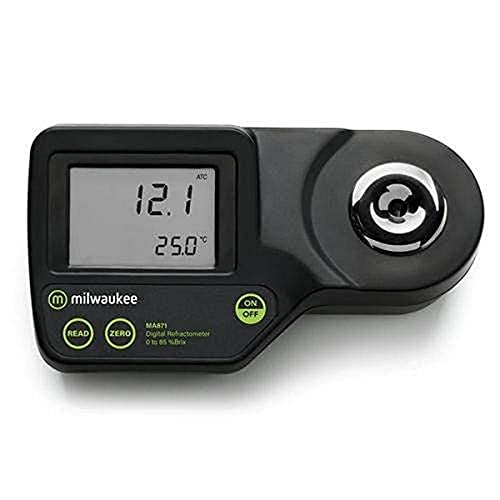
The Milwaukee MA871 refractometer provides fast, two- to three-drop measurements with an LCD display and quick results, typically under two seconds. It includes a simple one-point calibration with distilled or deionized water and a durable stainless steel sample well. Its IP65 rating indicates dust and water spray protection, which is beneficial in humid brewing environments. This device is built for durability and quick checks on-the-go, making it suitable for home brewers who need a robust instrument for frequent use or those working in less controlled settings such as a small brewery or outdoor checks during fermentation. The MA871 emphasizes speed, ease of cleaning, and rugged construction.
Strengths include rapid readings and rugged design; potential limitations are a smaller range relative to some other models and a focus on expediency over broad analytical versatility.
Buying Guide
When selecting a digital refractometer for brewing, consider these key factors to optimize your choice:
- Measurement range and scale alignment: Ensure the device covers the typical ranges you monitor (0-32% Brix, 1.000-1.130 SG, etc.). If you brew beer or mead with high gravity needs, a wider Brix range or RI option can help.
- ATC and environmental stability: Automatic Temperature Compensation helps maintain accuracy as ambient temperatures vary during mashing, boiling, and fermentation. Look for devices with a reliable ATC subsystem and a clear temperature operating range.
- Accuracy and resolution: Brewing applications benefit from high precision, typically within ±0.2% Brix or better, and a clear resolution for subtle differences in gravity and sugar content.
- Ease of use and readout: A large, legible display and straightforward sample application (drop on the prism) reduce measurement fatigue and error, especially during busy brew days.
- Data management: Some models offer Bluetooth or digital logging to track measurements across batches. This can be valuable for quality control and recipe refinement at scale.
- Durability and cleaning: Brew environments can involve moisture, sugars, and cleaning agents. Devices with protective housings, IP ratings, and easy-to-clean wells reduce maintenance time.
- Cost vs. features: Professional-grade refractometers provide higher precision and data capabilities but at a higher price. Hobbyists can benefit from mid-range models with reliable ATC and solid accuracy.
- Intended use scenarios: For home brewing, a straightforward dual-sensor (Brix/SG) model may suffice. For small craft breweries or meaderies, a model offering broader ranges and data integration can improve batch-to-batch consistency.
In practice, choose a refractometer that aligns with your brewing style, whether that means rapid field checks, precise wort measurements for consistency, or integrated data logging for long-term batch analysis. Regular calibration with distilled water and periodic verification with test solutions support sustained accuracy. For most home brewers, models like the Tiaoyeer or aichose provide dependable performance at a moderate price, while the Anton Paar SmartRef serves advanced operations requiring lab-grade precision and connectivity. The Milwaukee MA871 offers a rugged option for frequent, in-the-field use without sacrificing speed.