Smart leak detection saves energy, reduces downtime, and protects equipment across industrial systems. This article highlights five leading devices and kits that help technicians identify compressed air leaks, refrigerant leaks, and related anomalies. Each option offers distinctive sensing technology, ease of use, and practical applications for maintenance teams seeking faster pinpointing of leaks with minimal downtime.
| Product | Brand | Key Use | Type |
|---|---|---|---|
| FOTRIC TD2 Acoustic Imager | FOTRIC | Industrial leaks, vibration issues | Acoustic imaging camera |
| RectorSeal Better Bubble 65554 | Rectorseal | Refrigerant, air, and gas leaks | Bubble leak detector |
| TOPTES RT-389 | TOPTES | HVAC refrigerant leaks | Rechargeable leak detector |
| ComStar Leak Bubbles Yellow | ComStar | Industrial gas leaks | Bubble leak detector |
| ComStar Leak Bubbles Blue | ComStar | Industrial gas leaks | Bubble leak detector |
FOTRIC TD2 Acoustic Imager — Industrial Leak Detection

The FOTRIC TD2 combines 64 MEMS digital microphones with a 66° × 52° field of view to locate sound sources accurately. It covers 2 to 100 kHz, enabling detection of both audible and ultrasonic leaks. A 13MP camera provides detailed visual references for leak verification. It supports compressed air leak detection, vacuum leaks, fastener looseness, and seal integrity checks without downtime, improving maintenance efficiency.
RectorSeal Better Bubble 65554 Advanced Leak Detector

Better Bubble is an advanced leak locator designed to detect refrigerant gas, air, oxygen, and many other leaks. It operates effectively at varied surface temperatures from 20°F to 250°F and highlights leaks quickly and easily. The spray application is simple for pipes, tubing, tanks, and refrigerant coils, making it a go-to for quick field verifications.
TOPTES RT-389 Refrigerant Leak Detector

The RT-389 offers adjustable sensitivity across three modes and three alarm types, with a 14.5-inch flexible gooseneck for hard-to-reach areas. It detects refrigerants down to 3 g/yr, providing precise readings for automotive, residential, and commercial HVAC systems. Visual, audible, and vibration alarms can be customized, and a color TFT display aids in tracking readings and trends.
ComStar Leak Bubbles Yellow — Quick Gas Leak Detector

ComStar Leak Bubbles Yellow is described as the fastest-acting leak detector in its market. It is environmentally safe, non-toxic, and non-corrosive, suitable for detecting leaks in natural gas, refrigerants, nitrogen, air, and CO2. The formulation is designed for quick action in various applications, including HVAC and gas systems.
ComStar Leak Bubbles Blue — Fast Gas Leak Detection
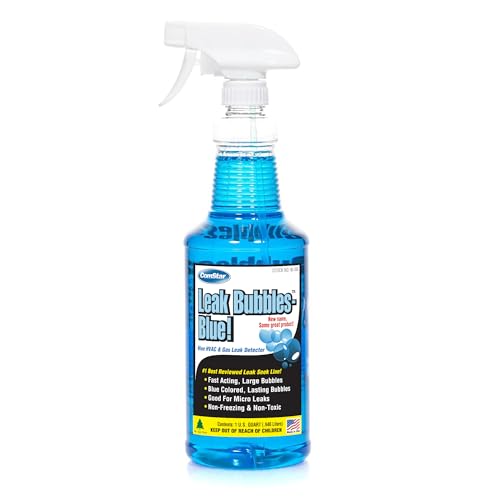
Blue Bubble Leak Detector from ComStar emphasizes fast action with a safe, non-toxic formula. It detects leaks in natural gas, refrigeration gas, nitrogen, air, and CO2, making it a versatile choice for plumbing, HVAC, and industrial gas systems. The product is designed for easy spray application and quick confirmation of leaks.
Buying Guide
Key considerations help decide which leak-detection equipment fits a facility or field crew best. First, identify the target leaks: compressed air, refrigerants, or general gas leaks. Acoustic imaging cameras like the FOTRIC TD2 provide real-time localization and a visual reference, ideal for complex systems with multiple potential leak sources. Bubble detectors such as Better Bubble and ComStar options offer rapid, surface-level leak confirmation with simple applications. For HVAC refrigerants, detectors like TOPTES RT-389 offer sensitivity adjustments and multi-modal alarms for precise monitoring. Durability, ease of use, battery life, and maintenance requirements should align with the working environment—shop floors, field service, or controlled labs.
Performance and accuracy depend on frequency range and sensor quality. The 2–100 kHz range in the FOTRIC TD2 allows detection of ultrasonic leaks that may be inaudible to humans, while battery-powered handheld detectors provide portability for on-the-spot checks. For safety and compliance, select detectors with clear alarms (sound, visual, and vibration options) and built-in data logging if trends must be analyzed over time. Consider availability of consumables (bubbles solutions or desiccants), spray compatibility, and the presence of continuous maintenance support from manufacturers. Finally, balance upfront cost with expected maintenance savings from reduced downtime and energy waste.
In practice, many facilities benefit from a mixed approach: an acoustic imaging camera to pinpoint leak locations in complex systems, complemented by bubble-based spot checks for quick confirmation during routine maintenance. Refrigerant detectors are valuable in service and retrofit projects where refrigerant handling is routine. The best choice depends on system type, leak likelihood, and technician workflow. Always follow manufacturer instructions and local safety standards when using any leak-detection equipment.