Choosing a coating thickness measurement gauge helps buyers evaluate vehicle paint integrity, verify repaints, and assess finishes on metals and alloys. This guide highlights five top models and outlines key buying factors to consider for both hobbyists and professionals. Each product below includes official features, making it easier to compare performance and suitability for automotive use.
| Product | Brand | Measuring Range | Key Feature | Link |
|---|---|---|---|---|
| Car Coating Thickness Meter | RDINSCOS | 0–elevated range on metals | Auto-detect ferrous/non-ferrous substrates | View |
| CM-205FN | VVV-Group | 0–1500 μm (0–59.1 mil) | Automatic substrate recognition | View |
| CM-208FN | VVV-Group | 0–78 mils (range varies per model) | Ferrous/non-ferrous detection | View |
| EC-770SE | yowexa | 0–2000 μm | External ruby probe for curved surfaces | View |
| Digital Professional CM-818 | VVV-Group | 0–5000 μm (approx. 0–197 mils) | Data storage with PC/USB export | View |
Car Coating Thickness Meter for Used Car Buyers
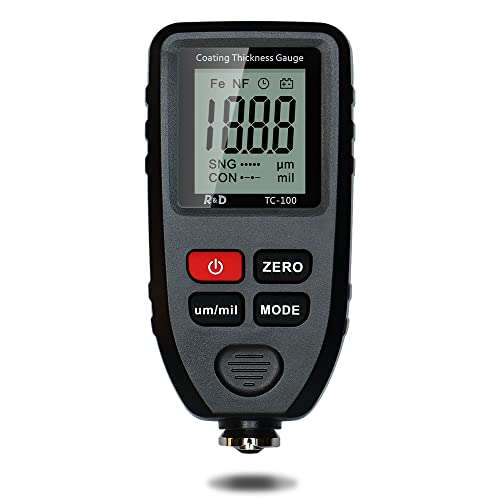
RDINSCOS’s coating thickness meter targets automotive paint inspection with auto-detection for steel and aluminum substrates. It automatically recognizes ferrous and non-ferrous substrates, enabling thickness measurements on metal surfaces without guesswork. Aimed at used-car buyers and inspectors, this device helps identify panels with repainting or concealed repairs by assessing paint depth on various car components. It is designed for metallic surfaces and supports quick checks across multiple panels to uncover hidden damage before purchase.
CM-205FN Paint Thickness Gauge For Cars

VVV-Group’s CM-205FN delivers fast, accurate paint and coating measurements on automotive metal surfaces. It’s ideal for car buyers, body shops, and detailers to detect repainted areas, body filler, or previous repairs, with digital readings shown in mils and microns. The device offers automatic substrate recognition for iron and aluminum, ensuring reliable results during professional inspections or routine checks.
CM-208FN Digital Coating Thickness Gauge

VVV-Group’s CM-208FN focuses on high-precision measurements with auto-recognition of ferrous and non-ferrous substrates. It features a compact, user-friendly design suitable for quick checks during used-car inspections, with readings in multiple units and a robust digital display. This model emphasizes ease of use for automotive professionals and enthusiasts seeking reliable paint depth data on metal surfaces.
EC-770SE Coating Thickness Gauge With External Probe
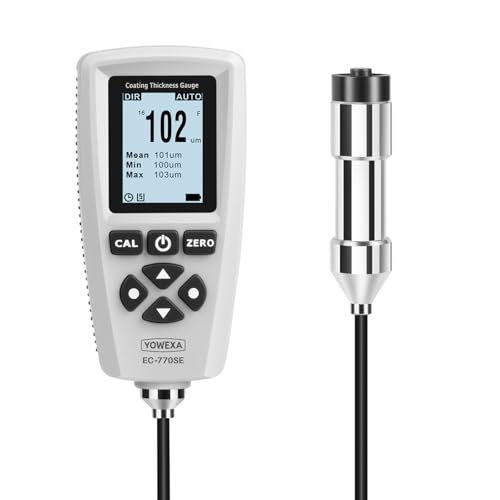
YOWEXA’s EC-770SE provides professional accuracy for automotive and industrial coating checks, using an external ruby-tipped probe for precise measurements on curved or recessed surfaces. It auto-detects Fe/NFe substrates and stores data for later analysis. Its USB export and multi-reading capacity support quick reporting, making it suitable for dealerships, shops, or contractors needing thorough documentation.
CM-818 Digital Professional Coating Thickness Gauge

VVV-Group’s CM-818 is designed for industrial applications, offering high-precision measurements with an expansive data-storage capability and PC/USB connectivity. It supports wide measurement ranges with a three-unit display and a robust sensor setup, enabling detailed documentation and batch checks across metal coatings, paints, platings, and coatings on various substrates.
Buying Guide: Key Considerations For Coating Thickness Gauges
When selecting a coating thickness gauge for automotive use, buyers should weigh several factors to ensure accurate, repeatable results across different substrates and conditions.
- Substrate recognition: Many gauges auto-detect ferrous (Fe) and non-ferrous (NFe) bases. This is essential for vehicles with aluminum panels or mixed metal bodies.)
- Measurement range and resolution: Consider the maximum coating thickness you expect to measure and the smallest increment the device can resolve. Higher-end models offer sub-mil resolutions, which matters for detecting thin repaints or refurbishments.
- Calibration and accuracy: Look for factory calibration options, zero-point calibration, and multi-point calibration modes to maintain accuracy across surfaces and conditions.
- Probe type and geometry: External ruby probes or integrated sensors affect measurement on curved surfaces, recessed areas, or panels with complex geometry. External probes often yield better results on challenging shapes.
- Display and data handling: A large, backlit display (ideally rotatable) supports readability in different lighting. Data storage and export (USB/PC) facilitate reporting and traceability for dealerships and body shops.
- Material compatibility and limitations: Most devices are designed for metal substrates and may not measure coatings on plastics or carbon fiber. Confirm material compatibility for your typical use cases.
- Portability and durability: For field use, mobile, rugged tools with long battery life and simple operation help maintain productivity on site or during inspections on multiple vehicles.
- Cost of ownership: Consider warranty, availability of replacement probes, and customer support when selecting a model for ongoing use.
Across automotive inspections, choosing a gauge with automatic substrate recognition, precise resolution, and easy data export supports objective decisions. The models listed above cover a range from consumer-friendly to industrial-grade, enabling buyers to align a tool with their specific use case—whether for pre-purchase checks, collision repair verification, or detailed paint diagnostics for shop workflows.