When choosing a CNC fabric cutting machine, durability, cutting thickness, and automation features matter most. This guide highlights five capable models widely used in professional settings for multi-layer fabrics, leather, and textiles. Each product offers distinct strengths—from high-powered motors to automatic knife sharpening and cordless operation—helping you select the right balance of power, precision, and convenience.
| Product | Brand | Max Cutting Thickness | |
|---|---|---|---|
| VEVOR Fabric Cutter, 750W | VEVOR | 8.3″ (210 mm) | Automatic knife sharpening |
| BEAMNOVA Fabric Cutter Electric | BEAMNOVA | 1.1″ (28 mm) | Internal sharpening and replacement blade |
| CGOLDENWALL Electric Rotary Cutter | CGOLDENWALL | 1″ (25 mm) | High speed 2400 RPM |
| VEVOR 5-Speed Cordless Rotary Cutter | VEVOR | 1.1″ (27 mm) | Built-in lubrication and replacement blade |
| SENCAN Cordless Rotary Fabric Cutter | SENCAN | 1″ (25 mm) | 880 RPM high speed with 70 mm blade |
VEVOR Fabric Cutter, 750W High-Speed Straight Knife

The VEVOR 750W fabric cutter is designed for industrial use with a 750W copper-motor setup delivering up to 2950 rpm. It handles multiple fabric layers with ease, reducing jams and enhancing batch efficiency. The 9.8″ (250 mm) alloy steel blade offers robust cutting power across textiles, leather, and cloth, with a maximum thickness around 8.3″ (210 mm). An automatic knife-sharpening system maintains blade sharpness during operation, minimizing downtime and manual maintenance.
BEAMNOVA Fabric Cutter Electric Cloth Cutter

BEAMNOVA’s fabric cutter emphasizes ease of use and long blade life with a 250W motor and octagonal alloy steel blades. The device can cut through fabrics up to 1.1 inches thick, delivering fast, clean, and controlled cuts. A built-in internal sharpening mechanism maintains blade sharpness, and the package includes a replacement blade for quick swaps, reducing downtime during production runs.
CGOLDENWALL Electric Rotary Fabric Cutter

CGOLDENWALL offers a high-speed cutting option with a 70 mm octagonal blade and 2400 RPM. The cutter supports multi-layer fabrics up to 25 mm thick and is noted for its straight and curved cutting capabilities. It includes a built-in sharpening stone, and guidance suggests not exceeding the maximum thickness to maintain clean cuts. A versatile choice for industrial and commercial cutting tasks.
VEVOR Fabric Cutter, 5-Speed Cordless Rotary Cutter

This cordless option from VEVOR features a built-in 2500 mAh battery and five speeds (600/800/1000/1200/1400 RPM) for flexible control across fabric types. The 3.9″ (100 mm) octagonal blade cuts up to 1.1 inches thick and includes a lubrication system to maintain smooth operation. An included replacement blade and quick-change battery support extended use without cords.
SENCAN Cordless Rotary Fabric Cutter
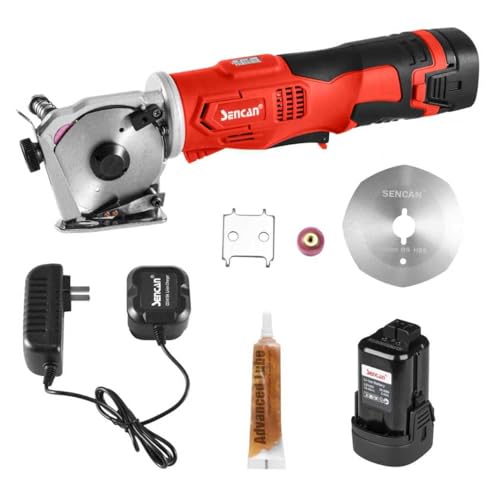
The SENCAN cordless fabric cutter uses a 70 mm blade with an 880 RPM high-speed rotation, enabling rapid cutting of multi-layer textiles and leather up to 1 inch thick. It supports straight and curved cuts, and includes two blades and a 14.4V battery. The cordless design reduces tethering constraints, making it suitable for large-scale projects and mobile workshops.
Buying Guide: Key Considerations For Selecting A CNC Fabric Cutting Machine
- Cutting thickness and materials: If you frequently cut multi-layer fabrics or leather, prioritize higher max thickness and a blade designed for tough materials. Check the stated maximum cutting height and the blade material (alloy steel is common).
- Power and speed: Industrial-grade cutters with 750W or higher motors provide faster, cleaner cuts on dense fabrics. For lightweight tasks, cordless models with 1,000–1,400 RPM offer convenient flexibility.
- Blade design and maintenance: Blade shape (straight vs. octagonal) and automatic sharpening systems reduce downtime. Consider models with built-in lubrication or easy blade replacement to extend tool life.
- Cordless vs. corded: Cordless cutters offer mobility, ideal for large fabrics or remote work floors. Corded options typically deliver uninterrupted power for long runs, important in production settings.
- Portability and ergonomics: A lighter, well-balanced unit reduces operator fatigue. Look for handles, comfortable grips, and compact footprints for shop efficiency.
- Safety features: Ensure equipment includes blade guards, emergency stops, and intuitive lockouts to minimize risk during operation.
- Maintenance and consumables: Availability of replacement blades and affordable spare parts is essential for sustaining production schedules.
- Compatibility with fabrics: Not all cutters handle textiles, leather, and heavy composites equally. Verify compatibility with your core materials and thickness ranges.
- Cost of ownership: Beyond the initial price, factor in blade replacements, batteries, lubrication needs, and maintenance frequency to estimate long-term costs.
When evaluating options, align the machine’s capabilities with daily workflow: batch cutting efficiency, material variety, and the need for mobility. For shop environments requiring continuous operation, prioritize models with automatic blade sharpening and robust motor performance. If flexibility and range of materials are paramount, cordless cutters with substantial battery life may provide the best value despite higher upfront costs.