CIP tank cleaning balls are essential for efficient sanitary processing, delivering reliable spray coverage and preventing residue buildup in tanks. This guide highlights five DERNORD CIP spray balls that span a range of thread types and connection sizes, helping facilities choose the right options for diverse tank geometries and pressures. Each pick combines stainless steel 304 durability with precise spray patterns to support hygiene, compliance, and uptime in food, beverage, and pharmaceutical operations.
| Product | Brand | Connection | Size | Notes |
|---|---|---|---|---|
| DERNORD 3/8″ NPT CIP Spray Ball | DERNORD | 3/8″ NPT Female | 25 mm | 360° spray; 0.3 MPa min |
| DERNORD 3/4″ NPT CIP Spray Ball | DERNORD | 3/4″ NPT Female | 53 mm | 360° spray; 0.3 MPa min |
| DERNORD 1″ NPT CIP Spray Ball | DERNORD | 1″ NPT Female | 53 mm | 360° spray; 0.3 MPa min |
| DERNORD 1.5″ TC X 1/2″ MNPT CIP Ball | DERNORD | 1.5″ TC X 1/2″ MNPT | — | 304 SS; 2 bar / 29 psi |
| DERNORD 1.5″ TC X 1/2″ FNPT CIP Ball | DERNORD | 1.5″ TC X 1/2″ FNPT | — | 304 SS; 2 bar / 29 psi |
DERNORD 3/8″ NPT Rotary Spray Ball Review

The 3/8″ NPT version features a 25 mm ball diameter and a 360° spray pattern. Constructed from 304 stainless steel, it supports a minimum working pressure around 0.3 MPa, offering efficient coverage for small to mid-sized tanks where precise nozzle placement is critical.
DERNORD 3/4″ NPT Rotary Spray Ball CIP
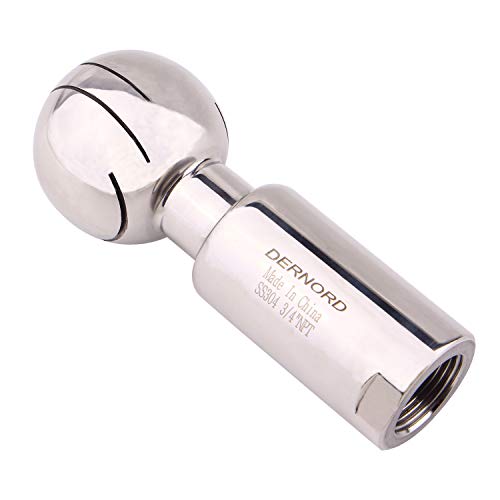
This 3/4″ NPT ball delivers a 360° spray pattern with a 53 mm ball diameter. It is designed for higher flow applications while retaining compact size, and it maintains a minimum working pressure near 0.3 MPa for consistent cleaning performance in larger CIP tanks.
DERNORD 1″ NPT Rotary Spray Ball CIP

The 1″ NPT version maintains a 360° spray examination with a 53 mm ball diameter, suitable for mid-to-large CIP tanks. It supports 0.3 MPa minimum working pressure, balancing cleaning intensity with energy efficiency in higher-volume systems.
DERNORD Sanitary Rotary Ball 1.5″ TC X 1/2″ MNPT

With a 1.5″ TC to 1/2″ MNPT configuration, this sanitary spray ball is made from 304 stainless steel and is recommended for up to 2 bar (29 psi). Its larger TC connection supports higher throughput while maintaining robust sanitation standards.
DERNORD Sanitary Rotary Ball 1.5″ TC X 1/2″ FNPT

This FNPT variant mirrors the MNPT version in material and pressure ratings, offering easy integration with female-threaded CIP systems. It is ideal for installations where a female connection is preferred for compatibility with existing equipment.
DERNORD Rotating CIP Spray Ball 1.5 Inch Tri Clamp

Designed for Tri Clamp systems, this 1.5 inch ball features a 50.5 mm outer diameter. Made from 304 stainless steel, it emphasizes durability and long service life, suitable for frequent cleaning cycles in routine CIP operations.
DERNORD Sanitary Rotary Ball 3″ TC X 1/2″ FNPT

With a 3″ TC to 1/2″ FNPT configuration, this ball is built for larger tanks. 304 stainless steel construction and a recommended 2 bar (29 psi) working pressure deliver reliable cleaning coverage for medium-to-large CIP vessels.
DERNORD Sanitary Rotary Ball 4″ TC X 1/2″ FNPT

For maximum tank diameter coverage, this 4″ TC X 1/2″ FNPT ball provides robust cleaning in large CIP tanks. Made of 304 stainless steel, it supports a recommended working pressure of 2 bar / 29 psi for thorough sanitation routines.
Buying Guide: Key Considerations For CIP Spray Balls
- Tank size and geometry: Choose ball diameter and connection type that align with tank diameter, inlet positions, and spray coverage patterns to avoid dead zones.
- Connection standards: NPT, TC (Tri Clamp), and FNPT/MNPT connections affect compatibility with existing CIP lines and fittings. Ensure mating components are readily available.
- Material compatibility: 304 stainless steel is common and corrosion-resistant for dairy, beverage, and pharmaceutical cleaning. Check for any specific CIP fluid requirements.
- Operating pressure: Select models with minimum working pressures that match your CIP system’s pump output. Higher pressures improve cleaning intensity but may increase wear.
- Maintenance and service life: Consider ease of disassembly for inspection and cleaning, and choose corrosion-resistant, durable designs to maximize service life.
- Spray pattern and coverage: 360° spray balls provide comprehensive coverage. Assess whether your tank requires side-wall or bottom discharge cleaning as well.
- Standards and sanitation: Look for sanitary design features, smooth welds, and cleanability, especially in food and pharma sectors with strict cleanliness requirements.
- Installation flexibility: Some models offer multiple connection options (MNPT, FNPT, TC) to simplify retrofits or upgrades in existing lines.
- Cost vs. benefit: While larger or higher-spec models may cost more upfront, they can reduce cycle times, water usage, and chemical demand over the lifecycle.
In choosing CIP spray balls, balance tank size, cleaning goals, and system pressure to maximize hygienic performance while minimizing downtime and maintenance. The selections above provide varied connection types, sizes, and spray patterns to support diverse CIP applications in American manufacturing contexts.