For hobbyists and makers seeking affordable options to power small boats, model ships, or DIY science projects, compact motors offer a practical starting point. This guide highlights five cost-effective, compact motors and kits that fit a range of applications—from model crafts to educational experiments. Each entry includes key features to help you compare performance, compatibility, and ease of use.
The following summary table presents five selected products at a glance. It focuses on size, drive capability, and intended use to help buyers identify the best fit for their projects.
| Product | Brand | Purpose | Notable Feature |
|---|---|---|---|
| QIEIEI Small Motor for Ship Models | QIEIEI | 3D printed model ships | Easy assembly, safe for beginners |
| AEDIKO 6 Sets DC Motors Kit | AEDIKO | DIY science projects | Six motors and accessories in one kit |
| LICHIFIT Double 130 Motors RC Kit | LICHIFIT | RC model ships | Double motor set for propulsion |
| COKOLATIA RC Boat Kit | COKOLATIA | Remote-controlled boats | 4-channel remote with motor kit |
| The Motor Mixer | Hoyt Mercantile Co | Novelty beverage stirrers | Wind-up, decorative outboard motor |
QIEIEI Small Motor for Ship Models

Designed for 3D printed ships and model builds, this compact motor from QIEIEI provides dynamic motion to bring creations to life. The unit is described as friendly for beginners and hobbyists, offering a safe, easy-to-assemble option suitable for enhancing 3D printing projects. It is positioned for model-makers who value a straightforward setup and reliable operation for inline propulsion in small vessels or display pieces.
Key considerations include compatibility with standard 3D printed housings, torque suitable for light model boats, and the ease of integration with simple gear arrangements. Enthusiasts can leverage this motor to experiment with different propeller configurations and drive systems, creating a tangible moving exhibit from a printed hull.
10 Pcs Boat Motor Coffee Stirrer Kit

These novelty stirrers mimic a miniature outboard motor and are crafted for use with mugs, cups, and glasses. Beyond their playful appearance, the stainless steel clips ensure a secure grip on standard drinkware, allowing the propeller-inspired mechanism to spin and stir beverages with flair. The set has appeal for hobbyists who appreciate quirky desk accessories, bar kits, or gifts for boat enthusiasts.
Considerations for use include durability of the stainless clip mechanism, the stability of the stirring action, and how the wind-up motion translates to consistent mixing. While primarily decorative, the stirrers are functional and can spark conversation at gatherings or themed events, making them a lighthearted addition to a maker’s toolkit.
AEDIKO 6 Sets DC Motors Kit

This six-piece DC motor kit from AEDIKO provides a robust spread for DIY science projects and experimentation. The package includes six DC motors, mounting brackets, two AA battery holders, six boat rocker switches, and various propellers and gears. It targets learners and makers who want to test multiple configurations, power options, and control setups. The motors operate across a voltage range of 3V to 12V with variable performance, appealing to mini projects, small robotics, or educational kits.
Critical considerations involve power supply compatibility, mechanical mounting, noise and heat generation, and the ease of swapping gears and propellers to explore different speeds and torque. This kit supports rapid prototyping and classroom demonstrations, offering a practical entry point into motorized DIY projects.
LICHIFIT Double 130 Motors RC Drive Set

This dual-motor RC kit from LICHIFIT is tailored for small RC boats, ships, and model craft. The set includes two 130 motors, motor seats, copper couplings, shaft, and propeller components suitable for DIY ship projects. It enables gentle dual-drive propulsion, which can improve maneuverability and speed for compact hulls. Builders can pair these motors with propeller kits to create balanced, dual-propeller configurations for precise control.
When evaluating this kit, assess hull compatibility, propeller sizing, and the availability of spare components like couplings and shafts. The configuration supports flexible experimentation with turning radii, thrust, and weight distribution—beneficial for learners refining RC boat construction skills.
4 Stroke 7.5HP Outboard Motor Kit
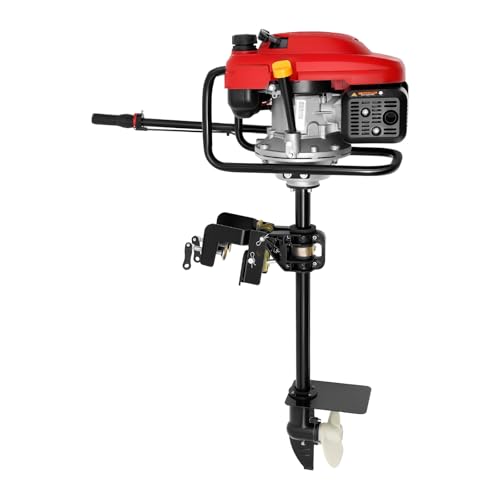
This outboard motor presents a higher power option among compact labels, delivering a 4-stroke design with up to 3.5 kW of output in a relatively lightweight, hand-pull-start configuration. It is designed for boats in the 13 to 19-foot range and emphasizes stable driving, heat dissipation, and efficient cooling. The unit’s continuous variable transmission supports smoother gear changes, which can improve control on longer runs or varied water conditions.
Potential considerations include mounting compatibility with small boats, fuel efficiency, maintenance requirements, and whether the weight fits the intended hull. For hobbyists refreshing or upgrading micro-boat projects, this motor offers a straight path to more substantial propulsion without stepping into full-scale marine engines.
EUDAX Rectangular Mini Motors Kit

The EUDAX kit offers six rectangular mini motors with plastic gears and battery holders, designed for science projects and small experiments. The kit includes several 3V motors, gearing, and a switch, enabling compact setups for educational demos or DIY devices. The emphasis is on high RPM and compact form factors suitable for micro-projects that require quick, modular motor solutions.
Important factors include thermal performance in enclosed housings, compatibility with 2x AA or other small power sources, and ease of assembly for students or first-time builders. For classrooms or hobby benches, such kits can accelerate prototype development and demonstration of motor-driven mechanisms.
Buying Guide: Key Purchase Considerations and Comparisons
- Project scale and motor power: Assess the hull size, weight, and desired speed to choose between tiny hobby motors and more robust 4-stroke options. Smaller models prioritize torque and efficiency at low voltages; larger kits enable higher thrust but require sturdier frames.
- Voltage and power source compatibility: Ensure the motor’s voltage range matches your intended battery or power supply. Many micro motors run on 3V–12V, while others require dedicated power packs or multiple batteries for higher RPMs.
- Mounting, gear ratios, and propeller compatibility: Review mounting holes, shaft sizes, and suggested propeller diameters. Proper alignment reduces vibration and improves efficiency. Double-motor setups offer better maneuverability but require balance considerations.
- Control and integration: If using RC or remote control, verify the kit’s compatibility with controllers, receivers, and optional speed controls. For educational projects, kits with additional gears or switches simplify demonstrations.
- Durability and heat management: Look for components with durable housings and effective heat dissipation, especially for extended use or enclosed spaces. Heat buildup can reduce motor life and performance.
- Ease of assembly and available documentation: Beginner-friendly motors include clear assembly guides and plug-and-play components. For more advanced projects, modular kits allow experimentation with different configurations.
- Component availability and spare parts: Consider the long-term availability of spare gears, shafts, mounts, and housings. Accessible replacements minimize downtime during builds and experiments.
- Budget alignment: Compare individual motor costs against kits with multiple motors and accessories. For learners, starter sets offer value, while seasoned hobbyists may prefer higher-quality cores for custom builds.
These options cover a spectrum from beginner-friendly model motors to more capable propulsion solutions for RC boats. When choosing, match motor size and power to your hull or model’s weight, ensure the power source is appropriate, and confirm that mounting and gear configurations align with your project goals. This approach helps balance cost with performance, ensuring a practical, enjoyable build experience.