Choosing the right ceramic balls for a ball mill is essential for achieving consistent grind size and minimizing contamination. This guide highlights durable, high-performance options across common sizes and materials, helping you pick media that match jar volume, milling speed, and target materials. Read on for practical insights, performance notes, and buying considerations to optimize your milling setup.
Summary of selected products
| Product | Brand | Size/Specification | Material | Notes |
|---|---|---|---|---|
| White Ceramic Grinding Balls – 20mm | Inoxia | 20 mm, 1 kg | Alumina (Al2O3) | Very hard wearing; suitable for medium to large jars |
| White Ceramic Grinding Balls – 13mm | Inoxia | 13 mm, 1 kg | Alumina (Al2O3) | Balanced size for mid-size jars |
| White Ceramic Grinding Balls – 40mm | Inoxia | 40 mm, 1 kg | Alumina (Al2O3) | Ideal for jars up to 3 L |
| uxcell 6mm Ceramic Bearing Balls | uxcell | 6 mm, 25 pcs | ZrO2 (Zirconia) | G5 precision; high heat resistance |
| uxcell 1/4 Inch Ceramic Bearing Balls | uxcell | 6.35 mm, 25 pcs | Si3N4 (Silicon Nitride) | Higher hardness; self-lubricating |
White Ceramic Grinding Balls – 20mm (Inoxia)

Material: Alumina (Al2O3) ceramic. These balls are very hard wearing and ideal for ball milling. Each 1 kg package occupies roughly half a liter, making them suitable for mid-size milling jars. Their consistent size helps achieve uniform grinding and predictable wear patterns, reducing contamination risks and improving repeatability in batch processing.
White Ceramic Grinding Balls – 13mm (Inoxia)

Material: Alumina (Al2O3). This size offers a balance between throughput and surface contact for mid-sized jars. The 13 mm balls are very hard wearing and well suited for achieving consistent particle size distribution in routine milling tasks, with reliable resistance to wear and breakdown under typical milling cycles.
White Ceramic Grinding Balls – 40mm (Inoxia)

Material: Alumina (Al2O3). The 40 mm size is intended for large-volume milling or jars up to about 3 liters. These balls provide robust impact in high-energy milling and can reduce milling time for larger batches, while maintaining low abrasion and minimizing contamination when properly matched to a compatible jar.
uxcell 6mm Ceramic Bearing Balls

Material: ZrO2 (zirconium oxide). A G5 precision grade with a pearly luster and smooth surface. These 6 mm balls are designed for high-precision milling setups, offering excellent thermal stability, corrosion resistance, and self-lubricating traits for reduced wear on contact surfaces in small to mid-sized mills.
uxcell 1/4 Inch Ceramic Bearing Balls

Material: Si3N4 (Silicon Nitride). Diameter 1/4 inch (6.35 mm); features a smooth surface, G5 precision grade, and self-lubricating properties. This high-hardness material offers superior wear resistance compared to standard chrome steel balls, making it a strong choice for demanding milling tasks where contamination control is critical.
uxcell 100pcs Ceramic Bearing Balls 1/8″ (3.175mm)

Material: Si3N4 (Silicon Nitride). Size 1/8″ (3.175 mm) with good dimensional stability and a smooth surface. G5 precision grade and high hardness make these suitable for precision milling tasks, especially when used in smaller jars or when tighter size tolerances are needed to reduce wear and ensure repeatable results.
Large Ball Mill Jars – 6 L
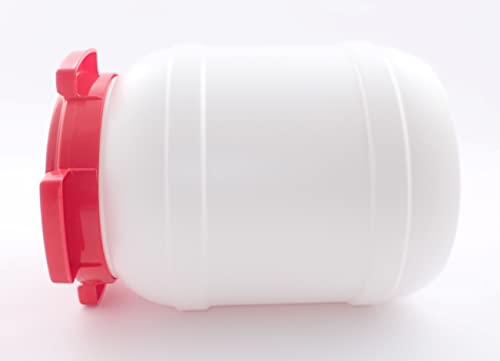
Material: Inoxia. These large jars provide airtight and watertight milling environments with wide neck openings and integrated rubber rings, designed for big milling projects. When pairing with large media like 40 mm balls, ensure jar capacity and motor power match the intended throughput to avoid overloading the mill.
Buying Guide: Key Purchase Considerations
Material and hardness: Alumina (Al2O3) balls are common and reliable for general milling, offering good hardness and chemical stability. Zirconia (ZrO2) and silicon nitride (Si3N4) options deliver superior hardness and thermal performance, with higher cost but reduced wear and contamination potential in some applications.
Size and jar compatibility: Match media size to jar volume and milling speed. Larger jars require bigger media to optimize impact energy, while too-small media can wash out efficiency. A mix of sizes often yields better grind distribution for heterogeneous samples.
Load and wear considerations: Keep a balance between media volume and jar capacity to prevent mill overloading. Excessive media can cause binding, higher energy consumption, and accelerated wear on bearings and jars.
Contamination risks: Ceramic media minimize metal contamination compared with steel, but some brands may introduce trace elements. For highly sensitive samples, select high-purity media and verify supplier certifications when available.
Cost and availability: High-precision ceramics (Si3N4, ZrO2) tend to be pricier. Evaluate total cost of ownership, including replacement rates, downtime, and the impact on batch consistency. Availability varies by supplier and region, so consider multiple sources.
Maintenance and handling: Ceramic balls can be brittle under certain impacts. Inspect balls for chips or cracks before reuse. Store media in clean, dry conditions to prevent moisture-related degradation in some materials.
Application fit: For large volumes and jars up to several liters, bigger media (like 20–40 mm) can improve throughput. For fine, uniform particle sizes or specialized materials, smaller media (3–6 mm or 6–6.35 mm) with high hardness may be preferable.