Choosing a reliable cement for high-heat applications helps prevent cracks, leaks, and gaps in stoves, furnaces, and fireboxes. This guide reviews top-rated high-temperature cements from trusted brands, highlighting bond strength, heat tolerance, and suitability for metal, brick, and ceramic surfaces. Each product section includes a direct Amazon link, an image, and key features to aid selection.
| Product | Brand | Heat Tolerance | Best Use |
|---|---|---|---|
| Rutland Furnace Cement 16 oz | RUTLAND PRODUCTS | Up to 2,000°F | Metal joints, stove repairs |
| Rutland Refractory Cement 64 oz | RUTLAND PRODUCTS | Up to 3,000°F | Firebox and firebricks |
| ComStar Furnace Cement 1 Quart | ComStar | Up to 3,000°F | Stone, metal, brick, ceramic bonding |
| Rutland Dry Mix 211 Refractory Mortar 10 lb | RUTLAND PRODUCTS | Up to 2,550°F | Masonry joints, firebox parge work |
| Meeco’s Red Devil 16 oz Furnace Cement | MEECO’S RED DEVIL | Up to 2,000°F | Repair and bonding in high heat |
Note: All products are designed for high-temperature environments, but application surfaces, curing, and temperature exposure can influence performance. Review the manufacturer’s instructions for surface prep, curing times, and heat cycling limitations before use.
Rutland Furnace Cement, 16 oz — Pre-Mixed High Temperature Cement

Rutland Furnace Cement is a ready-to-use high-temperature cement designed to firmly adhere to metal. Its smooth consistency bonds metal-to-metal or metal-to-masonry joints, suitable for repairing stove cracks, sealing joints, resetting firebricks, attaching stove collars, or filling ceramic logs. Ideal for wood stoves and boilers, this cement is marketed as a USA-made option in a black formulation for metalwork applications.
Key features include:
- Ready-to-use, no mixing required
- Strong bond to metal and masonry
- Suitable for stove repairs and sealing ceramic components
Applications: stove collars, joints, firebox sealing, and related high-heat repairs. Consider this option when metal-to-metal bonding is the priority and quick readiness matters.
Rutland Refractory Cement 64 oz — Fiber-Reinforced High Temperature Cement
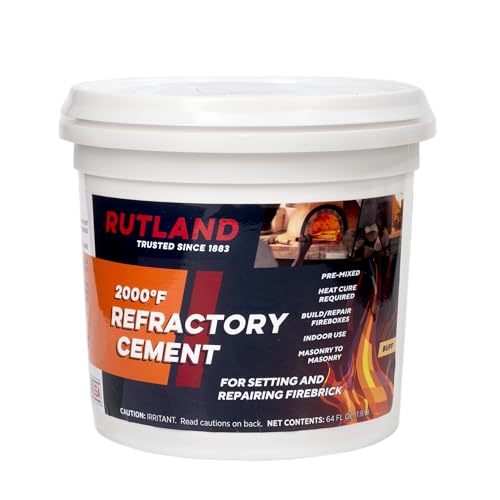
Rutland’s 64-ounce refractory cement is a pre-mixed, fiber-reinforced product designed for interior use in fireboxes. It adheres well to masonry and can fill gaps between firebricks, making it well-suited for repairing masonry joints and firebox surfaces. The thicker, smooth consistency helps create durable mortar-like joints for longer-lasting performance.
Key features include:
- Pre-mixed and ready to use
- Fibers enhance bonding and crack resistance
- Primarily for interior firebox and masonry repairs
Applications: firebox patching, gaps between firebricks, and general interior high-heat repairs. It’s a robust option when large areas need filling and durable internal joints are required.
ComStar Furnace Cement 1 Quart — Refractory & Retort Cement

ComStar furnace cement is a ready-to-use refractory cement that bonds to stone, metal, brick, and ceramic. It’s advertised as smokeless, acid-proof, and gas-tight, with a stated resistance to temperatures up to 3,000°F. The cement is described as ideal for sealing flue pipes, attaching stove collars, and resetting firebricks, delivering a versatile option for various high-temperature applications.
Key features include:
- No mixing required; ready to apply
- Strong bond across multiple substrates
- Extreme heat tolerance up to 3,000°F
Applications: repairs and sealing in stoves, fireplaces, and related high-heat environments. This cement is suitable for users seeking a broad-surface cement with durable heat resistance.
Rutland Dry Mix 211 Refractory Mortar 10 lb — Masonry High-Temp Mortar
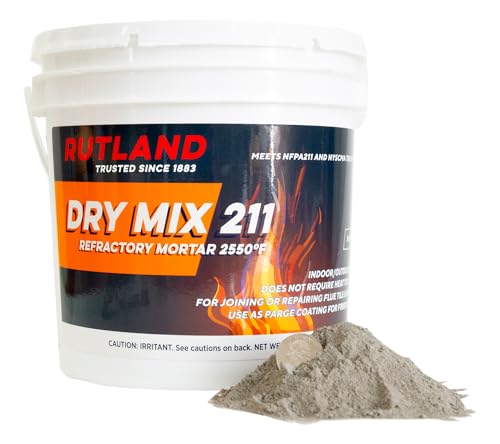
Rutland Dry Mix 211 is a dry refractory mortar designed to be mixed with water before use. It’s intended for joining or repairing masonry flue tiles in gas or wood fireplaces and stoves. The mortar can also serve as a parge coat for firebox exterior repairs, delivering a flexible option for those who prefer adding their own water mix ratio and application control.
Key features include:
- Dry mix, add water before use
- Suitable for firebox parge coatings
- Up to 2,550°F performance for masonry repairs
Applications: fireplace chimney repair, firebox plastering, and masonry joints where high heat is present. It’s a solid choice when wanting a mortar-like product with adjustable consistency.
Rutland Dry Mix 211 Refractory Mortar 2.5 lb — Small-Quantity Version

This smaller 2.5-pound version of Rutland 211 provides the same base capabilities in a compact package, ideal for minor repairs or touch-ups. It requires water mixing and cures in air, making it accessible for quick projects or smaller stoves and fireplaces where only a thin repair is needed.
Key features include:
- Water-mix dry mortar
- Non-heat-cured; air-cures over time
- Suitable for minor repairs and parge coats
Applications: small repair jobs, patching, and light mortar work around fireboxes or flues where precise control over the mix is advantageous.
Meeco’s Red Devil 1353 Gray Furnace Cement — 16 oz
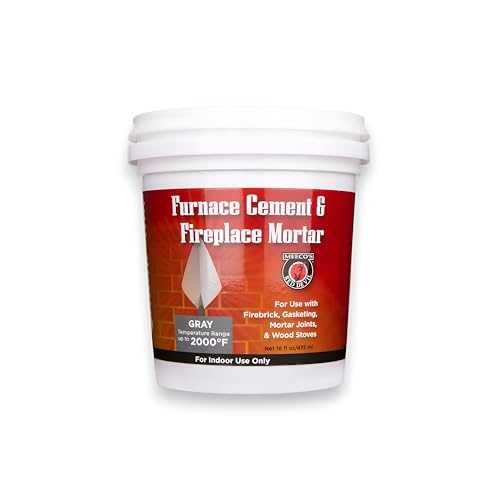
Meeco’s Red Devil gray furnace cement is a high-temperature sodium-silicate-based compound designed for repairing, sealing, and bonding in hot environments such as furnaces, stoves, and fireboxes. It is suitable for patching cracked firebrick and mortar and for cementing furnace components, chimney collars, boilers, and ductwork. It tolerates continuous operation up to 2,000°F, offering durable performance in many common high-heat scenarios.
Key features include:
- High-strength, ready-to-use cement
- Repair and sealing of high-heat joints
- Heat resistance up to 2,000°F
Applications: repairs and bonding where quick setup and robust heat resistance are needed, particularly in residential stoves and small fireplaces.
Buying Guide: Key Purchase Considerations
- Temperature rating: Match the cement’s maximum heat tolerance to the environment. Fireplaces and stoves often require cements rated at 2,000–3,000°F, while some repairs in less extreme areas may suffice with 1,500–2,000°F products.
- Substrate compatibility: Ensure the cement bonds well to the intended surface—metal, brick, stone, or ceramic. Some products emphasize metal-to-metal bonding; others excel on masonry or firebox bricks.
- Form factor: Pre-mixed versus dry-mix. Pre-mixed cements are convenient and ready-to-use, while dry-mix mortars let you tailor consistency for large joints or parge coats.
- Setting and cure: Consider whether air-curing or heat-cure is required. Dry-mix mortars may rely on air curing, while some products require gradual heating for full strength.
- Application scope: For comprehensive firebox repairs, choose a product rated for joint sealing, brick resetting, and collar attachments. For minor patches, a smaller tube or tub may suffice.
- USA-made options: If supporting domestic manufacturing matters, several brands offer US-made cements with reported performance in high-heat scenarios.
- Safety and handling: Follow ventilation guidelines, wear protective gear, and observe curing times. Some cements are formulated to be smokeless, but proper curing remains essential.
- Repair type: Decide between fixing cracks, rebuilding gaps, or sealing joints. Some cements are better for bonding metal-to-metal, others for masonry restoration.
In practice, a combination approach is common: use a ready-to-use cement for initial sealing and metal joints, and a durable refractory mortar for larger masonry repairs or firebox parge coats. Always follow the manufacturer’s instructions for surface prep, curing, and safe usage in high-heat environments.