Whether you’re casting precious metals, refining alloys, or creating small metal parts, the right mold makes all the difference. The following best-in-category metal casting molds cover sturdy sand casting frames, graphite ingot molds, and loaf ingot molds. Each option supports a range of metals including gold, silver, copper, aluminum, and brass, and many are designed for hobbyists and professionals alike. Read on to compare features, materials, and typical applications to help you choose the ideal mold for your project.
Summary of chosen products:
| Product | Brand | Material | Notable Use |
|---|---|---|---|
| Cast Iron 2-Part Flask Mold Frame | SIMOND STORE | Cast Iron | Sand casting for jewelry and small parts |
| Nelyrho 100 oz Loaf Ingot Mold | Nelyrho | Cast Iron | Cast, melt and refine non-ferrous metals |
| 100 oz Gold Bar Loaf Ingot Mold | Bonbo | Cast Iron | Gold, silver, copper, aluminum casting |
| MMasters Graphite 4-Round Ingot Mold | Molten Masters | Graphite | Gold, silver, copper, aluminum casting |
| Cast Iron 2-Part Sand Casting Flask Mold | PMC Supplies LLC | Cast Iron | Delft Clay & Petrobond sand casting |
Cast Iron 2-Part Flask Mold Frame for Sand Casting Jewelry Metal Casting

This durable flask mold frame is built from cast iron to deliver strong heat resistance and corrosion resistance, making it suitable for jewelry casting and metalsmithing. Designed to endure repeated use in heat-intensive casting tasks, it supports a reliable mold frame for hobbyists and professionals alike. The frame coordinates with Delft clay and petrobond casting sands and is compatible with several metals, including gold, silver, copper, and brass. Its sturdy construction helps maintain alignment during casting, reducing the risk of miscasts.
Key features include robust corrosion resistance, heat stability, and compatibility with common casting sands. The design supports both beginners and seasoned casters seeking a durable, reusable mold frame that can handle various small-scale metal projects. Use this mold for creating jewelry pieces, coins, and other small metal components with precision and repeatability.
Nelyrho 100 oz Troy Ounce Cast Iron Loaf Bar Ingot Mold
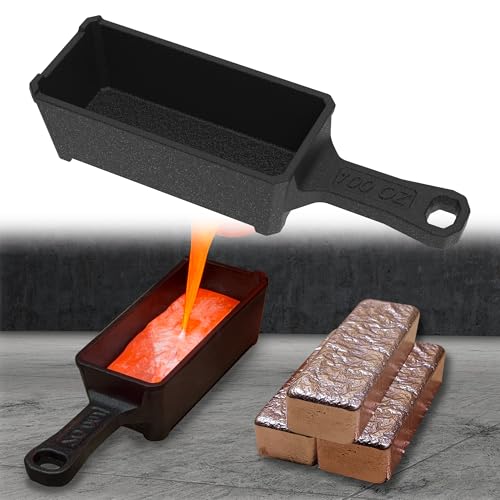
This loaf ingot mold holds up to 100 troy ounces and is sized for comfortable handling during melting and pouring. Made from premium cast iron, it offers good thermal conductivity, high temperature resistance, and durability for repeated use. The wide application range covers refinement and casting of non-ferrous metals such as gold, silver, copper, aluminum, and brass. The mold can also function as a graphite crucible alternative for certain workflows, expanding its versatility in a metalworking shop.
The mold design emphasizes reliability and control, with dimensions that fit standard tongs and furnaces. It’s suitable for hobbyists performing small to medium-scale ingot production as well as professionals refining metals. The tool’s sturdy build helps ensure consistent ingots and reduces the risk of sticking or warping during withdrawal from the mold.
100 oz Troy Ounce Gold Bar Loaf Ingot Mold For Smelting And Refining

This 100-ounce loaf ingot mold is designed for heavy-duty casting of precious metal ingots. The structure accommodates up to 100 troy ounces and is particularly well-suited for gold and silver pouring, with compatibility for other metals such as copper, aluminum, and brass. The design includes a handle that aids in control during pouring, helping to minimize heat transfer injuries and improve safety. This mold’s interior cavity is engineered to promote easy release and consistent bar shapes.
With its high durability and specialized use for precious metals, this mold is ideal for small foundries, precious metal refiners, and serious hobbyists who require reliable, large-volume ingots. The frame ensures straightforward removal, and the overall build supports precise, repeatable ingot production over many pours.
MMasters 4-Round Graphite Ingot Mold

This graphite ingot mold features four round cavities and high-purity graphite with low ash content, aiding metal purity at high temperatures. It’s designed for efficient melting and pouring for non-ferrous metals like gold, silver, copper, and aluminum, making it suitable for laboratories, jewelry work, and metal processing. The compact outer dimensions and individual round cavities enable multiple ingots per pour, improving production efficiency. It’s rated to handle high-temperature use, minimizing deformation and wear over time.
The mold’s graphite construction provides excellent thermal conductivity and easy release, reducing sticking and improving workflow. It’s well-suited for both small-scale jewelry production and experimental alloy casting. Its durability supports repeated heating cycles, though graphite molds may require handling care to prevent cracking from rapid temperature changes.
MMasters 4kg Premium Graphite Ingot Mold

This larger graphite ingot mold holds up to 4 kg of gold or 2.12 kg of silver, with dimensions designed to maximize ingot size while maintaining safe handling. The premium graphite construction ensures high temperature resilience and durability for repeated use, with minimal ash content to promote metal purity. It’s ideal for melting and analyzing non-ferrous metals and is suitable for jewelry studios, research labs, and metalworking shops that produce larger ingots.
Users should consider volume requirements, furnace capacity, and handling logistics when selecting this mold. The slightly larger cavity size enables efficient production of substantial ingots, while the graphite material offers reliable release and thermal performance across various metal types.
Nelyrho 4 Pieces 1kg Graphite Ingot Molds

Set of four 1 kg graphite ingot molds crafted from high-density, fine-grained graphite (99.9%). These molds are designed for refining and casting, offering a consistent release and durability under high temperatures. The identical dimensions across the four pieces simplify batch production of uniform ingots, which is useful for refiners and jewelers who produce multiple units per session. The graphite construction helps maintain metal purity with minimal ash content, aiding both visual and chemical inspection of ingots.
Consider using these molds for small-scale refining of gold, silver, copper, or brass. As a multi-pack, they’re a good value for studios that require multiple ingots per casting cycle, while still offering the precision expected from graphite tools.
Cast Iron 2-Part Sand Casting Flask Mold Frame for Delft Clay and Petrobond

This two-part sand casting flask frame is designed for Delft Clay and Petrobond sands, offering reliable alignment with four locating pins to ensure neat, accurate mold reproduction. The measures of 4-3/4″ x 3″ x 2″ provide a compact yet capable frame for jewelry pieces, coins, and small metal components. Cast iron construction delivers robust heat resistance and durability for repeated use, supporting consistent results in sand casting workflows. A practical option for hobbyists experimenting with different sand molds and metals in a small-foundry setup.
Consider the balance between ease of setup and repeatable accuracy. The 4 locating pins reduce movement during pouring, which can improve yield and consistency when casting intricate shapes. This mold is well-suited for those who want a dependable, affordable frame for Delft Clay or Petrobond-based casting projects.
Simond Store 2 Part Sand Casting Mold – Cast Iron Flask Frame

This 2-part sand casting mold from Simond Store emphasizes durability and versatility. Cast iron construction provides heat tolerance and corrosion resistance, suitable for jewelry tools and metalsmithing. The mold supports gold, silver, copper, and brass and is compatible with sanding and other casting sands for various processes. Its robust build makes it suitable for both professional shops and serious hobbyists seeking reliable, long-lasting metal casting molds. The design helps ensure stable alignment for clean, repeatable casts across multiple sessions.
The mold offers a balance of strength and practicality, enabling straightforward duplication of shapes and smooth release during demolding. It is appropriate for a range of foundry projects, from small jewelry pieces to cast components, thanks to its sturdy construction and compatibility with common casting sands and methods.
Buying Guide: Key Purchase Considerations
Material: Cast iron molds offer durability, heat resistance, and low cost, ideal for hobbyists and small studios. Graphite ingot molds provide superb thermal conductivity and easy release, but may require more careful handling due to temperature sensitivity and fragility. Consider your metal type, pour temperatures, and number of pours per session when choosing a material.
Capacity and size: Ingot molds come in various volumes (from 1 kg to 4 kg and 100 oz capacity). Match capacity to your typical batch size to prevent overfilling and ensure efficient workflow. Loaf ingots are best for long, rectangular pours, while smaller round graphite cavities enable multiple ingots per cycle.
Release and maintenance: Graphite molds offer clean release but require careful handling to avoid microcracks; iron molds can accumulate scale and may need cleaning between pours. Look for designs with smooth cavities and easy demolding features to reduce waste and improve yield.
Compatibility: For sand casting frames, ensure the mold matches your preferred sands (Delft Clay, Petrobond, or other casting sands) and your process (lost-wax, direct pour, or finishing steps). Frames with alignment pins improve repeatability, particularly in jewelry casting or coin production.
Safety and ergonomics: Inspect handles, levers, and grip areas on large ingot molds for operator safety, especially when pouring hot metals. Ergonomic features can reduce fatigue during long casting sessions and help maintain precision over multiple pours.
Cost vs. durability: While graphite molds may have higher upfront costs, their longevity and purity can justify the investment for precise ingot production. Cast iron molds typically offer excellent durability at a lower price point but may require more maintenance with repeated heats.
Brand and support: Consider brands with clear product documentation, warranty options, and responsive support. For hobbyists, reputable brands with corroborating user feedback can reduce the risk of miscasts and material failure.
Intended use and compatibility: If you plan to cast precious metals, verify the mold’s suitability for high-purity metals and its tolerance for long pours. For general metal casting or education labs, a more versatile, multi-metal mold with straightforward demolding might be preferable.
Maintenance routine: Regular inspection for cracks, warping, or residue is important. Clean molds after use, dry thoroughly, and store in a dry environment to extend their lifespan and ensure consistent results for future projects.