Choosing the right bucket attachment can dramatically improve the speed and quality of small- to mid-sized earthworks. This guide highlights five top buckets designed for mini excavators, focusing on material handling, trenching, slope leveling, and ditch cleaning. Each option offers durability, compatibility, and practical features to fit common job sites in the United States. Read on to compare specs, performance notes, and key factors to consider before buying.
| Product | Brand | Key Use | Notable Feature |
|---|---|---|---|
| DANWIWEE Mini Excavator Bucket Attachments, 20″ No Teeth Flat Backhoe Buckets | DANWIWEE | Loading sand and soil, ditch cleaning | Wide 20″ edge; manganese steel; easy install |
| MMS 19.69″ Flat Tooth Backhoe Bucket | MMS | Slopes leveling, material handling, ditch dredging | Reserved side panel holes for versatility |
| MMS 7.87″ Narrow Backhoe Bucket | MMS | Narrow trenching and precise digging | Compact 200 mm/90 mm dimensions, durable teeth |
| 39.3″ Hydraulic Cylinder Tilting Bucket | MMS | Wide-area grading and backfill | Large 1000 mm width; U.S. warehouse stock |
| 500mm Flat Bucket Accessories (Toothless) | yihaoa | River dredging, slope leveling, cleaning | Wide 500mm edge; durable manganese steel |
Note: Each product below is a practical choice for common mini excavator tasks, such as leveling slopes, dredging ditches, and loading soft materials. The selections emphasize compatibility with machines in the 0.8–1.8 ton to 1–3 ton range, welded construction, and straightforward installation.
DANWIWEE 20″ No Teeth Flat Backhoe Bucket
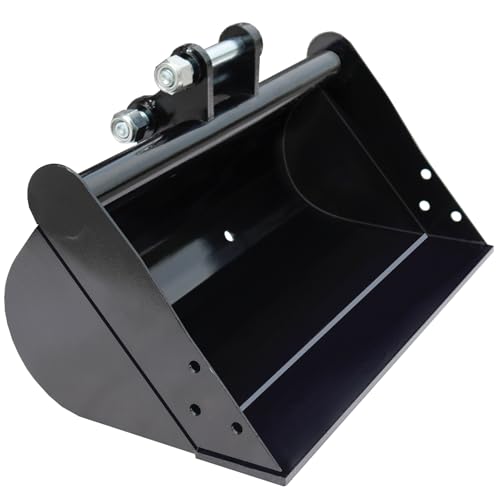
The DANWIWEE 20″ No Teeth Flat Backhoe Bucket is designed for efficient surface leveling and material loading with a straight edge. Its flat design makes it ideal for smoothing soft materials like sand and soil, as well as dredging rivers and ditches. The 25 mm hole and standard wheelbase provide compatibility with most mini excavators, while manganese steel construction offers improved wear resistance and durability for long-term use. Suitable for quick material relocation and textural finishing on sloped terrain, this bucket supports steady, economical operation on small sites.
Key specifications and considerations:
- Edge: Straight 20″ / 500 mm for leveling and dredging tasks
- Material: Manganese steel for durability
- Compatibility: 25 mm hole, 88 mm center wheelbase
- Best use: Soft materials (sand, soil) and surface finishing
MMS 19.69″ Flat Tooth Backhoe Bucket

The MMS 19.69″ (500 mm) flat toothed bucket adds versatility with a shallow, flat profile that’s well-suited for grading, leveling slopes, and ditch work. It includes reserved side panel installation holes, which can increase attachment flexibility for various tasks. The manganese steel composition offers abrasion resistance, helping this bucket withstand repeated use in challenging environments. Before purchasing, verify dimensions to ensure a perfect fit with your mini excavator.
Key specifications and considerations:
- Span and hole: 90 mm / 3.54 in; 25 mm / 0.98 in
- Durability: High-quality manganese steel
- Versatility: Side panel holes for added task options
- Best use: Material handling, leveling, and ditch dredging
MMS 7.87″ Narrow Backhoe Bucket

The MMS 200 mm (7.87″) narrow backhoe bucket emphasizes precision trenching and tight digging for pipelines, drainage, or landscaping. Constructed from manganese steel, it provides wear resistance and durability for repeated use in compact excavations. It’s designed for compatibility with minis in the 0.8–1.8 ton range, with pin center dimensions of 90 mm to ensure a secure fit. This bucket is a solid choice when trench width and control are essential on smaller sites.
Key specifications and considerations:
- Width: 200 mm / 7.87″ for narrow trenching
- Material: Manganese steel for rugged performance
- Compatibility: 90 mm pin centers
- Best use: Narrow trenches, precise digging, landscaping
39.3″ Hydraulic Cylinder Tilting Bucket

The 39.3″ hydraulic tilting bucket is a large-capacity option for graders and muckers, designed to cover broader work areas. It’s engineered for compatibility with 1-3 ton mini excavators. The bucket’s wide profile supports efficient material spreading, leveling, and backfilling, while its fast availability from a U.S.-based warehouse reduces downtime. The attachment includes standard dimensions: 25 mm hole diameter, 88 mm wheelbase, and 120 mm span, with M14 hydraulic threading. Installation is straightforward with included pins and hoses.
Key specifications and considerations:
- Length: 1000 mm / 39.3 inches
- Connection: 25 mm hole, 88 mm wheelbase, 120 mm span
- Hydraulics: M14 oil thread
- Best use: Large-area grading, leveling, trench backfill
500mm Flat Bucket (Toothless)

The 500 mm flat bucket from yihaoa is designed for efficient surface work—leveling slopes, dredging, and cleaning ditches without teeth. Its wide edge supports rapid material movement, and the manganese steel construction ensures durable performance in wet or abrasive conditions. It is compatible with most small excavators and features a standard 25 mm hole and 88 mm center wheelbase. This toothless design is ideal when cutting and digging aren’t required but surface finishing and debris removal are the priority.
Key specifications and considerations:
- Width: 500 mm / 20 inches
- Material: Manganese steel
- Compatibility: 25 mm hole, 88 mm wheelbase
- Best use: Dredging, slope leveling, general cleaning
Buying Guide: Key Purchase Considerations For Mini Excavator Buckets
Selecting the right bucket attachment involves weighing machine compatibility, task requirements, and site conditions. Consider these perspectives to choose wisely:
- Machine compatibility: Verify pin diameter, center-to-center distance, and overall width to ensure a secure fit on your specific mini excavator model. The most common specs to confirm are hole diameter (often 25 mm) and center wheelbase (usually around 88–90 mm).
- Task alignment: For trenching and precise digging, narrow buckets with reinforced teeth or flat-edged designs excel. For cleaning, leveling, or dredging, wide toothless or flat-edge buckets speed up material movement.
- Material and durability: Manganese steel is standard for durability and wear resistance. Evaluate whether your tasks involve hard soil, clay, or abrasive materials, which may demand higher resistance or additional reinforcements.
- Single-use versus multi-function: Some buckets offer side panel holes for extra versatility or integrated features like hydraulic tilting. Weigh whether this flexibility justifies any potential extra weight or cost.
- Install and maintenance: Ensure the bucket package includes pins and hydraulic hoses if needed. Quick installation reduces downtime, while proper maintenance extends service life (cleaning, inspection for wear, and replacing worn teeth when applicable).
Other factors to consider include travel and storage constraints on the job site, availability of replacement parts, and whether you need a single bucket for a range of tasks or specialized buckets for specific work streams. By assessing these angles, you can match a bucket to the job profile, machine, and environment—optimizing productivity and reducing wasteful changes mid-project.