Choosing the right binding attachment can streamline edge finishing on industrial sewing projects. This guide highlights five highly compatible options, detailing what each does best, so you can match your machine and workflow to the right accessory.
| Product | Brand | Key Benefit |
|---|---|---|
| Plain Edge Binder For Singe Needle Sewing Machines | Cutex | RAW finish top and bottom; folds tape around fabric |
| Binding Curve Edge Folder | Hicello | Ideal for curve edges; supports many brands |
| Plain Raw Edge Single Fold Binder | ckpsms | Swing away, adjustable; fits multiple machines |
| Flat Folder Binding Attachment | WQAPVHBG | Guide rail design; compatible with 2/3 needle machines |
| Double Fold Binder Attachment | ckpsms | Swing away; clean top & bottom finish |
Plain Edge Binder For Singe Needle Sewing Machines

The Plain Edge Binder is designed to fold tape in half around fabric to create a RAW finish on both edges. It is used to insert Tape, Braid, or Binding along garment edges as shown in accompanying diagrams. This model includes 2 attachment mounting thumb screws for secure installation on compatible machines. It fits brands like Juki, Sailrite, and Singer, making it a versatile choice for many industrial setups.
In operation, the binder helps maintain a neat edge by guiding tape into position before stitching, reducing manual handling and ensuring consistent results across batches. Its straightforward design emphasizes reliability in repetitive production environments, where speed and uniformity are critical. Users should verify bed mounting compatibility with their specific machine model before purchase to maximize performance.
Hicello Binding Curve Edge Folder

The Hicello binding curve edge folder is designed for inside curving operations such as necklines and armholes. It excels at binding curve edges and is compatible with BROTHER, SINGER, PFAFF, JANOME, JUKI, and other major brands. The product size and tape specifications are tailored to 30 mm (1.18″) tape, with a finished edge around 6.0 mm. This attachment supports precise, curved seam work, which is essential for contour fittings and professional-looking curves. When selecting this folder, ensure your machine bed accepts the mounting holes and that the binding tape width matches your project requirements.
CKPSMS Swing Away Adjustable Plain Raw Edge Binder
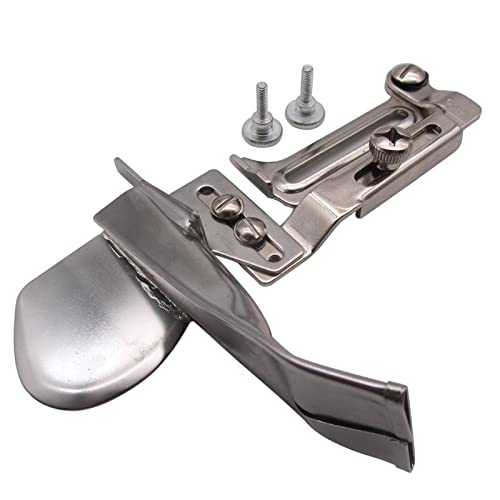
The CKPSMS Adjustable Plain Raw Edge Binder (A4B) features a swing-away design that lets operators move the binder out of the way when not needed. It’s described as raw-edge capable and fits machines with attachment mounting holes in the bed, including single-needle and walking-foot models. The binder ships with two mounting screws, allowing quick installation and removal. This model is suitable for factories that require intermittent binding operations without full-time binder engagement. Make sure your machine bed matches the mounting pattern before purchasing.
WQAPVHBG Flat Folder Binding Attachment

The WQAPVHBG binding attachment features a guide rail design to fold the tape around fabric, helping keep the tape straight for roll hems and similar operations. Made from metal for durability, it’s built to withstand long-term industrial use. Its inlet/outlet sizing supports 1-3/8″ tape entering and 1/2″ exiting, and it’s advertised as compatible with 2- or 3-needle flat lock machines. This makes it a solid option for factories needing consistent tape application across multiple machines without frequent adjustments.
Zerodis Adjustable Flat Seamer Double Folder Binder

The Adjustable Flat Seamer Double Folder Binder by Zerodis is designed for industrial sewing machines and can accommodate a range of machines, including older models. It emphasizes ease of use without removing the binder from the machine, thanks to a swing-away design. The binder is built from alloy materials to resist wear and corrosion in demanding environments. It’s positioned as a practical choice for finishing edges with a two-fold binding that creates a clean appearance on both sides of the fabric. Operators should confirm mounting compatibility and tape width requirements before purchasing.
Buying Guide: Key Considerations for Choosing a Binding Attachment
Choosing the right binding attachment depends on a few core factors. First, verify compatibility with your sewing machine family (industrial, walking foot, single needle, or flat bed). Check mounting holes, bed size, and whether the binder uses a swing-away design, which can save space and time in busy workflows. Tape width compatibility matters; most binders support common sizes such as 1″ (26mm) or 1-3/8″ (35mm), but exact tolerances vary. Material quality is important for industrial use; metal constructions tend to offer better durability and wear resistance than plastic. For curved edges, curve-edge folders are essential, while straight edge folders excel in uniform, straight hems. Finally, consider installation ease and whether the attachment requires tools; some models include mounting screws for quick fit, while others may need additional hardware. When evaluating options, compare the ease of operation, the binder’s ability to stay aligned during sewing, and how it integrates with your existing workflow and fabric types.
In practice, many shops prioritize swing-away designs for flexibility, allowing operators to switch between freehand binding and binding tasks without full removal from the machine. Others rely on a sturdy guide-rail system to keep tape aligned as fabrics move through the feed, ensuring consistent edges across high-volume runs. Users should weigh the balance between precision, speed, and the specific edge finishes their projects require, whether a raw edge, single fold, or double fold binding, to select the most suitable attachment.
Also consider the range of machines the attachment claims to support. Some binders advertise broad compatibility with brands like Juki, Brother, Singer, Janome, and other common industrial models. If your inventory includes multiple brands, a universal or swing-away binder can reduce inventory management complexity. Finally, always verify technical specifications: tape size range, finished edge width, and whether the binder supports inside curve work or only flat edges. Matching these details to your production needs helps ensure reliable performance and consistent quality across runs.