Choosing the right battery watering system is essential for maintaining lead-acid batteries in industrial settings. This guide highlights reliable options designed for heavy-duty use, offering automatic shut-off, gravity-fed and direct-fill capabilities, and compatibility with common battery configurations. Below, you’ll find concise product summaries and a buying guide to help you compare features, installation ease, and long-term value.
| Product | Brand | Key Feature |
|---|---|---|
| Battery Watering Gun Filler with Auto Shut Off | LHNY | Auto shut-off; versatile bayonet fit |
| Battery Watering Technologies – Direct Fill Link | Battery Watering Technologies | Direct fill; durable flow indicator |
| 36V Forklift Battery Watering System | LHNY | Single-connection, accurate filling |
| Battery Watering Technologies K1200B-GLFBCTB | Battery Watering Technologies | VB-TBU valves; 12-cell compatibility |
| NT2212GFR Gravity Feed Tank – 2.5 Gallon | Battery Watering Technologies | Gravity-fed; compatible connectors |
Battery Watering Gun Filler With Auto Shut Off

The LHNY Battery Watering Gun Filler features an auto shut-off valve that stops filling at the correct electrolyte level, minimizing overfill risk. Its beveled nozzle accommodates standard bayonet vent openings as well as flip-top caps, making it suitable for various industrial batteries such as forklifts, golf carts, and RVs. The design emphasizes ease of use: plug in, connect the hose, and fill. The one-size-fits-all nozzle helps streamline inventory for maintenance teams managing multiple battery types.
Battery Watering Technologies Direct Fill Link
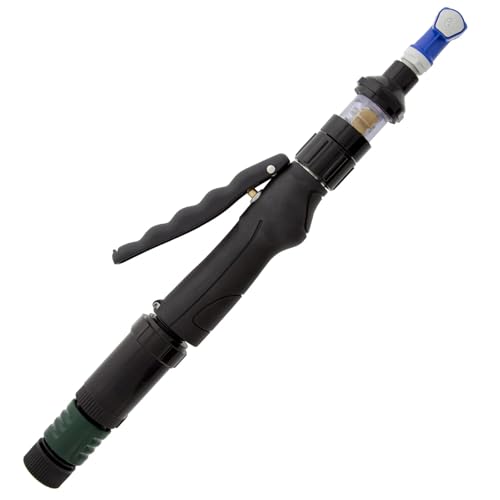
The Direct Fill Link from Battery Watering Technologies emphasizes durability and reliability with a pressure-sensitive handle and a flow indicator encased in PVC pipe. This design is built for heavy-duty industrial use, ensuring consistent water flow and accurate filling. Its compatibility with the Direct Fill Link system helps technicians connect multiple cells or battery strings with minimal downtime, improving maintenance efficiency across fleets and facilities.
36V Forklift Battery Watering System

This LHNY kit is designed for 36-volt forklift configurations. It uses a single connection to fill each battery set accurately, reducing manual checks and guesswork. The system follows a simple installation workflow, with self-regulating valves and clear tubing for visibility. The kit’s emphasis on fast, reliable setup makes it suitable for warehouses and manufacturing floors that require quick deployment and scalable maintenance across multiple 36-volt battery banks.
Battery Watering Technologies K1200B-GLFBCTB Universal 12-Cell System

The K1200B-GLFBCTB model from Battery Watering Technologies provides automatic electrolyte monitoring for 12-cell lead-acid systems. Built-in VB-TBU valves regulate water flow to ensure consistent levels, reducing the risk of overwatering or under-watering. This matches industrial settings where multi-cell configurations are common, delivering safer operation and easier maintenance across battery fleets used in forklifts, scissor lifts, and other heavy equipment.
NT2212GFR Gravity Feed Tank – 2.5 Gallon

The NT2212GFR gravity feed tank offers a compact solution for facilities with space constraints. With a 2.5-gallon capacity and gravity-fed delivery, it provides a steady water supply for multiple maintenance cycles. Its 3/8″ (10 mm) female connector (Part #: 09FUM1) ensures secure coupling with compatible water lines and battery watering components, supporting scalable maintenance for fleets of low-profile or space-limited battery banks.
Buying Guide: Key Considerations For Industrial Battery Watering Systems
When selecting a watering system for industrial batteries, consider the following factors to balance reliability, cost, and ease of use:
- Compatibility: Confirm the system works with your battery types (24V, 36V, 48V, or 12-cell lead-acid configurations) and vent styles. Look for universal or clearly compatible connectors.
- Automation vs. manual control: Automatic shut-off and VB-TBU valves help minimize human error and overwatering. For older facilities, gravity-fed or direct-fill options may be more practical.
- Ease of installation: Quick-connect fittings, clear tubing, and modular components reduce downtime during setup and expansion across fleets.
- Maintenance and durability: PVC flow indicators, rugged valves, and corrosion-resistant materials extend service life in industrial environments.
- Scalability: Choose systems that accommodate multiple cells or battery strings and can be expanded as your fleet grows.
- Safety and compliance: Ensure systems minimize splash risk, control electrolyte exposure, and meet local safety regulations for battery maintenance.
- Cost of ownership: Compare initial kit costs, replacement parts, and expected lifespan to determine long-term value for your operations.
Industrial users should assess compatibility with existing battery rooms, floor space constraints, and the frequency of maintenance cycles. A mix of universal systems and modules tailored to specific configurations often yields the best balance of reliability and cost efficiency across large fleets.