Exploring the best aluminum ingots for casting helps hobbyists and professionals alike achieve reliable melt performance and clean, pure results. This guide showcases five top options, highlighting purity, melting behavior, and practical use in DIY projects, metal refining, and small-scale foundry work. Each product is evaluated for ease of use, compatibility with common melting setups, and overall value for aluminum casting efforts.
Summary of Selected Products
- High Purity 99.6% Raw Aluminum Pellets (1.1 Pound) — SZONEE
- High Purity 99.6% Raw Aluminum Pellets (2.2 Pound) — SZONEE
- 100 oz Troy Ounce Gold Bar Loaf Cast Iron Ingot Mold — Bonbo
- Nelyrho 100 oz Troy Ounce Cast Iron Ingot Mold — Nelyrho
- RotoMetals Hardball Special Casting Alloy Ingot — Roto Metals
Best High-Purity Aluminum Pellets For Casting

Brand: SZONEE
Product features: Wide application range supports metal casting in aluminum melting furnaces or pots, ideal for DIY projects and metallurgy applications; high purity with minimal impurities and uniform pellet size; melting point near 1220℉, maintaining consistent performance even in varied casting scenarios.
These aluminum pellets provide a simple, low-impurity feedstock for small furnaces and crucible casting. The uniform pellet size promotes predictable melting rates, while the high purity reduces contaminants that could affect alloy quality or chemical reactions. Suitable for hobbyists refining metals or running chemistry experiments that require a steady aluminum supply.
Versatile Pellets For Medium-Weight Casting Applications
Brand: SZONEE
Product features: Similar to the 1.1-pound option, with a larger 2.2-pound quantity. Designed for the same applications—metal casting, DIY projects, and chemical experiments—with the same purity and melting characteristics (nearly 1220℉).
For users needing more material per casting session, this option reduces the number of refills while maintaining consistent quality and behavior in the melt. Ideal for more ambitious DIY projects or small-scale production runs where volume matters.
Durable Ingot Mold For Gold, Silver And More

Brand: Bonbo
Product features: Highly versatile loaf ingot mold capable of handling gold, silver, copper, aluminum, brass, and other metals; redesigned handle for better control during pouring; tapered sides aid in easy removal of ingots; holds up to 100 troy ounces of metal and may drop out easily from the mold after cooling.
While designed for gold and other metals, this cast-iron ingot mold supports aluminum casting as well. The sturdy construction and removal features streamline iterative casting and refining workflows in hobbyist and light professional settings.
Cast Iron Ingot Mold With Large Capacity
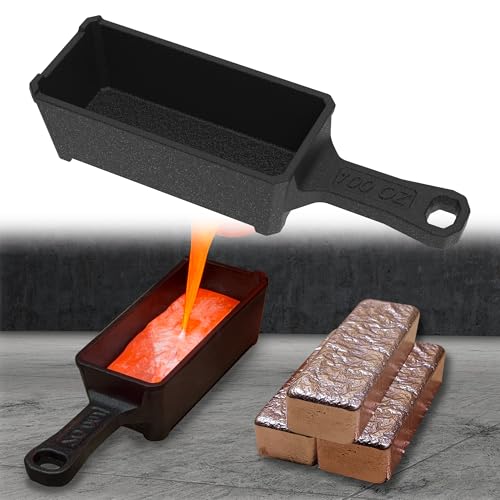
Brand: Nelyrho
Product features: Casts up to 100 troy ounces; suitable for melting and refining non-ferrous metals including gold, silver, copper, aluminum, and brass; made from durable cast iron with high-temperature resistance and good thermal conductivity for efficient casting.
Appropriate for larger aluminum ingot pours, this mold supports efficient production runs, easier unfolding of ingots, and minimized sticking due to design and material properties. It is a practical option for semi-professional or serious hobby casting work involving aluminum alloys and other metals.
Hardball Casting Alloy Ingot For DIY Projects

Brand: Roto Metals
Product features: Ingot dimensions approximately 8-3/4″ x 1″ x 2″; weight about 5 pounds; classic alloy composition with 2% Tin, 6% Antimony, and 92% Lead; designed for DIY casting and metalworking projects requiring a stable alloy ingot input.
This ingot is not aluminum but is included for readers exploring a broader spectrum of casting materials and alloys. It provides a reference point for comparing melting behavior, alloying considerations, and handling practices with other ingots used in aluminum casting workflows.
4 Pound Aluminum Pellets For Pro-Grade Casting

Brand: SZONEE
Product features: A 4-pound batch of high-purity 99.6% aluminum pellets; designed for metal casting in aluminum melting furnaces; uniform pellet size; nearly 1220℉ melting point ensures consistent results across multiple casts.
This option provides a larger quantity for ongoing casting sessions or courses where repeated melts are needed. The purity and design align with reliable, repeatable casting processes in a home foundry or workshop environment.
Graphite Ingot Moulds For Small-Batch Casting

Brand: Patelai
Product features: Graphite ingot mould with low ash content (<0.1%), high thermal conductivity, rapid heating and cooling; withstands up to 2000 degrees Celsius; corrosion and impact resistant; suitable for casting non-ferrous metals like gold, silver, copper, aluminum, and brass. Ideal for small-capacity melts.
Graphite Ingot Molds For Refining And Casting

Brand: Nelyrho
Product features: Four pieces of 1kg graphite ingot molds; high-density, 99.9% graphite; designed for refining and melting metals; easy release of ingots by turning or tapping; corrosion and heat resistant; suitable for gold, silver, aluminum, copper, and brass processing.
Buying Guide: Key Considerations For Aluminum Casting Ingots
- Purity and composition: Higher purity aluminum (>= 99.6%) reduces impurities that can affect alloying and crystallization. Consider feedstock consistency for repeatable melts.
- Pellet vs ingot mold form: Pellets provide fast, uniform melting and easier dosing in small furnaces, while ingot molds offer shaped, ready-to-cool bars for standard workflows.
- Melting point and heat behavior: Aluminum typically melts around 1220℉ (660℃). Ensure your furnace or crucible materials tolerate repeated cycles without degradation.
- Mold material and design: Graphite and cast iron molds have different heat conductivities and release properties. Graphite tends to release ingots cleanly, while cast iron offers durability for larger pours.
- Volume for batch processing: For hobbyists, smaller batches (1–4 pounds) allow frequent testing and refinement. For small workshops, larger batches reduce restocking frequency but require more heat and handling capability.
- Compatibility with equipment: Verify that your melting furnace, crucible, and tongs are rated for aluminum and compatible with the chosen ingots or pellets to minimize contamination and safety risks.
- Handling and safety: Always use protective gear, work in a well-ventilated area, and follow proper pouring and cooling procedures to prevent burns and accidents.
- Purity verification: If you’re performing chemical reactions or precise alloying, testing ingot purity and consistency helps ensure predictable results in downstream processes.
- Cost-to-output balance: Compare price per pound with purity and expected yield. Higher-purity pellets may reduce refining time and improve final alloy quality.
In metal casting, selecting the right aluminum feedstock depends on project scale, equipment, and the desired finish. Pellets offer quick melting and uniformity for small-scale DIY projects, while larger ingots and durable molds support more intensive casting workflows. When choosing among options, consider purity, melting behavior, mold release, ease of handling, and compatibility with your existing casting setup.