Phase converters enable single-phase power systems to run three-phase equipment, expanding options for shops and facilities that lack three-phase utility supply. This article highlights top options related to a 40 HP category by examining versatile American Rotary models, DPS multi-brand units, and VFD-based converters that support higher power needs. The selections below emphasize reliability, ease of installation, and compatibility with CNC machines, VFDs, EDMs, and other demanding loads. Readers will find practical guidance to help compare performance, control features, and installation considerations for safe, efficient operation.
| Product | Brand | HP Range | Type |
|---|---|---|---|
| Rotary Phase Converter AD20 | American Rotary | 20 HP | Rotary Converter |
| AR5 5 HP Rotary Phase Converter | American Rotary | 5 HP | Rotary Converter |
| AR10-10HP Rotary Phase Converter | American Rotary | 10 HP | Rotary Converter |
| DPS My-PS Series (7.5 HP, 2 HP) | Generic / DPS | 2–7.5 HP | Phase Converter / VFD-like |
| XCFDP 0.75kW VFD | XCFDP | 0.75 HP | VFD Converter |
Note: This article focuses on practical, widely available units that satisfy varied single-to-three-phase conversion needs. When planning a 40 HP related workflow, consider motor starting methods, cooling, space, and electrical code compliance to maximize performance and safety.
AD20 Rotary Phase Converter with Digital Controls
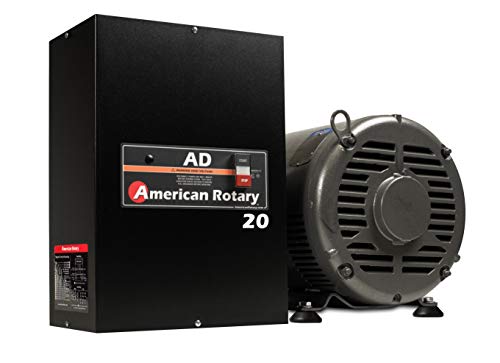
The AD20 model from American Rotary is designed to start load profiles up to 10 HP directly, with capabilities to support a 20 HP rated load under appropriate conditions. Its digital controls offer precise operation and monitoring for heavy-duty CNC, VFD, and other equipment. This converter is described as suitable for a range of loads including resistive and rectified computer-based loads, making it a strong option for shops that run CNC machines or battery chargers on single-phase power.
Key features include: 20 HP load handling, digital controls, and compatibility with CNC, VFD, EDM, and battery chargers. The manufacturer emphasizes robust performance in mixed-load environments and reliable starting for demanding equipment. For facilities deploying multiple machines or high-resistance loads, the AD20 can be a practical centerpiece connected to a 208-240V supply. Consider cooling and adequate space to ensure sustained operation under heavier loads.
AR5 5 HP Rotary Phase Converter

The AR5 provides a compact solution for smaller, lighter loads but can start up to approximately 2.5 HP under 208-240V conditions for general-purpose use. It is positioned for light- to moderate-load applications, including motor loads and combination loads. This unit is suitable for users who require a reliable three-phase supply for small CNC or light machining tasks, as well as general shop machinery. When planning capacity, factor in peak startup currents and the cumulative load of adjacent devices to prevent voltage dips.
Highlights include: suitability for 2.5 HP general loads, 208-240V operation, and a one-to-three phase conversion capability. The AR5 is a practical entry point for shops expanding from single-phase power to three-phase operations without a full 3-phase service upgrade. Installation considerations include proper grounding, motor rotation checks, and ensuring that the motor sizes do not exceed the converter’s startup range for smooth performance.
AR10-10HP Rotary Phase Converter

The AR10-10HP unit targets moderate three-phase needs with the ability to start up to a 5 HP load under 208-240V conditions. Aimed at general-purpose and mixed-load environments, this converter supports CNC work, VFD-driven machines, and other three-phase equipment while remaining suitable for light to moderate loads. It’s a balanced choice for users who need more capability than the AR5 but do not yet require the full scale of a higher HP model.
Core considerations include: a 10 HP rating, 1 to 3 phase conversion, and compatibility with common 208-240V shop electrical systems. As with other rotary converters, ensure proper lubricated bearings, proper belt tension, and attention to amperage during startup to prevent tripping circuits. This unit can be a practical upgrade path for shops expanding capabilities without moving to larger electrical upgrades.
DPS My-PS Series 7.5 HP Converter

The DPS My-PS-7.5 model provides a practical single-to-three-phase conversion option for hobbyists and small shops, supporting up to 7.5 HP loads. It is described as easy to connect and operate, with a focus on compact size and lightweight design. This unit is suitable for smaller CNC machines, VFD drives, and other essential equipment requiring three-phase power from a single-phase source. It is listed for use with one motor only, emphasizing straightforward setup and dependable operation for lighter-duty conversion tasks.
Considerations include: single motor use, UL listing, and the balance between ease of installation and maximum HP. For facilities planning to scale upward, evaluate whether to pair the DPS unit with additional converters or upgrade to a higher-HP rotary converter to avoid overloading during peak operation.
XCFDP 0.75kW VFD for 1HP to 3-Phase Output

The XCFDP VFD offers a modest yet practical approach to converting single-phase 220V input to three-phase 220V output. Rated at 0.75 kW (about 1 HP) with 5A current capability, this unit is best suited for small spindle motors or light-duty drives. VFDs like this can provide smooth speed control and efficient motor operation for tasks requiring adjustable RPM, such as light milling or spindle rotation control. This option is ideal when precise speed management is needed and the load remains within the VFD’s rated output.
Key factors include: single-to-three-phase functionality, compact dimensions, robust protection features, and the possibility to integrate with CNC or small automation projects. When evaluating VFDs, consider motor compatibility, control panel accessibility, and whether the unit’s protections align with your safety and electrical standards.
HY HUANYANG VFD Converter, 4kW to 5HP

The HY HUANYANG VFD series provides a 4kW (about 5 HP) capability with single-phase input and three-phase output, designed to drive motors and spindles with variable speed requirements. It can be configured for easy connection to existing single-phase power sources while delivering a 3-phase output to compatible loads. The model emphasizes compatibility with motor speeds and resilient operation with a range of loads. For shops seeking adjustable speed control for spindle motors or other 3-phase equipment, this VFD offers a compact, efficient solution that can integrate with CNC machinery and other automation tasks.
Considerations for this option include: input/output voltage compatibility, protection features, heat dissipation, and the suitability of a 220V supply in the workspace. When integrating VFDs for speed control, ensure correct parameter settings, motor data alignment, and adequate cooling to sustain performance during longer runs.
Buying Guide: Key Purchase Considerations and Comparisons
- Load profile and starting current: Rotary converters tolerate motor startup surges, but heavier or highly inductive loads may require pre-start planning or larger HP units. VFDs handle specific motor loads with adjustable speed but require motor compatibility and proper wiring.
- HP rating vs. actual application: Choose a unit that can comfortably cover the combined load of all equipment that will run simultaneously. Add conservative headroom to avoid continuous overload.
- Control features and monitoring: Digital controls, remote monitoring, and status indicators simplify maintenance and reduce downtime. Evaluate the availability of remote troubleshooting and documentation from the manufacturer.
- Efficiency and cooling: Rotary converters generate heat during operation; provide adequate ventilation and, if needed, added cooling. VFDs also dissipate heat and may require fans or enclosure ventilation.
- Installation space and wiring: Ensure space for the converter, proper mounting, and safe routing of 208-240V supply lines. Respect local electrical codes and consider professional installation for larger HP units.
- Compatibility with loads: CNC machines, EDM devices, battery chargers, and VFD-driven equipment behave differently under phase conversion. Confirm the converter’s advertised load compatibility and recommended use cases for your equipment mix.
- Maintenance and serviceability: Look for units with accessible components, clear service instructions, and readily available replacement parts from the manufacturer or trusted distributors.
- Scalability: If future expansions are likely, plan for a system that allows upgrading to higher HP units or combining multiple converters to meet growing three-phase demands without reconfiguring the entire setup.
- Safety and compliance: Adhere to electrical codes, grounding practices, and manufacturer safety guidelines. Use appropriate fusing and protective devices to mitigate fault conditions.