For profit-focused 3D printing, you want reliable, fast, and versatile machines that handle frequent use and larger builds. This guide highlights five standout options ideal for business, prototyping, and small-scale production. Each entry emphasizes build volume, speed, reliability, and material options to help you choose printers that maximize throughput and minimize downtime.
| Product | Brand | Key Strength |
|---|---|---|
| Longer LK5 Pro 3D Printer | Longer | Large build volume with stable triangular frame |
| QIDI MAX3 3D Printer | QIDI Technology | High-speed, auto leveling, large format |
| Creality K2 Pro Combo | Creality | Multicolor printing and high-speed with chamber heating |
| Ender 3 3D Printer | Comgrow | Open-source, resume printing, accessible entry model |
| Anycubic Kobra 3 V2 | ANYCUBIC | AI-assisted leveling, user-friendly and compact |
The following sections break down each model’s features, performance notes, and practical use cases for a profit-oriented workflow. The goal is to present objective data to help you assess total cost of ownership, maintenance needs, and potential output quality for commercial tasks.
Longer LK5 Pro 3D Printer
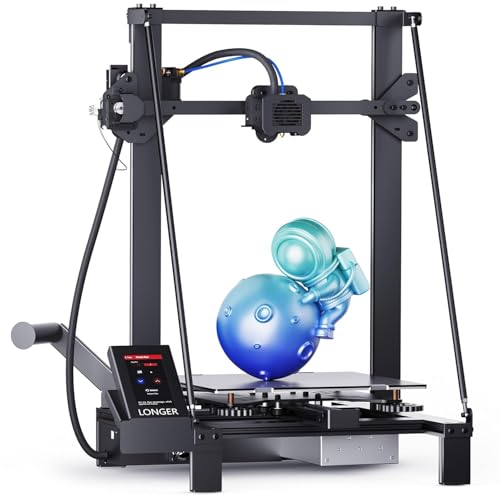
The Longer LK5 Pro combines a large build area with a solid triangular frame to reduce resonance and enhance precision. It supports a maximum build size of 11.8 x 11.8 x 15.7 inches (300 x 300 x 400 mm) and is designed for a range of materials, enabling diverse prototyping and small-batch production. The printer can reach 180 mm/s with good stability, and its firmware optimizations help maintain 0.1 mm precision on consistent runs. This model suits educational labs, makerspaces, and small studios seeking reliable large-format output.
QIDI MAX3 3D Printer

The QIDI MAX3 offers high-speed performance with a sizable 325 x 325 x 315 mm printing area and a capable auto-leveling system. Its all-metal frame and robust components deliver stable long-term usage, including a 6 mm thick aluminum heatbed and hardened linear shafts for consistent results. The printer is compatible with high-performance filaments and supports direct-drive extrusion, enabling smooth printing of standard materials and specialty blends. It is positioned for professionals needing faster turnarounds without sacrificing accuracy.
Creality K2 Pro Combo 3D Printer
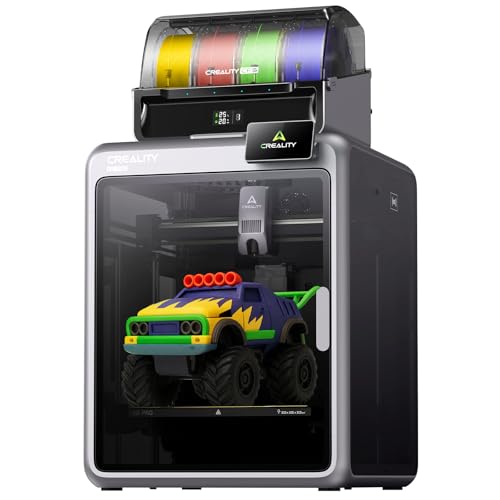
The Creality K2 Pro Combo shines with multi-color capability via the CFS Smart Filament System, enabling up to 16-color and multi-material prints. It features a large 300 x 300 x 300 mm build volume, allowing bigger prototypes or batch printing. With high-speed performance up to 600 mm/s and 20,000 mm/s² acceleration, the K2 Pro aims to cut production times while maintaining quality. An all-metal chassis and stable motion systems support reliable operation in busy shop environments.
Official Creality Ender 3 3D Printer
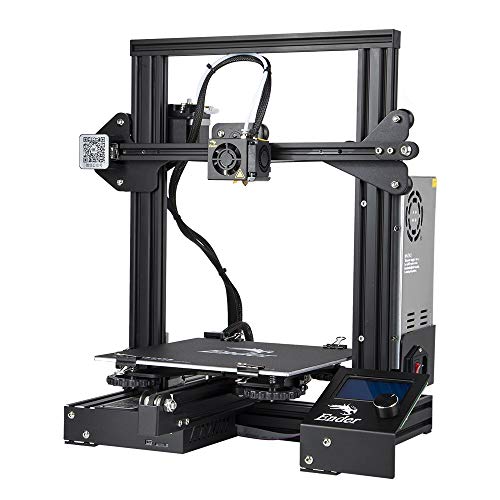
The Ender 3 remains a staple for beginners moving toward profit-focused projects. It features a resume printing function to recover from power interruptions, a straightforward extruder, and a modular platform that supports customization. The model is well-suited for small batches and iterative prototyping where lower upfront costs and a wide user base are advantageous. It’s important to track upgrade paths for reliability in production settings.
Anycubic Kobra 3 V2

The Anycubic Kobra 3 V2 emphasizes ease of use with enhanced auto-leveling (LeviQ 3.0) and a standard 720p camera for monitoring prints. The model ships as a capable starter or secondary production unit, with a focus on user-friendly setup and reliable first layers. It is appropriate for shops that require a simpler, repeatable workflow for basic parts or consumer-facing prototypes while offering compatibility with various filaments when paired with the right accessories.
Buying Guide: Key Purchase Considerations
- Build volume and scale: Choose a printer whose bed size aligns with your typical part dimensions. Larger builds increase batch capacity but may require more space and maintenance.
- Print speed vs. stability: High speeds can boost throughput but may reduce surface finish if the machine’s mechanics aren’t optimized. Look for robust frames, high-quality motion systems, and good firmware control.
- Material compatibility: Identify which filaments you need (PLA, PETG, ABS, PA, CF-filled blends) and ensure the printer supports them reliably. Direct-drive or all-metal hotends can expand material options.
- Auto leveling and bed adhesion: Automatic leveling reduces setup time and errors. Good bed adhesion and a reliable bed heater help prevent failed prints and keep production flowing.
- Reliability and uptime: Consider printers with proven track records, readily available replacement parts, and active user communities. For profit, ongoing support and upgrade paths matter for long-term ROI.
- Power and safety features: Resume printing after power loss is valuable for production risk management. Enclosed designs can improve safety and reduce fumes in shared spaces.
- Software and workflow integration: Seamless slicer support, firmware updates, and integration with your existing CAD/PDM tools can streamline production.
- Total cost of ownership: Account for filament costs, maintenance, spare parts, and possible upgrade kits when evaluating profitability, not just upfront price.
In profit-focused environments, printers with large build volumes, fast yet reliable performance, and strong support ecosystems tend to offer the best ROI. Balancing upfront investment with ongoing material and maintenance costs will help determine which model aligns with your production goals.