Ready to add elasticity and resilience to your 3D projects? This guide surveys top 1.75mm flexible filaments designed for fast printing and reliable layer adhesion. From TPU blends to silk TPUs, these options suit hobbyists and makers who need durable, bendable prints without clogs or warping. Each entry includes key specs, typical uses, and compatibility notes to help you choose the right filament for your printer.
| Product | Brand | Filament Type | Shore Hardness | Notes |
|---|---|---|---|---|
| SUNLU 3D Printer Filament | SUNLU | TPU 95A | 95A | Fast printing, good adhesion |
| OVERTURE TPU Filament | OVERTURE | TPU 95A | 95A | Clog-free and vacuum-sealed packaging |
| Geeetech TPU Filament | Geeetech | TPU 95A | 95A | Excellent layer adhesion |
| YOUSU Silk TPU Filament | Yousu | TPU 95A Silk | 95A | Shiny silk surface, attractive finish |
| TECBEARS TPU Filament | TECBEARS | TPU 95A | 95A | High-speed printing option |
SUNLU TPU 3D Printer Filament
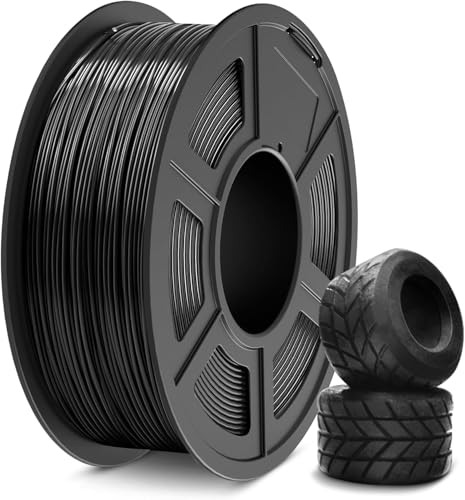
SUNLU’s 1.75mm TPU filament emphasizes fast printing without sacrificing flexibility. The material blends resilience with a soft touch, enabling durable parts such as flexible hinges, wearables, and protective covers. With a Shore hardness of 95A, it offers a practical balance between pliability and strength for everyday flexible components. The manufacturer highlights user-friendly adhesion between layers, contributing to smooth surfaces and reliable prints on most FDM printers. Operators can expect strong part integrity even after bending or light impacts. Typical use cases include wearable accessories, soft grippers, and silicone-like seals.
Printing considerations include pre-drying if humidity is a concern, as with many TPU materials, and tuning speeds to maximize strength without stringing. The filament’s composition is designed to reduce common TPU challenges, such as clogging and warping, while maintaining a consistent diameter tolerance. The result is a dependable option for creating functional yet flexible objects that require some give and resilience.
OVERTURE TPU Filament 1.75mm

OVERTURE’s TPU 95A filament is engineered for flexible parts that require durability and resilience, such as protective housings, wearable accessories, and light-duty gears. The material’s hardness is tuned to deliver a balanced mix of softness and impact resistance, enabling parts that can absorb shocks while retaining structural integrity. The packaging emphasizes clog-free performance, with a drying step prior to sealing and a vacuum-sealed foil bag to preserve filament quality. Users should store remaining filament with desiccants to prevent moisture-related issues, especially after opening.
Layer adhesion is highlighted as a strong feature, contributing to smooth surface finishes and precise geometries. For best results, practitioners should keep nozzle temperatures within the recommended TPU range and consider slower print speeds to ensure uniform extrusion. The combination of high elasticity and reliable adhesion makes this filament suitable for flexible components that encounter bending and compression in daily use.
Geeetech TPU Filament 1.75mm

Geeetech’s TPU filament combines elasticity with practical toughness. With a 95A Shore hardness, the material supports flexible applications ranging from protective cases to wearable components. It emphasizes strong interlayer bonding and a smooth surface finish, reducing the risk of delamination during bending and flexing. The printing process is designed to minimize common TPU issues like stringing, enabling cleaner outlines and consistent solid prints. This makes the filament suitable for both creative designs and functional flexible parts that require repeatable performance over multiple cycles of use.
Key considerations include ensuring adequate drying prior to use and storing spools properly to maintain performance. The filament is marketed for compatibility with a wide range of FDM printers, and users often report straightforward feeding and stable extrusion, even for first-time TPU users. If you need flexible components with reliable surface quality, this option provides a robust balance of elasticity, toughness, and usability.
YOUSU Silk TPU Filament 1.75mm

YOUSU Silk TPU filament introduces a distinctive silk-like sheen to 3D prints, offering both aesthetics and flexibility. With a 95A Shore hardness, it provides a comfortable balance between softness and resilience, suitable for fashion items, decorative pieces, and accessories that benefit from a glossy, premium surface. The silk finish is achieved without post-processing, saving time for designers who prioritize visual appeal as well as performance. The material remains compatible with most 1.75mm FDM printers, and the silk texture can help prints stand out in both art and functional categories.
Printing tips include standard TPU best practices: ensure proper bed adhesion, appropriate cooling, and careful calibration to avoid warping. The silk effect can influence surface texture, so users may need minor post-processing if a ultra-smooth finish is desired. This filament is ideal for projects where both flexibility and visual impact matter, such as accessories, cosmetic parts, and novelty items that require a refined appearance.
TECBEARS TPU Filament 1.75mm
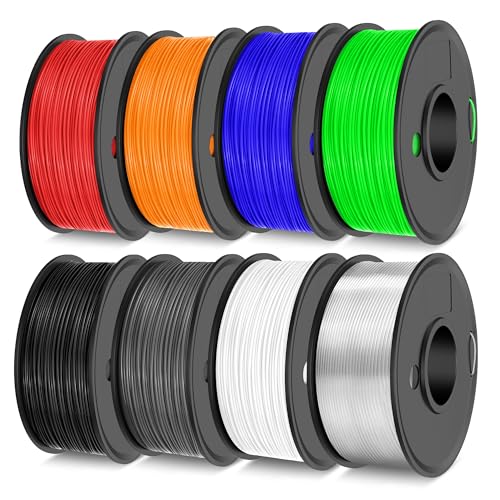
TECBEARS offers a versatile TPU selection with multiple color options on a 250g spool, expanding to 2kg across eight rolls. The 95A hardness matches the common TPU standard for flexible parts, while the high-speed claim suggests improved print times compared with traditional TPU formulations. This can be advantageous for rapid prototyping of wearables, footwear components, and flexible fittings where timing matters. The set’s multi-color approach enables color testing and mixed-material projects without frequent re-spooling.
For successful results, users should consider drying the filament before printing and keeping spools sealed when not in use to minimize moisture uptake. The product line emphasizes compatibility with a broad range of 3D printers and practical performance in everyday flexible builds, ensuring reliable extrusion and layer bonding even at elevated print speeds.
Buying Guide: Key Purchase Considerations
Filament selection depends on your intended use, printer capabilities, and project requirements. Consider these factors when choosing flexible 3D printing filament:
- Shore hardness: 95A TPU is a common balance for flexibility and durability; softer or silk variants affect surface finish and feel.
- Print speed vs. reliability: Some brands advertise faster printing; test speeds incrementally to avoid jams and delamination.
- Diameter tolerance and drying: 1.75mm is standard, but tolerance accuracy and post-drying steps impact extrusion consistency.
- Storage and moisture: TPU is hygroscopic; sealed storage with desiccants preserves performance and minimizes bubbles.
- Printer compatibility: Most FDM printers handle 1.75mm TPU, but some setups prefer direct-drive extruders for better control.
- Surface finish and aesthetics: Silk TPUs deliver glossy finishes; choose based on whether appearance or texture is prioritized.
When evaluating options, review user feedback on clog-free performance, layer adhesion, and post-processing needs. For projects demanding tight tolerances or precise geometry, verify diameter consistency and extrusion stability. If you’re testing multiple colors, consider bundles that offer varied hues without changing filaments frequently. Always start with manufacturer-recommended temperatures and gradually tune bed and nozzle settings to your printer’s unique characteristics.