When selecting a 3D printer for prostheticwork, key factors include build volume, material compatibility, print speed, and reliability. The following 5 printers are chosen for their balance of performance, versatility, and suitability for dental and prosthetic projects. Each model supports precise fabrication, whether you’re crafting dental crowns, braces models, or custom prosthetic components. Below, you’ll find product sections with quick highlights and how they fit a prosthetics workflow, followed by a buying guide to compare essential considerations.
| Product | Brand | Key Strengths |
|---|---|---|
| Raise3D Pro2 Plus | Raise3D | Large build volume, dual extrusion, high-temp capability |
| FLASHFORGE Adventurer 5M | FLASHFORGE | Fully auto leveling, high-speed CoreXY, easy setup |
| FLASHFORGE AD5M Pro | FLASHFORGE | Fully enclosed, auto-leveling, air filtration |
| Creality K2 Pro Combo | Creality | Multicolor printing, large build area, fast speeds |
| TINA2 Plus V2 | Entina | High-speed auto leveling, beginner-friendly |
These selections emphasize capabilities valuable to prosthetics fabrication, including accurate modeling, safe material handling, and adaptability for different workflow stages—from initial prototypes to final dental or orthopedic components. Review each product’s specifications, then use the buying guide to align choices with your practice’s needs, such as patient-specific restorations, rapid prototyping for treatment planning, or classroom training in dental labs.
Raise3D Pro2 Plus — Dual Extrusion, Enclosed, Large Build

The Raise3D Pro2 Plus is designed for demanding tasks with a large build volume (12 x 12 x 23.8 in) and dual extrusion. It supports high-temperature printing up to 300°C, enabling strong, accurate prosthetic components using materials such as advanced polymers. Features include a filament sensor, camera monitoring, and a HEPA filter ensuring safer printing environments. Its electronic-driven dual extruder and precise layer control enable complex multi-material parts, useful for dental models and custom prosthetics requiring fine surface detail.
FLASHFORGE Adventurer 5M — Auto Leveling, High Speed

The Adventurer 5M offers one-click auto leveling and rapid CoreXY printing up to 600 mm/s, aiding fast prototyping for prosthetic models and dental guides. Its 280°C direct extrusion and detachable nozzle support flexible material choices, while the dual-sided PEI platform makes removal easy. This model excels for quick iterations in patient-specific models and educational demonstrations, combining speed with straightforward operation for clinics or labs with limited setup time.
FLASHFORGE AD5M Pro — Auto-Level, Quiet, Enclosed

The AD5M Pro is a fully enclosed 3D printer with an auto-leveling system and a quiet operation profile. Its filtration includes HEPA13 and activated carbon to reduce particulates and odors, contributing to safer printing in clinical or classroom environments. CoreXY all-metal motion ensures high-speed performance with reliable prints, making it suitable for producing dental models and prosthetic components with consistent geometry and surface finish.
FLASHFORGE AD5M — Auto Level, 600mm/s Speed

The AD5M focuses on automated bed leveling and easy operation, removing manual calibration challenges for prosthetic modeling. The all-metal CoreXY structure supports high-speed, precise prints while maintaining print quality. Its user-friendly design appeals to both beginners and professionals creating dental models, orthodontic guides, or prosthetic contours that require consistent first-layer adhesion and repeatable results.
Creality K2 Pro Combo — Multicolor, Large Build
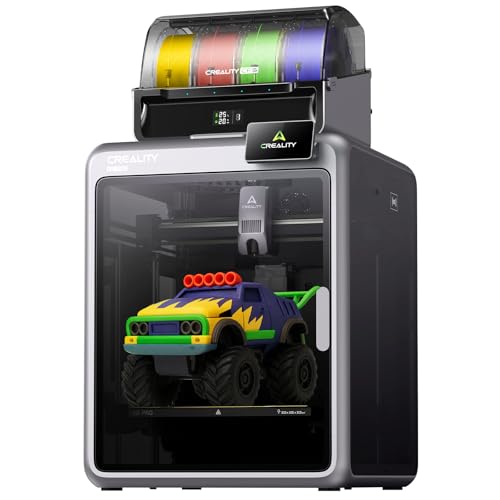
The Creality K2 Pro Combo enables multicolor printing with the CFS Smart Filament System, supporting up to 16 colors and multi-material outputs. Its large 300×300×300 mm build volume is ideal for sizable prosthetic prototypes or multiple parts in a batch. With a top speed of up to 600 mm/s and acceleration of 20,000 mm/s², it balances rapid production with detailed surface quality, useful for patient-specific dental models and prosthetic components that require color-coded visualization.
TINA2 Plus V2 — Fast Auto Leveling, WiFi
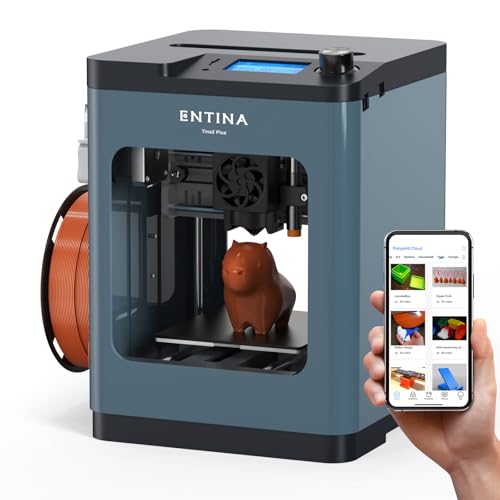
The Tina2 Plus V2 emphasizes speed and ease of use with 250 mm/s printing, high-power cooling, and an auto-leveling setup for quick starts. It is positioned as beginner-friendly yet capable enough for more complex prosthetic prototyping. The compact design and included starter kit support rapid deployment in teaching labs or small clinics seeking hands-on learning with reliable results.
Buying Guide
When choosing a 3D printer for prosthetics, consider these core factors:
- Build volume: Larger volumes support full-scale dental models or multi-part prosthetics, but may increase footprint and cost.
- Material compatibility: Prototyping materials vary in strength, biocompatibility, and wear. Look for high-temp capability and support for biocompatible resins or durable polymers if needed.
- Printing speed vs. accuracy: High speeds can reduce production times but may affect surface finish. Seek a balance that suits your workflow.
- Enclosure and filtration: Enclosed chambers with filtration enhance safety in clinical or teaching environments by reducing fumes and noise.
- Automation: Auto-leveling and automatic filament handling save setup time and improve first-layer reliability, important for consistent prosthetic models.
- Multi-material/Color capabilities: For clear differentiation of components or color-coded guides, consider printers with multi-material or multi-color capabilities.
- Software ecosystem: Compatible slicers and cloud-based workflows can streamline model preparation, sharing, and remote monitoring.
- Maintenance and service: Availability of spare parts, customer support, and firmware updates influence long-term reliability in clinical settings.
In prosthetics workflows, it’s often beneficial to pair a high-volume, robust printer with precise resins or dental materials, while keeping a smaller, fast printer for rapid prototypes and teaching demos. Evaluate total cost of ownership, including filament and resin costs, maintenance, and any required post-processing steps such as support removal or curing. Consider trial printing with patient-specific models to validate fit, alignment, and surface accuracy before clinical use.