When choosing a 3 way sanitary ball valve, reliability, material compatibility, and ease of cleaning are essential. This guide highlights high-quality options suitable for sanitary applications, including tri-clamp (Tri-Clamp) connections and PTFE lining for seamless flow control. Each product is rated for food-grade use and designed to minimize fluid resistance while maintaining excellent sealing performance. Read on to compare key features and determine which valve best fits your process, whether dairy, brewing, or biotech.
| Product | Connection Type | Tube/Clamp Size | Material | Key Benefit |
|---|---|---|---|---|
| BYMOS 1.5″ 3-Way Clamp Valve | Clamp | 1.5″ | Stainless Steel 304 | Long life, low fluid resistance |
| DERNORD 3″ Sanitary Ball Valve | Tri-Clamp | 3″ | Stainless Steel 304 | High pressure rating, broad temperature range |
| DERNORD 1.5″ Tri Clamp 3-Way | Tri-Clamp | 1.5″ | Stainless Steel 304 | T-Port flexibility, compact footprint |
| DERNORD 1.5″ Tri Clamp 3-Way PTFE Lined | Tri-Clamp | 1.5″ | Stainless Steel 304 | PTFE lining for clean, compatible flow |
| DERNORD 2″ Tri Clamp 3-Way | Tri-Clamp | 2″ | Stainless Steel 304 | Versatile for larger lines and higher throughput |
BYMOS 1.5 Inch 3 Way Sanitary Ball Valve

The 3-Way Ball Valve by BYMOS features a 1.5 inch clamp connection with a stainless steel 304 body and a PTFE-lined seal typical of sanitary hardware. It emphasizes long life due to self-lubricating internal components and a compact design that reduces fluid resistance. The valve’s 3-way configuration enables straightforward routing of liquids in multiple directions, making it suitable for process lines, CIP loops, and distributor manifolds. Its clamp connection supports easy disassembly for cleaning and inspection, aligning with sanitary industry standards.
DERNORD 3″ Sanitary Ball Valve

This 3″ sanitary ball valve is designed for 3″ Tri-Clamp connections and uses FOOD GRADE stainless steel 304. It offers strong corrosion resistance and high strength, making it a solid choice for demanding sanitary processes. The valve is rated up to 1000 psig (WOG) and supports a wide operating temperature range, enabling use in varied production environments. The robust construction supports durable performance under frequent CIP cycles and high-flow applications, with a focus on reliable sealing and minimal maintenance needs.
DERNORD 1.5 Inch Tri Clamp 3-Way, T-Port

This 1.5″ tri-clamp 3-way valve uses a T-Port configuration, allowing alternative routing of flow through the valve. The 1 inch tube OD matches common small-bore sanitary piping, and the stainless steel 304 construction supports strong durability and corrosion resistance. PTFE lining provides clean compatibility with a range of liquids, particularly where sanitary processing and ease of cleaning are critical. The compact design supports efficient installation in tight spaces.
DERNORD 1.5″ Tri Clamp 3-Way, PTFE Lined

This DERNORD model combines a 1.5″ Tri-Clamp connection with a 3-way T-Port design, featuring PTFE lining for enhanced chemical compatibility and cleanability. The PTFE lining reduces sticky buildup and eases disassembly for CIP processes, while the stainless steel 304 body delivers reliable mechanical strength. The valve supports typical sanitary process temperatures and pressures, making it suitable for beverage, pharmaceutical, and biotech lines that require stringent hygiene standards.
DERNORD 2″ Tri Clamp 3-Way, PTFE Lined

This larger 2″ tri-clamp 3-way valve from DERNORD supports higher throughput lines common in dairy processing and industrial setups. PTFE lining offers excellent chemical resistance and cleanability, while the 304 stainless steel frame ensures reliable performance under demanding sanitary conditions. Its 3-way T-Port design supports flexible routing options to optimize batch processing and CIP cycles, reducing dead legs and improving sanitation efficiency.
BENCHIQICH 25mm Sanitary Ball Valve 3 Way

Benchhiqich offers a compact 25mm sanitary ball valve with a 3-way configuration and a ferrule-type Tri Clamp connection. The design emphasizes ease of installation and operation, with precise flow control to optimize system efficiency. It also focuses on reliable truncation and leakage prevention, delivering strong sealing performance in sanitary lines and compatible with standard cleaning protocols.
FLOW SOLUTIONS 1.5″ Tri Clamp Sanitary 3-Way

This FLOW SOLUTIONS valve is a 1.5″ sanitary ball valve with a 3-way Tee ball valve T-Port configuration. It uses PTFE lining and Tri-Clamp triclamp stainless steel 304 with a standard gasket kit, facilitating straightforward installation and cleaning. The valve’s dimensions and flange compatibility are described to suit common sanitary piping, making it a practical option for medium-scale process lines requiring flexible routing.
DERNORD 3-Way Ball Valve with T Mounting Pad
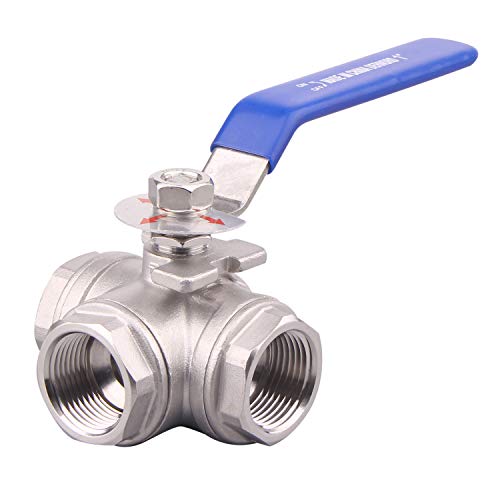
DERNORD’s 3-Way Ball Valve with a T mounting pad is designed for versatile installations, enabling easy mounting and integration into larger assemblies. It offers a broad operating temperature range and a threaded disassembly option for maintenance. The valve features a 1-inch NPT port configuration and is suitable for water, oil, and gas lines where sanitary-grade performance is required, with a focus on durability and serviceability.
Buying Guide: Key Considerations For 3-Way Sanitary Ball Valves
- Connection Type and Size: Choose Tri-Clamp or Clamp connections for easy disassembly and cleaning. Ensure the clamp size matches your piping (1.5″, 2″, or 3″).
- Port Configuration: T-Port (3-way with a T shape) supports flexible routing; L-Port and other configurations may offer different flow paths and mixing capabilities. Consider your process flow and CIP requirements.
- Material and Lining: Stainless steel 304 is standard for sanitary use. PTFE lining improves chemical compatibility and simplifies cleaning; verify compatibility with your process fluids.
- Pressure and Temperature Ratings: Confirm maximum pressure (psig) and operating temperature range to prevent leaks and ensure reliable operation under CIP cycles.
- Cleanability and Accessibility: Sanitary valves should resist seizing and be easy to disassemble for sanitation. Look for smooth interiors and standard gasket materials.
- Size and Flow Characteristics: Larger bore valves support higher throughput but may require more space. Assess fluid resistance and flow coefficients to minimize energy loss.
- Maintenance and Availability: Consider valve ease of maintenance, availability of spare parts, and compatibility with existing sanitary fittings in your facility.
- Usage Context: Dairy, beverage, biotech, and pharmaceutical applications often require validated cleanability and compliance with industry standards. Ensure the valve meets applicable certifications.
In selecting the best option, balance the need for flow capacity, connection compatibility, and cleanability with the specific chemistry of your process. The products above cover a range of sizes, port configurations, and lining options to help you tailor a solution that fits your system’s sanitation and throughput requirements.