Finding a reliable 2-inch trash pump with strong GPM performance is essential for draining flooded spaces, irrigation setups, and job sites. This guide highlights five solid options that balance flow rate, ease of use, and durability. Each product entry includes key specs, practical features, and a quick look at what makes it suitable for waste-water handling and rapid water transfer in American settings.
| Product | Brand | GPM | Engine/Power | Notable Features |
|---|---|---|---|---|
| BILT HARD Semi Trash Pump 2 In | BILT HARD | 158 | 7HP 212cc | Complete fittings; EPA certified; 50 ft discharge, 12 ft suction |
| VEVOR Trash Pump 2 In | VEVOR | 142 | 7HP 4-stroke OHV | 2″ inlet/outlet; max lift 148 ft; clog-resistant |
| Westinghouse 2-Inch Gas Powered Semi Trash | Westinghouse | 158 | 212cc 4-stroke OHV | Up to 91 ft head; 25 ft suction lift; durable build |
| Aceup Energy Semi Trash Pump 2 In | Aceup Energy | 158 | 7HP 208cc | Portable; recoil start; 12 ft suction, 25 ft discharge |
| Honda WB20XT4A 2-Inch Water Pump | Honda | 164 | GX12 118cc | Commercial-grade; low vibration; high efficiency impeller |
BILT HARD Semi Trash Pump 2 In

The BILT HARD 2-inch semi-trash gas pump combines a 7HP, 212cc four-stroke engine with a capable flow rate of 158 GPM. It includes a complete fittings kit with a 50 ft discharge hose and a 12 ft suction hose, making setup straightforward for job sites or flood cleanup. The EPA Phase III-compliant engine features idle control and low oil shutoff, enhancing safety and fuel efficiency. This unit is designed for quick water transfer and debris handling with a compact, mobile frame.
VEVOR Trash Pump 2 Inch

The VEVOR 2-inch trash pump uses a 7HP 4-stroke OHV engine to deliver up to 142 GPM. It features a rugged aluminum alloy pump body and a cast iron impeller, designed to resist wear and handle solids up to about 1/3 inch. With a max lift of 148 ft and a 22 ft suction, this model balances power with portability, making it a practical choice for water transfer on worksites or drainage tasks.
Westinghouse 2-Inch Gas Powered Semi Trash Water Pump

The Westinghouse WP160 delivers up to 158 GPM from a 212cc 4-stroke OHV engine. It offers up to 91 feet of total lift and a 25-foot suction lift, making it suitable for basement drainage, pool evaporation projects, or site cleanups. With a robust metal frame and corrosion-resistant housing, this semi-trash pump is designed for durability in challenging environments.
Aceup Energy Semi Trash Pump 2 Inch

Aceup Energy’s 2-inch trash pump runs on a 7HP, 208cc engine with a maximum head of 95 ft and up to 27 ft of suction. It offers a flow of 158 GPM and includes a 12 ft suction and 25 ft discharge hose. The unit emphasizes portability with an integrated handle and sturdy base, and it uses a recoil start system for easy operation in field conditions.
BILT HARD 3 Inch Trash Pump
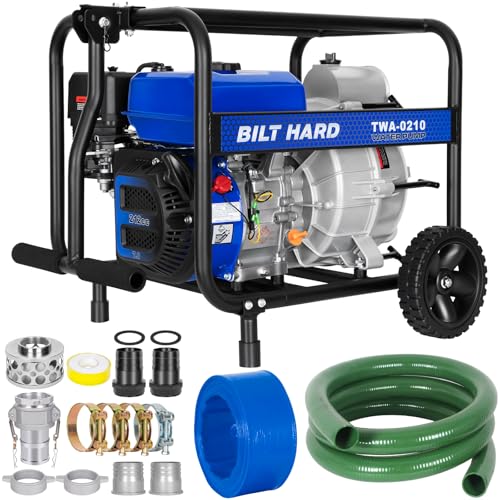
Note: This model is a 3-inch pump and not strictly within the 2-inch category, but it offers substantial flow at up to 290 GPM and a 7HP, 212cc engine. It features a 50 ft discharge hose and a 15 ft suction hose with complete fittings. This option is suitable when you need higher throughput on larger projects or flood response efforts where bigger lines are available and appropriate.
Tsurumi HS2.4S Submersible Trash Pump

The Tsurumi HS2.4S is a submersible trash pump with a semi-vortex impeller and integrated agitator. It handles debris up to 0.3 inch and runs on a 1/2 HP 115V motor, delivering about 39 GPM. The 20-foot power cord and angled 2-inch discharge port provide flexibility for various dewatering and remediation tasks, especially in confined spaces.
NuBusno Gas Trash Pump 2-Inch

NuBusno’s 2-inch trash pump features a 6.5HP engine with a flow up to 158.50 GPM and a lift of approximately 91.86 ft. Built with carbon steel, aluminum alloy, and cast iron, the unit emphasizes longevity and durability in tough conditions. It uses a simple pull-cord start for straightforward operation and includes a sturdy frame for transport between sites.
Buying Guide: Key Purchase Considerations
- Flow rate versus lift: For rapid removal of water with debris, prioritize pumps with higher GPM and sufficient head lift to reach discharge points. If debris size is a concern, check the impeller design and solids handling capability (e.g., ability to pass solids up to 1/3 inch or more).
- Engine type and fuel: Gas-powered pumps deliver mobility without mains power, but consider fuel availability, engine displacement, and EPA/phase certifications. For long-term use, choose models with reliable starting and efficient fuel use.
- Durability and materials: Cast iron impellers, aluminum housings, and rugged frames extend pump life. Corrosion-resistant finishes are beneficial for wet environments and outdoor deployments.
- Hose length and fittings: Complete fittings and longer discharge or suction hoses reduce field setup time. Ensure compatibility with cam-lock fittings and sealing tape to prevent leaks.
- Portability versus capacity: Heavier, higher-capacity pumps may require wheels or handles. For frequent relocation, select a model with a balanced weight, ergonomic handle, and transport-ready design.
- Maintenance and servicing: Look for widely available replacement parts, straightforward maintenance intervals, and easy oil changes. EPA-certified engines can help with compliance and efficiency.
- Operational environment: Submersible electric pumps are ideal for confined spaces but require electrical access. Gas pumps excel outdoors and larger sites but require fuel management and proper ventilation.
- Solids handling and filtration: Assess solids capacity and filtration accessories included in the kit. Pumps designed for semi-trash applications typically handle coarse debris better than standard dewatering pumps.
These considerations help compare models across brands and price ranges, aligning capabilities with project demands, whether you’re draining a flooded basement, clearing irrigation channels, or supporting construction site cleanups.