Choosing a reliable 12-volt, 3-way solenoid valve is essential for compact pneumatic systems, automation projects, and DIY setups. This guide highlights five top options, detailing their specifications, typical uses, and what to consider when selecting a valve. Each product below includes a quick link to its Amazon listing, a visual, and key features to help you compare performance, compatibility, and ease of installation.
Overview of selected products
| Product | Valve Type | Voltage | Ports | Connection |
|---|---|---|---|---|
| TAILONZ PNEUMATIC 3/8″NPT 3V310-10 | 2 Position 3 Way | DC12V | 3 Way | 3/8″ NPT |
| TAILONZ PNEUMATIC 1/4″NPT 3V210-08 | 2 Position 3 Way | DC12V | 3 Way | 1/4″ NPT |
| uxcell Miniature 2 Position 3 Way | 2 Position 3 Way | DC12V | 3 Way | Various, 4mm tube outer |
| TAILONZ PNEUMATIC 1/8″NPT 3V110-06 | 2 Position 3 Way | DC12V | 3 Way | 1/8″ NPT |
| Acogedor 3 Way 2 Position | 2 Position 3 Way | DC12V | 3 Way | ¼” Threaded |
Across these options, you’ll find compact designs suitable for lab benches, small automation projects, and hobbyist pneumatic rigs. When choosing, pay attention to operating pressure, coil current, and the type of connection you need (NPT vs. metric, threaded vs. push-to-connect). The following sections dive into each product’s details to help you match performance with your application.
TAILONZ PNEUMATIC 3/8″ NPT 12V Valve

Product name emphasizes a 2-position, 3-way configuration with a 3/8″ NPT inlet/outlet arrangement. The DC12V coil provides straightforward control in compact circuits. Working pressure spans 25 to 116 psi, making it suitable for general-purpose pneumatic lines. The design is a pilot-operated valve that stays open when de-energized and closes when energized, offering predictable on-off behavior in trigger-based systems.
Key considerations
- Port size: 3/8″ NPT for larger line options and quicker airflow.
- Voltage and coil behavior: 12V DC with simple energize/de-energize control.
- Operating pressure range supports most small-to-medium pneumatic tasks.
TAILONZ PNEUMATIC 1/4″ NPT 12V Valve

This model mirrors the compact 12V design in a smaller 1/4″ NPT footprint, making it ideal for tighter spaces. It retains a 2-position, 3-way configuration with a similar operating principle: valve remains open when the coil is de-energized and closes when energized. Suitable for control of smaller actuators, vent lines, and intermediate routing within a pneumatic circuit.
Key considerations
- Great for compact installations where space is at a premium.
- Ensure compatible tube diameters and fittings for easy integration.
- Check coil current to ensure your drive electronics can supply it reliably.
uxcell Miniature 2 Position 3 Way Valve

uxcell offers a compact DC12V valve with 2-position, 3-way operation. Includes two valves in a set, ideal for dual-routing tasks or testing multiple flow paths in a single setup. Port diameters around 3.5mm for both input and output, with a 4mm tube compatibility in some configurations. The product is designed to minimize heat buildup and manage stable switching under typical lab and hobbyist cycles.
Key considerations
- Two valves per package can simplify parallel or alternating control schemes.
- Electrical current is modest (0.2A typical), compatible with many microcontrollers and drivers.
- Verify tubing dimensions to avoid leaks and ensure a snug fit.
TAILONZ PNEUMATIC 1/8″ NPT 12V Valve
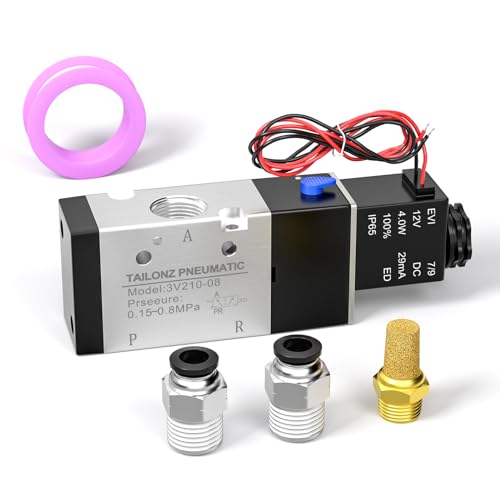
This 1/8″ NPT unit brings 12V operation into even tighter space demands. It remains a 2-position, 3-way valve with a pilot-operated design, suitable for small lines and precise routing in compact pneumatic projects. The smaller port size favors low-volume, high-control scenarios where rapid actuation is not a primary requirement, but reliability and space savings are critical.
Key considerations
- Small footprint supports panel mounting or tight enclosures.
- Assess system flow and backpressure to ensure adequate response.
- Compatibility with existing tubing and fittings is essential for leak-free operation.
Acogedor 3 Way 2 Position Solenoid Valve

Acogedor presents a 3-way, 2-position valve engineered for durable copper coil performance. The key features emphasize high-frequency capability (up to 10 Hz) with reliability under operation pressures between 0 and 0.7 MPa. Its aluminum alloy body reduces weight while maintaining machining precision to minimize leaks and ensure smooth cycling. This makes it suitable for more dynamic applications requiring quicker cycling without sacrificing stability.
Key considerations
- Higher potential repeatability in cycling applications due to copper coil and robust construction.
- Consider dynamic load and frequency limits to avoid premature wear.
- Ensure drive electronics can sustain the coil current for repeated cycles.
Baomain 4V230C-08 5 Way 3 Position

Baomain’s internally piloted, 5-way, 3-position valve offers a more complex routing option, suitable for setups requiring multiple exhaust and feed paths. With 12V DC operation, it supports broader pneumatic control in a single unit. The 1/4″ PT ports balance reasonable flow with compact form, making it a strong choice when you need additional control lines within a compact footprint.
Key considerations
- Five-port configuration enables versatile circuit designs.
- Internally piloted actuation can improve response consistency.
- Check compatibility with your control logic: some applications expect discrete exhaust paths.
RIH Pneumatics 4V310-10 12V/24V 5 Way Valve

RIH’s solenoid valve combines a 5-way, 2-position design with a single coil pilot operation, available in 12V and 24V variants. It is suitable for more complex pneumatic systems that require multiple actuators or venting routes. The 25 to 116 psi working range mirrors typical industrial control environments, enabling broader integration in automatic equipment or lab automation setups.
Key considerations
- 5-way control expands the potential layouts for actuators, cylinders, and valves.
- Choose the voltage variant that matches your control electronics (12V is common for hobbyists).
- Verify coil resistance and drive current to prevent overheating or insufficient actuation.
U.S. Solid 1/4in NPT 3 Way 2 Position Valve

U.S. Solid’s valve offers a 1/4″ NPT 3-way, 2-position configuration with a compact form factor. It’s described as having an IP65-rated housing, combining corrosion resistance with protection from dust and water. The DC 12V coil draws modest current and is suitable for straightforward on/off and vent control in pneumatic lines, making it a practical choice for durable, everyday use in small systems.
Key considerations
- IP65-rated housing adds environmental protection for non-lab environments.
- Compact, reliable operation with reasonable power draw.
- Confirm tubing and fitting compatibility to avoid leaks and misalignment.
Buying Guide: Key Purchase Considerations And Comparisons
When selecting a 12V 3-way solenoid valve, consider the following factors to ensure the best fit for your system:
- Port size and thread type: Match inlet and outlet sizes (1/8″, 1/4″, 3/8″ NPT) to your tubing and fittings; improper sizing can reduce performance or cause leaks.
- Electrical requirements: Coil voltage is typically 12V DC; verify current draw and compatible drive electronics to prevent saturation or overheating.
- Actuation mode and clarity: 3-way valves can route flow to different paths or vent lines. Decide if a simple 2-position, 3-way valve suffices or if a 5-way configuration is needed for more complex control.
- Operating pressure: Ensure the valve’s working pressure range aligns with your system, often around 25–116 psi for typical small pneumatic builds.
- Material and build quality: Aluminum bodies are common and lightweight; IP ratings (like IP65) protect against dust and water exposure in harsher environments.
- Cycling frequency: Some models are rated for higher switching frequencies than others. If your application demands rapid cycling, confirm the maximum Hz or cycle life.
- Environmental compatibility: Consider exposure to dust, moisture, and temperature. Marine or outdoor labs may require sealed housings or corrosion resistance.
- Maintenance and accessibility: Look for valves with simple port access, easy coil replacement, and readily available spare parts.
- Physical footprint and mounting: Ensure the valve fits within enclosure dimensions and mounting patterns; some models are panel-mmount friendly.
- Cost vs. features: Higher feature counts (5-way, higher-frequency cycling, IP ratings) come with increased cost. Balance requirements with budget.
Across these five options, the best choice depends on your project size, space constraints, required airflow, and how many channels you need to control. For quick, mid-range applications, the 3/8″ and 1/4″ NPT variants provide robust flow with straightforward integration. For ultra-compact builds, the 1/8″ NPT version is advantageous. If you need multiple control paths in one unit, a 5-way or internally piloted valve offers expanded routing, though it may require more careful wiring and panel space.