When selecting a 1 HP water pump, Americans seek reliability, strong flow, and durable construction for tasks such as basement drainage, pool drainage, and yard flooding. This guide highlights five top models, detailing performance, materials, and installation features to help you compare quickly. Each product includes practical pros and potential limitations to consider for your specific use case.
| Product | Brand | Approx. Flow | Key Benefit |
|---|---|---|---|
| Aquastrong Sump Pump 1 HP | AQUASTRONG | 4500 GPH | High flow with bottom suction |
| Wayne CDU1000 | Wayne | 6100 GPH | Durable cast iron and stainless steel |
| TRUPOW 1 HP Sump Pump | TRUPOW | 3981 GPH | Removable bottom screen |
| Red Lion RJS-100-PREM | Red Lion | 23 GPM | Premium cast iron build |
| Aeromixer 1 HP Transfer Pump | AEROMIXER | 5120 GPH | Versatile large-task capability |
Aquastrong Sump Pump 1 HP Overview

The Aquastrong sump pump delivers a powerful 1 HP motor achieving up to 4500 GPH at 5 ft, with a lift height up to 30 ft. Its bottom suction design helps reduce debris intake and can handle solids up to 1/5″. It ships with flexible discharge adapters and a 10 ft UL-rated power cord for added safety and convenience. Ideal for flooded basements, hot tubs, and window wells, installation is simplified by included adapters for common piping sizes.
Key features
- 1 HP motor for strong pumping power
- 4500 GPH performance at 5 ft
- Bottom suction minimizes air locks and clogs
- 1/5″ solids tolerance with easy installation adapters
Wayne CDU1000 Submersible Sump Pump

Wayne’s 1 HP model uses durable cast-iron and stainless steel construction with a vertical float switch. It’s designed for indoor basement applications, capable of moving up to 6,100 GPH. The top suction design reduces air lock risk and minimizes debris-related clogs. Easy setup typically completes in under 15 minutes, with no extra drilling required for a typical sump pit.
Key features
- Indoor use only; robust corrosion-resistant housing
- Top suction design lowers clog risk
- 6,100 GPH efficiency for rapid drainage
- Quick installation without weep hole drilling
Wayne 1 HP Heavy Duty Sump Pump (CDU1000ET)

This Wayne model emphasizes heavy-duty performance with a 1 HP motor and a steel-corrosive resistant build. It delivers around 6,100 GPH and features a top suction design to minimize air locks and debris buildup. The unit is designed for easy installation and reliable operation in basements or other indoor drainage scenarios.
Key features
- Cast iron and stainless steel construction for longevity
- Top suction minimizes clogging
- High discharge rate suitable for severe water inflows
TRUPOW 1 HP Sump Pump

TRUPOW’s 1 HP sump pump is designed for high-efficiency water removal with a maximum flow of 3,981 GPH and a lift height up to 28 ft. A removable bottom screen prevents large debris from entering the pump, aiding maintenance. The thermoplastic construction offers durability, with an automatic overload protection to safeguard the motor. Includes a 1″ NPT discharge and a 3/4″ garden hose adapter for flexible piping needs.
Key features
- High efficiency with strong lifting capability
- Removable bottom screen for easy cleaning
- Thermoplastic body with overload protection
Red Lion RJS-100-PREM 1 HP Jet Pump

The Red Lion RJS-100-PREM is a premium shallow well jet pump rated at 1 HP, capable of delivering up to 23 gallons per minute. It uses a rugged cast iron casing with a glass-filled thermoplastic impeller and diffuser for improved durability. The unit supports either 115 or 230 volts, with a capacitor included to boost starting power. It is CSA listed for use in the USA and Canada.
Key features
- 1 HP jet pump with 23 GPM at peak performance
- Cast iron housing and durable diffuser system
- Dual voltage operation (115/230V) with starting capacitor
Aeromixer 1 HP Transfer Pump
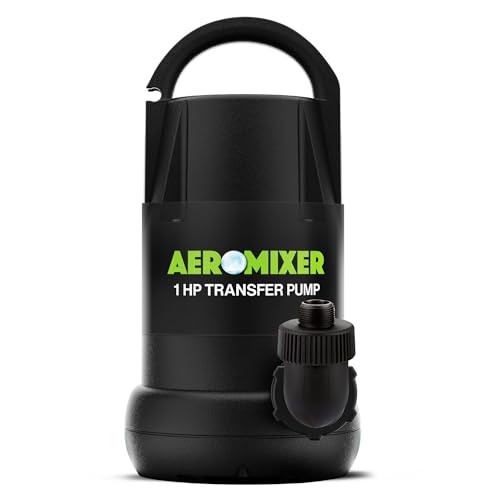
Aeromixer offers a versatile 1 HP submersible pump suitable for pool drainage, garden transfers, and general water removal. It pumps up to 5,120 GPH, tolerates large debris, and is designed for heavy-duty outdoor use. The unit is portable and can function as both a sump pump and a transfer pump for a variety of drainage tasks.
Key features
- High flow of up to 5,120 GPH
- Debris-tolerant design for outdoor use
- Portable and adaptable for multiple drainage tasks
Buying Guide: Key Purchase Considerations
When choosing a 1 HP water pump, consider the following factors to match your needs:
- Flow rate and head: Ensure the pump offers sufficient GPH and lift height to move water from your source to the discharge point. Basements and pools require higher head performance.
- Construction materials: Cast iron and stainless steel housings provide durability in harsh settings, while thermoplastic options can be lighter and corrosion-resistant.
- Submersible vs. surface: Submersible pumps are ideal for flooded areas and sump pits; surface pumps suit transfer tasks and hose drainage.
- Discharge sizing and adapters: Check NPT discharge sizes and included adapters to fit existing piping.
- Debris handling: Bottom suction and removable screens help prevent clogs when solids are present.
- Electrical considerations: Power cord length, voltage options, and overload protection affect installation and safety.
- Portability and installation: Look for handles, compact form, and easy setup if you plan to move the pump between sites.
- Intended environment: Indoor basement drainage vs. outdoor pool drainage require different sealing and corrosion resistance features.
Performance Comparison at a Glance
The five selected models cover a range of performance and use cases—from rapid indoor basement drainage to versatile outdoor water transfer. If you need maximum pumping capacity for severe floods, Wayne CDU1000 variants offer robust GPH while maintaining reliable top suction. For pool drainage and large outdoor tasks, Aeromixer and Aquastrong provide strong flow with debris tolerance. Red Lion adds a premium jet-pump option for shallow wells, and TRUPOW offers a reliable, maintenance-friendly sump pump with a removable bottom screen. Consider your water source, debris content, and installation constraints when deciding.