Flow switches play a critical role in automating pump systems, dosing stations, and water transfer setups. This guide highlights five 1-inch flow switches that balance durability, accuracy, and ease of installation. Each option is suited for common applications like chemical dosing, irrigation, water treatment, and fire sprinkler systems. Read on to compare features, materials, and compatibility to help select the right model for your project.
Summary table of selected products
| Product | Brand | Key Use | Voltage/Contacts | Notes |
|---|---|---|---|---|
| Flow Switch, Grid Controls 1″ M210 | Grid Controls | Pump/chemical dosing, 1″ line | 115VAC, ON 1.1 GPM / OFF 0.5 GPM | Includes electrical box and cord |
| HFS-25 1″ Paddle Flow Switch | YWBL-WH | Water treatment, HVAC, liquid handling | AC220V, 15A | High sensitivity; suitable for liquids non-corrosive to brass |
| Chazcool HFS-25 1″/dn25 Flow Switch | Chazcool | General water flow control | 6-380V SPDT, 220VAC microswitch | DN25 stainless steel paddle |
| McDonnell & Miller FS251 | McDonnell & Miller | General purpose, electronic | Electronic component; US origin | Replaces Fs4-3 |
| GREDIA 1″ Water Flow Sensor | GREDIA | Flow sensing with hall effect | DC 5-24V, 1-60 L/min | Pack of 2; incline calibration via Q formula |
Grid Controls 1″ M210 Flow Switch
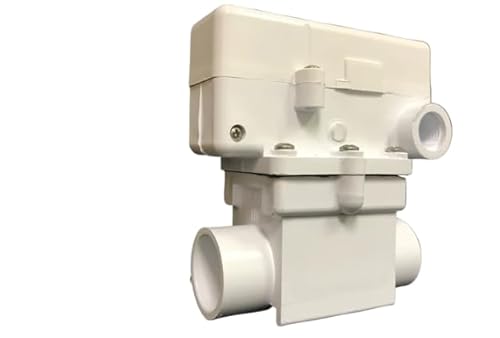
The Grid Controls M210 flow switch is designed for 1-inch piping with a compact electrical box and cord for plug-and-play installation. It targets pump control and dosing setups, providing a defined ON/OFF flow window: 1.1 GPM ON, 0.5 GPM OFF. This model supports 115 VAC operation and is suitable for systems where precise activation is required to start a dosing pump or similar device. Use cases include chemical dosing, irrigation, and water transfer. The included electrical box reduces wiring complexity in field installations and helps protect the control electronics from moisture and dust.
From an applications perspective, the M210 is well-suited for systems that require straightforward control with a single inlet. It can be integrated into pump stations, irrigation manifolds, and small-scale water treatment lines. Materials are designed to withstand typical household and light industrial environments, though users should confirm compatibility with any aggressive chemicals involved in dosing. The unit is widely compatible with standard 1″ piping and offers a balanced combination of reliability and ease of use for DIY installers and professionals alike.
YWBL-WH HFS-25 1″ Paddle Flow Switch
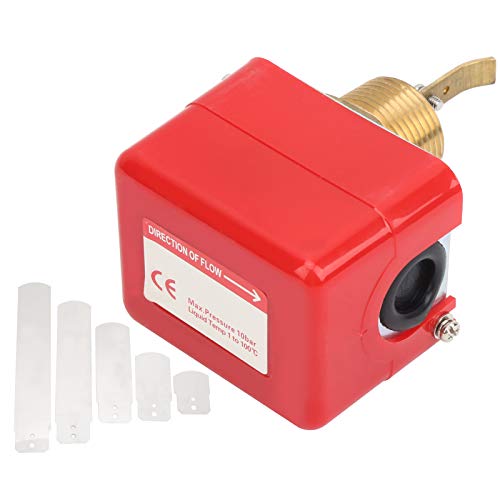
The YWBL-WH HFS-25 paddle flow switch employs a paddle mechanism to detect liquid flow in 1-inch lines. It is designed for water treatment systems, central air conditioning, and other water-based applications. The device is compatible with water and other non-corrosive liquids that do not affect sealing performance or brass and phosphor bronze components. A key feature is its high sensitivity and durable construction, making it practical for continuous operation in HVAC, treatment, and circulation loops. Operators should verify that the liquid meets compatibility requirements to avoid brass or seal damage and ensure proper flow activation.
With a focus on reliability, the HFS-25 offers straightforward installation and durable operation in environments where flow presence must trigger associated equipment. Its paddle design helps ensure robust response to modest flow changes, making it a solid choice for systems that monitor water flow to control pumps or valves. Users should ensure proper orientation and clearance to allow the paddle to move freely and avoid clogging by debris.
Chazcool HFS-25 1″/dn25 Flow Switch

The Chazcool HFS-25 is a 1″/dn25 paddle-type flow switch with SPDT contacts rated up to 380V and a 220 VAC microswitch. It features a stainless steel paddle designed for 0–60°C ambient and liquid temperatures from 0 to 60°C (with limits if the liquid freezes). The device monitors flow and energizes one circuit while breaking another, enabling simple control of pumps, alarms, or other equipment based on flow. It supports a range of liquids that are not corrosive to copper, including water-based solutions and glycol blends common in cooling and heating systems.
Practical deployment considerations include ensuring the liquid’s compatibility with copper components and confirming that the line pressure stays within the unit’s stated maximum (1.0 MPa). The SPDT configuration provides versatility for switching control circuits and interlocking safety devices. Installation requires attention to flow direction and secure mounting to prevent vibration from affecting accuracy. This makes the Chazcool switch a good choice for appliances and systems that require reliable dry-contact signaling in a compact form factor.
McDonnell & Miller FS251 Flow Switch
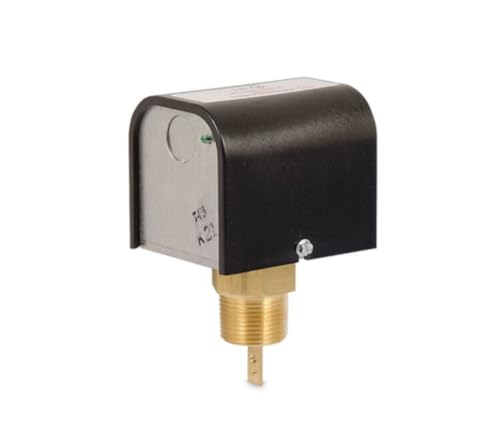
The McDonnell & Miller FS251 is positioned as a general-purpose flow switch, replacing the FS4-3 in certain configurations. It emphasizes electronic sensing in a compact package, suitable for applications requiring straightforward monitoring of fluid flow to trigger related controls. With factory-origin components and a compact footprint, the FS251 is often used in boiler and hydronic loops, where flow confirmation is necessary for safe operation and proper sequencing of pumps and valves. The listed product dimensions indicate a standard small form factor compatible with common panel installations.
When evaluating the FS251, users should consider compatibility with the system’s voltage, contact type, and the presence of any necessary enclosures or wiring harnesses. The electronic nature of this switch can provide precise signaling, but it also means electrical noise, vibration, or improper shutoff could impact performance if not properly mounted. Overall, this model offers a dependable option for established control schemes in commercial and residential hydronics.
GREDIA 1″ Water Flow Sensor
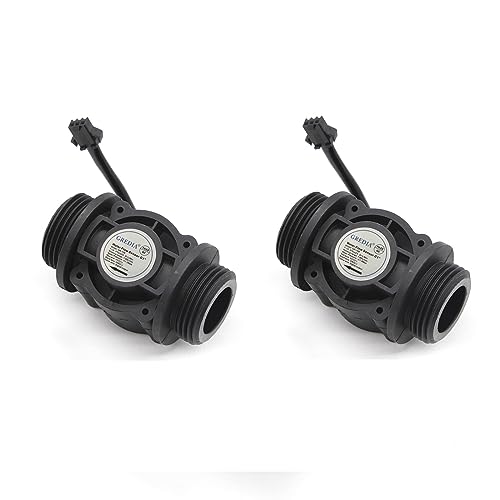
The GREDIA flow sensor offers a hall effect-based measurement in a 1-inch configuration, provided as a pack of two sensors. It is designed for liquids with a flow range of 1–60 L/min and supports DC voltages from 5 to 24 V. Applications include water flow monitoring in drinking water systems, irrigation, and industrial processes where digital interfacing or meters are needed. The F=(5.5*Q)±2% relationship provides a predictable output for simple flow rate calculations, making it suitable for integration with microcontrollers, data loggers, or digital controllers.
Important considerations include ensuring the liquid is non-corrosive to sensor materials and verifying supply voltage compatibility with your controller. Hall effect sensors tend to offer good longevity and reliability in dry or wet environments, but care should be taken to seal and protect electrical connections in humid or wet installations. The two-pack option is cost-effective for redundant sensing or multi-point monitoring in larger systems.
Buying Guide: Flow Switch Selection For 1-Inch Piping
Key considerations when selecting a 1-inch flow switch include application type, fluid compatibility, electrical requirements, and installation environment. The right model should reliably detect flow to start or stop a pump, trigger a valve, or initiate a dosing cycle, while accommodating the system’s power supply and control inputs. Below are essential factors and comparisons to help guide a decision.
- Application and flow range: For pump control and dosing, pick a model with a defined activation window (e.g., ON/OFF) that matches your system’s flow dynamics. Paddle-type sensors are common for liquid line monitoring, while electronic switches excel in precise signaling for automation.
- Voltage and contact type: Consider AC/DC compatibility, contact configuration (SPDT vs. SPST), and whether a dry contact or relay is required by the control logic. Ensure the switch voltage and current ratings align with the interlock, alarm, or controller inputs.
- Materials and compatibility: Stainless steel or brass components suit many water-based applications. Verify that the liquid is non-corrosive to copper and seals, and that materials tolerate any additives (chemicals, glycol, or cleaners) in the system.
- Environment and mounting: Evaluate ambient temperature, pressure range, and enclosure needs. Some switches are designed for wet environments or require protection against dust and moisture. Proper mounting reduces vibration and ensures accurate sensing.
- Wiring and installation: For quick installs, models with integrated electrical boxes and cord sets can reduce wiring time. Check for compatibility with existing control panels and whether external relays or digital interfaces are needed for integration.
- Maintenance and replacement: Consider modular components, availability of spare parts, and the ease of field replacement. A switch with a straightforward mechanical or electronic interface can shorten service times.
- Cost vs. durability: While price can be a factor, prioritize reliability in critical systems like water treatment or fire suppression. Durable flow switches with robust seals and corrosion resistance tend to deliver longer service life.
- Non-technical considerations: If the system involves dangerous chemicals or high-pressure lines, select models with appropriate certifications and robust safety features. Plan for future scalability if the system may expand to multiple branches or zones.