Choosing the right variable speed motor for a lathe can improve cutting control, torque, and finish quality. This guide highlights five top options that fit common hobbyist and light professional lathe setups, focusing on speed range, torque, and control features. The products below are assessed for ease of integration, reliability, and versatility across a range of lathe models.
| Product | Brand | Key Feature |
|---|---|---|
| PSI Woodworking TCLVSKIT2 Variable Speed Lathe Conversion Kit | PSI Woodworking | 3/4 HP motor with three belt positions for RPM ranges |
| High Torque AC Motor + Speed Controller + Gear Box | VQP | 0-135 RPM variable speed with reversible gear motor |
| AC Motor Speed Controller 120V 15A | Azucyzi | LED display, precise variable speed regulation, overload protection |
| Adjustable 4000W AC Motor Speed Controller | Boxyouping | High-current, versatile control for various 110-120V motors |
| Bemonoc High Torque AC Motor with Gearbox | Bemonoc | 0-7.5 RPM adjustable with reversible operation |
Below are five relevant options that cover a range of lathe sizes and power needs. Each entry includes a direct link to the product page and a quick note on what makes it suitable for lathe applications.
PSI Woodworking TCLVSKIT2 Variable Speed Lathe Conversion Kit

The TCLVSKIT2 kit enables a multi-speed lathe to run at variable speeds, featuring a 3/4 HP motor and a switch box controller. It provides three belt positions with RPM ranges of approximately 650-1450, 1250-2800, and 1600-3800. This setup supports a range of turning tasks from finishing to rough stock removal, making it a versatile upgrade for hobbyist lathes that require smoother speed control and torque at different diameters.
High Torque AC Motor + Speed Controller + Gear Box

This 250W single-phase geared motor offers high torque (16Nm) and a reversible operation option, with a variable speed range up to 0-135 RPM. While designed for heavier tasks, its compact configuration fits many small to medium lathes. Reversibility adds flexibility for threading and back-drafting operations, and the integrated gear box helps manage torque at lower speeds for stable turning of larger diameters.
AC Motor Speed Controller 120V 15A
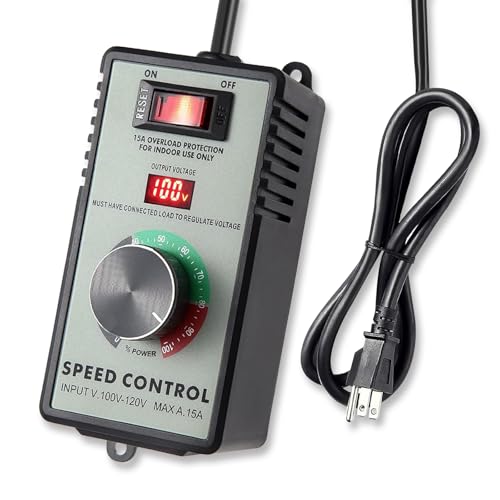
This speed controller features a precise LED display for regulating 120V motors. It supports both resistive and inductive loads up to 2000W and 1000W respectively, with overload protection. Ideal for enthusiasts needing accurate, readout-based speed changes on a lathe, including routers or grinders that share the same power circuit. The flame-retardant shell adds durability in workshop environments.
Adjustable 4000W AC Motor Speed Controller
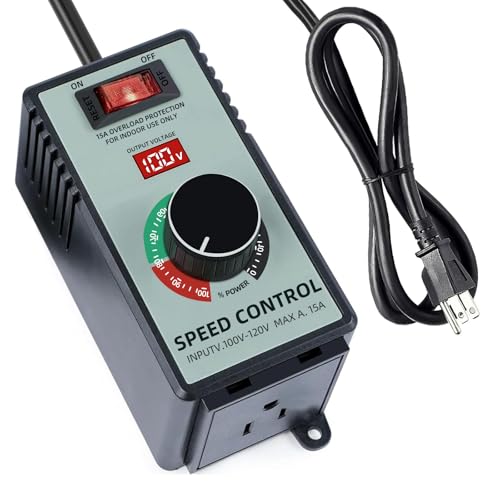
This high-current controller accommodates a wide range of single-phase motors from 110V to 120V. It provides smooth speed regulation for devices like routers, grinders, and small machining tools. Its broad compatibility makes it a solid option for workshop setups that require robust power management and stable voltage delivery to maintain consistent lathe performance across tasks.
Bemonoc High Torque AC Motor With Gearbox

The Bemonoc motor features a 25W drive with a 1:180 reduction ratio and a 10mm shaft. It offers reversible operation and precise speed control suited for applications such as conveyors or small machining tasks. The gearbox construction enhances durability and torque stability at low speeds, supporting reliable performance in finishing or threading operations on smaller lathes.
Buying Guide
Key considerations
- Power and torque: Match motor horsepower or wattage to your lathe’s spindle requirements. Higher torque helps with larger diameters or tougher materials.
- Speed range and control: Look for a unit offering a broad RPM span and stable regulation, with a clear method to adjust during cutting or threading.
- Control method: Options include belt-driven variable speed, electronic speed controllers, and VFDs. Choose based on noise, heat, and precision needs.
- Compatibility: Confirm mounting compatibility, shaft dimensions, and belt/pulley alignment with your existing lathe.
- Protection and safety: Overload protection, thermal cutoffs, and durable housings reduce risk during operation.
- Reversibility: If your tasks involve reversing direction (e.g., certain threading operations), a reversible motor can be advantageous.
Comparison perspectives
- Manual belt-change vs. electronic speed control: Manual setups may require more tuning but can be simple and reliable, while electronic controls provide finer, repeatable speeds.
- Compact gearboxes vs. direct-drive: Gearboxes offer higher low-end torque and control for small lathes, whereas direct-drive motors can be lighter and simpler for simple tasks.
- Single-phase options: Most hobbyist lathes use 110-120V. Ensure the chosen controller or motor is rated for your electrical system and local voltage standards.
- Safety features: Favor controllers with overload and short-circuit protection to protect both the motor and operator.
When selecting a variable speed solution for a lathe, prioritize compatibility with your spindle, desired speed range, and the level of control you need for your projects. The products above provide a spectrum from kit-based conversions to integrated motor and controller assemblies, enabling you to choose a configuration that aligns with your lathe size, material work, and workshop workflow.