Choosing the right spray coating for a metal roof involves durability, reflectivity, and flexibility to handle movement and weather. This guide highlights five top-performing products designed for metal surfaces, including elastomeric and silicone formulations. Each option balances adhesion, UV resistance, and ease of application, helping to prevent leaks and extend roof life. Below is a quick snapshot to compare key features and coverage.
| Product | Brand | Coating Type | Key Benefit | Approx. Coverage Notes |
|---|---|---|---|---|
| Rust-Oleum Elastomeric Roof Coating (710 White) | Rust-Oleum | Elastomeric | High reflectivity, quick rain resistance | Great for large flat roofs |
| AMES Maximum Stretch Roof Coating (White) | AMES | Elastomeric, acrylic, rubberized | 650% elongation, reduces heat gain | Adheres to metal; versatile for repairs |
| Liquid Rubber Waterproof Sealant (Black) | Liquid Rubber | Liquid rubber elastomeric | Over 950% elongation, flexible membrane | Excellent waterproofing for flat/low slope |
| Countryman Coatings 100% Silicone Roof Coating (White) | Countryman Coatings | Silicone | High reflectivity, no primer required | Widely compatible with many surfaces |
| RubberTop Roof Coating | Rubbertop USA | Elastomeric (acrylic & silicone) | Waterproof and temperature resistant | Easy spray/roll/brush application |
The list below focuses on five products well-suited for metal roofs, covering a range of application methods, reflectivity, and elasticity. Each entry includes practical details drawn from the product features to help you compare at a glance.
Rust-Oleum Elastomeric Roof Coating, White

The Rust-Oleum Elastomeric Roof Coating is designed for metal and other roof surfaces needing durable protection. Its formulation emphasizes high initial reflectivity and sustained reflectivity after weathering, helping to minimize heat absorption. The product is rain resistant within roughly six hours, supporting quicker return to service after application. This coating is suitable for large, flat roof expanses, where uniform coverage and durability are essential. It offers a balance between ease of application and long-term protection against weathering, making it a practical choice for homeowners and property managers.
Key considerations include surface cleanliness, proper agitation, and multiple coats as needed for full adhesion. While it provides strong reflectivity, users should verify compatibility with any existing coatings and follow safety recommendations for roof work.
AMES Maximum Stretch Roof Coating, White
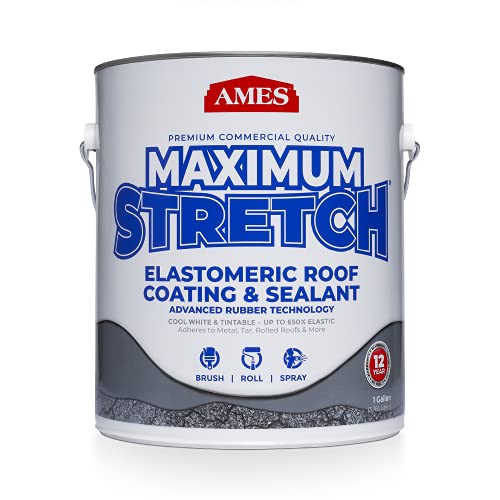
AMES Maximum Stretch Roof Coating is a white, elastomeric acrylic that combines rubberized properties with strong elongation. It offers about 650% elongation, helping resist cracking and peeling as the roof expands and contracts with temperature changes. With an 88% light reflectivity rating, the bright white finish reduces surface temperatures and cooling costs. The coating adheres well to metal roofing and other common roof substrates. It can be brushed, rolled, or sprayed on and is suitable for low-slope roof maintenance, RV roofs, and general waterproof sealing. This option emphasizes long-term flexibility and energy efficiency.
Application considerations include ensuring a clean, dry surface and applying in recommended conditions to maximize elongation and adhesion. The product’s versatility makes it a solid pick for projects requiring durable elasticity and reflective benefits.
Liquid Rubber Waterproof Sealant – Exterior Roof Coating

Liquid Rubber Waterproof Sealant provides a seamless membrane across flat and low-slope roofs, metal roofs, foundations, and more. Its formula uses an industrial-strength bitumen composition with remarkable flexibility—over 950% elongation—to withstand movement, temperature shifts, and UV exposure. The coating dries to form a durable, flexible rubberized layer that resists cracking and peeling. Coverage depends on surface type and coat thickness, but typical guidance notes multiple heavy coats for the desired membrane depth. This product is often positioned as a versatile, long-lasting waterproofing solution for preventive maintenance and leak repair.
Practical considerations include follow-up sealing for seams and penetrations, ensuring proper ventilation during application, and selecting the appropriate application method (brush, roller, or spray) for your roof’s geometry.
Countryman Coatings 100% Silicone Roof Coating

Countryman Coatings Silicone Roof Coating is a 100% silicone top coat designed for broad surface compatibility and high reflectivity, with performance claimed to approach a 90% UV reflectivity level. A notable feature is minimal primer requirement, as the silicone coating is engineered to adhere to many common roof surfaces without extensive surface preparation. This makes it a flexible option for aging roofs that still have good structural integrity. The product is marketed to reduce energy costs through high reflectivity and to extend roof life by sealing leaks, cracks, and seams.
When considering Countryman Coatings, evaluate roof surface types, needed curing times, and the compatibility with other coatings on the roof. Silicone coatings tend to excel in UV resistance and long-term durability but may require careful surface preparation for best adhesion on some substrates.
RubberTop Roof Coating

RubberTop Roof Coating offers a waterproof elastomeric blend with both acrylic and silicone components. The coating is designed to lower interior temperatures by reflecting radiant heat and is described as easy to apply via spray, roller, or brush. It combines resistance to heat and cold weather, making it suitable for metal roof environments with wide temperature swings. The product emphasizes straightforward application and durable protection against moisture ingress, contributing to a longer roof life and reduced energy load on cooling systems.
Key considerations include ensuring surface cleanliness, checking compatibility with any existing coatings, and applying with appropriate thickness for the desired membrane performance.
Buying Guide: Key Purchase Considerations For Metal Roof Coatings
- Material type and flexibility: Elastomeric coatings (rubberized) are known for cracking resistance on metal roofs, while silicone coatings excel in UV resistance and longevity. Choose based on climate, movement of the roof, and desired longevity.
- Reflectivity and energy savings: Higher reflectivity reduces heat absorption, potentially lowering cooling costs. White or light-colored finishes are typically best for reflective performance.
- Adhesion and substrate compatibility: Ensure the coating adheres well to metal surfaces and any existing coatings. Some products claim primer-free adhesion, while others may require surface prep.
- Elasticity and elongation: A higher elongation rating (e.g., 650% or more) indicates better ability to accommodate thermal expansion and contraction without cracking.
- Application method and ease: Consider whether you’ll spray, roller, or brush the coating. Large roofs may benefit from spray Application for efficiency, while smaller projects can use brushes or rollers.
- Curing time and weather tolerance: Shorter cure times speed up project completion, but consider weather windows and temperature constraints to avoid early wash-off or poor film formation.
- Durability and maintenance: Look for UV stability, resistance to cracking, peeling, and chemical exposure. Silicone coatings often require less maintenance, while elastomerics may require reapplication sooner in harsh climates.
- Longevity versus upfront cost: Higher-performance coatings may cost more upfront but provide longer service life and energy savings. Evaluate total cost of ownership over the roof’s expected life.
- Environmental and safety considerations: Check for VOC content, user safety guidelines, and ventilation requirements during application and curing.
When selecting a spray coating for a metal roof, match product specs to your roof’s slope, climate, and existing conditions. A thorough assessment—surface cleanliness, moisture levels, and structural integrity—will guide the best choice among elastomeric and silicone options. Consider both immediate protection and long-term performance to optimize longevity and energy efficiency.