Choosing the right pump for waste oil involves balancing flow rate, compatibility with various oils, safety features, and durability under demanding conditions. The following picks are designed to handle diesel, kerosene, biodiesel, and other light oils common in maintenance, automotive, and industrial settings. Each option emphasizes self-priming capability, heat protection, and robust construction to keep workflows efficient and safe.
Summary of chosen products
| Product | Brand | Key Capability | Power |
|---|---|---|---|
| 110V AC Diesel Transfer Pump | VALYHOOD | 15 GPM, self-priming; thermal protection | 110V |
| GROZ Heavy Duty Electric Oil Transfer Pump | Groz | 4 GPM; 55 gallon drum compatibility; aluminum body | 110/115/120V |
| BLACKHORSE-RACING Self Priming 110V | BLACKHORSE-RACING | 20-60 LPM; self-priming | 110V |
| TIGEROAR Oil Transfer Pump | TIGEROAR | 18 GPM; strong cast aluminum; high lift | 110V |
| YOHOME Diesel Transfer Pump | YOHOME | 20 GPM; high lift; overheat protection | 110V |
VALYHOOD 110V Diesel Transfer Pump

Features include a 15 GPM transfer rate and a self-priming design, suitable for diesel, kerosene, biodiesel, mineral oil, and related fluids. The unit uses a cast iron sealed pump chamber for durability and incorporates a built-in bypass to prevent backflow. Thermal protection automatically stops the pump if overheating occurs, enhancing safety and longevity. Flow performance: up to 16 ft suction lift and 42 ft head maximum, enabling flexible placement relative to the source container and discharge point.
GROZ Heavy Duty Electric Oil Transfer Pump

Designed to move bulk oils, hydraulic fluids, and antifreeze at 4 GPM, the GROZ pump emphasizes versatility across synthetic oils, used oils, and oil-based solvents. Its aluminum die-cast body resists corrosion, and sintered powder metal gears provide durability for demanding environments. The 2-inch bung adaptor supports common drum setups, expanding compatibility in workshops and warehouses. This pump is well-suited for large-volume transfers where reliability matters.
BLACKHORSE-RACING Self Priming 110V AC 16GPM
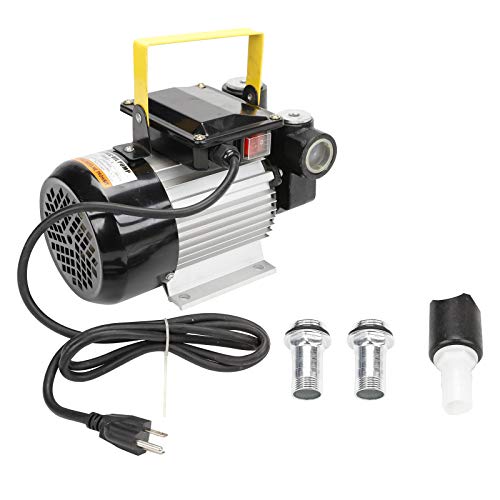
With a selectable flow range of 20-60 LPM (approx. 5.25-15.75 GPM) and a 110V AC 550W motor, this unit provides strong performance for automotive and industrial tasks. Self-priming operation simplifies setup, and the pump is designed for robust use in environments requiring reliable, continuous fluid transfer. The model emphasizes ease of maintenance and practical operation in busy workshops where quick transfers are essential.
TIGEROAR Oil Transfer Pump

This pump offers up to 18 GPM with a 1/2 HP motor and a maximum lifting height of 49 ft. Built with a cast aluminum body, cast iron pump head, and protective anti-corrosion finishing, it is designed for durability in challenging environments. Included 3/4″ hose adapters and a secure cooling fan aid heat management during extended operation. The copper motor improves efficiency and reduces the likelihood of early wear.
YOHOME Diesel Transfer Pump

With a flow rate up to 20 GPM and a 110V / 60 Hz power supply, the YOHOME pump is built for efficiency in transferring diesel, kerosene, biodiesel, and light fuel oils. It can lift fuel up to 60 feet and offers a suction lift around 6.6 feet, simplifying operations from elevated containers or taller drums. Overheat protection and a built-in bypass help ensure stable operation during longer transfer tasks, contributing to safer and more reliable performance.
Buying Guide: Key Considerations When Selecting a Waste-Oil Pump
When choosing a pump for waste oil, consider the following factors to ensure you pick a unit that fits your needs:
- Fluid compatibility: Ensure the pump materials resist corrosion from diesel, biodiesel, kerosene, and used oils. Aluminum and cast iron components are common, but confirm seals and diaphragms suit your fluids.
- Flow rate and head: Higher flow saves time but may require more power and proper mounting. Check both maximum lift (suction height) and discharge head to match container height and destination.
- Self-priming capability: A pump that self-primes reduces setup time and is more forgiving when the source tank is not perfectly vented.
- Safety features: Overheat protection, automatic shutoff, and bypass valves prevent damage and reduce fire risk in oily environments.
- Durability and construction: Look for robust housings (cast aluminum, cast iron) and protected electrical components for workshop use.
- Drum compatibility: If you work with drums or totes, a model with bung adapters or compatible fittings will simplify operations.
- Maintenance: Access to spare diaphragms, seals, and diaphragms; cleanability; and ease of disassembly affect long-term costs.
- Power availability: Most models use 110V AC; confirm your facility has a compatible power source and consider duty cycle for continuous use.
- Portability and mounting: Weighs, handle design, and mounting holes influence how easily you can position or secure the pump in a shop.
- Environmental conditions: Waterproof switches or sealed housings improve safety in humid or outdoor settings.
How to Compare Models
- Match flow rate to your workload: For heavy daily use, target pumps in the 15–20 GPM range with sufficient lift and robust cooling.
- Assess oil compatibility: If you encounter biodiesel or fuel blends, verify seals and diaphragms tolerate these fluids.
- Check ease of maintenance: Pumps with easily replaceable diaphragms and accessible filters reduce downtime.
- Evaluate safety features: Overheat protection and automatic shutoffs are crucial in high-heat environments or extended pumping sessions.
These considerations help select a pump that balances performance, reliability, and total cost of ownership for waste-oil handling in automotive, industrial, and maintenance settings.