Finding the right air pressure regulator is essential for consistent performance in pneumatic tools, painting, and hobby projects. The following selections prioritize reliability, adjustable ranges, and compatibility with common air lines. Each product is evaluated for build quality, ease of use, and accuracy. Below is a quick summary of the five highlighted regulators to guide your decision.
| Product | Brand | Thread | Pressure Range | Notes |
|---|---|---|---|---|
| SNS AR2000-N02 | SNS | 1/4 NPT | 0-150 PSI | Bracket and gauge included |
| DEVMO AR2000 | DEVMO | AR2000 standard | 0-150 PSI | Aluminum alloy with gauge |
| SNS AR4000-N04 | SNS | 1/2 NPT | 0-150 PSI | Higher flow, bracket and gauge |
| Walfront G1/4 | Walfront | G1/4 | 0-? PSI (typical 0-150) | Stable aluminum alloy regulator |
| Preciva 4 Way | Preciva | 1/4″ & 1/8″ ports | 0-180 PSI | Four-way valve with safety relief |
SNS AR2000-N02 Pressure Regulator

The SNS AR2000-N02 is a compact air regulator with a 1/4 NPT thread. It provides a 0-150 PSI adjustable range and a rated flow of 19.4 SCFM (550 L/min), making it suitable for hobbyist air tools and small shop tools. Operating temperature spans 5 to 60°C (41-140°F). The included bracket and gauge facilitate quick setup and monitoring, offering a straightforward solution for precision control in compact systems. Its aluminum body supports durability while maintaining light weight. This model emphasizes reliable regulation with a focus on accessibility for DIY users and small shops.
DEVMO AR2000 Aluminum Regulator
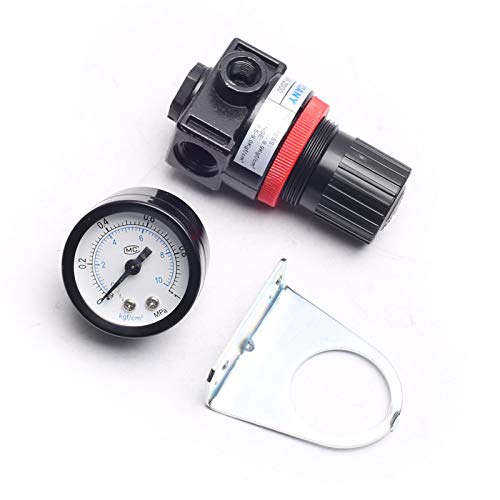
The DEVMO AR2000 regulator is built from an aluminum alloy and plastic, combining light weight with corrosion resistance. It includes a gauge to monitor output pressure and is positioned as an adjustable regulator suited for general pneumatic applications. The product emphasizes a balance between durability and straightforward operation, making it a practical choice for users seeking a dependable regulator for everyday air-handling tasks. The design leans toward ease of installation and maintenance in small to mid-sized pneumatic setups.
SNS AR4000-N04 Large-Flow Regulator

The SNS AR4000-N04 is designed for higher-volume air applications, featuring a 1/2 NPT thread and an impressive rated flow of 211.9 SCFM (6000 L/min). It maintains a 0-150 PSI range and a temperature span of 5 to 60°C (41-140°F). This model suits workshops or tools requiring more substantial airflow while preserving precise pressure control. The larger porting makes it a fit for air tools with elevated demands, such as spray systems or continuous-duty air lines. Bracket and gauge support facilitate precise setup and monitoring in busy work environments.
Walfront G1/4 Aluminium Regulator

The Walfront G1/4 regulator is constructed from high-quality aluminium alloy, designed to deliver stable, reliable pressure regulation with a balanced inlet structure. It emphasizes precision and leak resistance, making it a solid choice for pneumatic systems that demand consistent output. The integrated gauge helps monitor pressure levels, supporting accurate adjustments for tools and devices in small to medium-scale air networks. The regulator’s durability aligns with continuous use in workshops or garage setups.
Preciva Four-Way Regulator Valve

The Preciva four-way air pressure regulator integrates a primary regulator with additional ports for multiple connections, including a safety relief valve. It supports a pressure range up to 180 PSI (12 BAR) and is built with aluminum alloy and plastic for durability while keeping weight manageable. The top-mounted red ON/OFF switch enhances ease of use in field setups or integrated systems. Its versatile port configuration suits complex lines where multiple tools require regulated air from a shared source. This model is appropriate for shop environments needing a compact, multi-connection regulator with built-in safety features.
Buying Guide: Pressure Regulating Valves for Air Systems
Key purchase considerations help align a regulator with your needs:
- Pressure range and accuracy: Choose regulators that cover your target working pressure with stable output. Look for gauges that clearly indicate current settings and allow fine-tuning.
- Port size and thread compatibility: Common options include 1/4″ NPT, 1/2″ NPT, and metric equivalents like G1/4 or G1/2. Ensure the connection threads match your hoses and fittings to avoid leaks.
- Flow capacity: For tools with higher air demand, such as spray systems or impact tools, select regulators with higher SCFM/L/min ratings. A regulator with insufficient flow can starve tools during operation.
- Material and durability: Aluminum alloys offer lighter weight and corrosion resistance. Brass components tend to be robust for long-term use in demanding environments.
- Built-in gauge and accessibility: A clear gauge helps with quick monitoring. Some units include brackets for stable mounting, improving accessibility in tight spaces.
- Safety features: Four-way regulators or models with integrated relief valves help prevent over-pressurization, protecting equipment and operators.
- Ease of installation: Look for units with straightforward mounting options and simple adjustment mechanisms. Compatibility with existing lines reduces installation time.
- Maintenance and replacements: Consider availability of spare parts, such as gauges, seals, and seals, to minimize downtime.
For different use cases, consider the following perspectives:
- Home shop or hobbyist use: Favor compact regulators with easy gauge reading and simple adjustment. A 0-150 PSI range is typically sufficient for most tools.
- Garage or light manufacturing: Prefer regulators with higher flow capacity and robust construction. A model with a gauge and bracket improves monitoring in busy work areas.
- Spray and painting tasks: Look for precise regulation and stable pressure to ensure consistent spray patterns. A regulator with a clear gauge and good sealing is essential.
- Multi-tool systems: A four-way regulator or a regulator with multiple ports enables connecting several tools while maintaining controlled pressure across the network.
All five products introduced above provide credible options for different budgets and needs. When selecting, prioritize compatibility with your air system, required flow, and the level of monitoring you prefer during operation. The right regulator will stabilize performance, extend tool life, and reduce waste from pressure fluctuations.