When choosing a mixing valve for an eyewash station, reliable temperature control and fast response to cold-water loss are essential. The following selections prioritize thermostatic performance, ease of installation, and ANSI/OSHA considerations to help keep eyewash procedures safe and compliant in laboratories, industrial facilities, and workshops.
The table below summarizes five top options, highlighting brand, model, and standout features to consider as you compare products for your eyewash needs.
| Product | Brand | Key Feature |
|---|---|---|
| Speakman Safe-T-Zone STW-370 Thermostatic Mixing Valve | Speakman | Positive shut-off when cold water is lost; single eye/eye-facewash compatibility |
| Speakman SEF-TW Eyesaver Thermostatic Mixing Valve Kit | Speakman | Integral cold water bypass; high flow capacity; cold-water shutoff |
| Haws 9201E Emergency Thermostatic Mixing Valve | Haws | Wide flow range; low internal pressure drop; fast wax-based thermostat |
| Fiivas Eye Wash Station Faucet Mounted Kit | Fiivas | Faucet-mounted, no separate plumbing; multi-angle rotating |
| Lunarlipes Faucet Mounted Eyewash Station Kit | Lunarlipes | ANSI Z358.1 compliant; quick-connect adapters; turnkey installation |
Speakman Safe-T-Zone STW-370 Thermostatic Valve
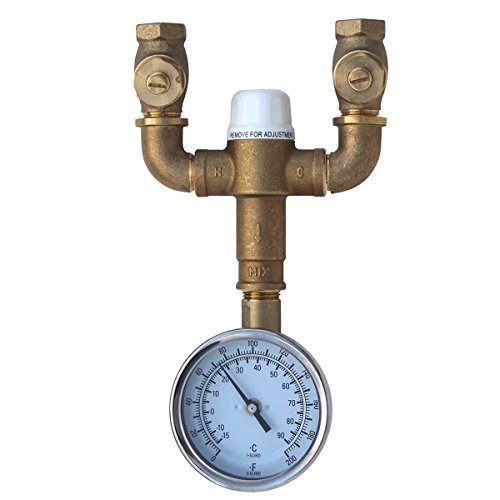
The Speakman STW-370 replaces older Speakman SE-370 models and is designed for single eye or eye/facewash stations. It provides a positive shut-off mechanism when cold water is lost, contributing to safer, more controllable eyewash operation. A robust rough brass build supports durability in demanding environments. Installation compatibility with existing eyewash configurations makes it a practical upgrade for facilities seeking improved temperature control and reliability.
Speakman SEF-TW Eyesaver Thermostatic Kit

This Eyesaver Thermostatic Mixing Valve Kit by Speakman features an integral cold-water bypass and a valve shutdown on loss of cold water, with a generous 53 gpm capacity. It is designed to ensure reliable eyewash flow and temperature stability, supporting quick, safe flushing during emergencies. The dual-function approach helps maintain compliance while simplifying installation in laboratories or industrial settings.
Speakman SEF-1850-TW Eyesaver Laboratory Faucet Kit

The SEF-1850-TW combines a full-function laboratory faucet with an independently operated eyewash and thermostatic mixing valve. Its patent-pending 2-in-1 design supports continuous eyewash operation while allowing normal faucet use. The aerated eyewash is designed for user comfort and can provide the full recommended eyewash duration, making it suitable for labs requiring a compact, integrated solution.
Haws 9201E Emergency Mixing Valve

The Haws 9201E offers a broad 1–31 gpm flow range with fast temperature response. This valve features low internal pressure drop, advantageous in systems with variable supply pressure. Its wax-based thermostat technology supports rapid, reliable temperature control across the operating range, making it a strong choice for facilities that demand precise temperature consistency during eyewash use.
Fiivas Eye Wash Faucet Kit

The Fiivas faucet-mounted eye wash station attaches directly to a standard faucet, eliminating the need for separate plumbing. Its multi-angle rotation and quick activation enable efficient flushing in emergencies. This option is well-suited for areas with limited space or where temporary eyewash solutions are needed without major remodeling.
Lunarlipes Faucet Mounted Eyewash Kit

The Lunarlipes kit converts a standard faucet into an ANSI Z358.1-compliant eyewash station with multiple adapters and inspection tools. It emphasizes ease of installation and compatibility with various faucet sizes, making it suitable for industrial sites, laboratories, and offices that need a quick, standards-aligned eyewash solution without extensive plumbing work.
Buying Guide: Key Considerations For Eyewash Mixing Valves
Choosing the right thermostatic mixing valve for an eyewash station involves balancing performance, reliability, and ease of maintenance. Here are several purchase considerations to help you compare options:
- Temperature stability and safety: Look for thermostatic control that maintains a safe eyewash temperature across a wide range of supply conditions. Features like cold-water bypass and automatic shutoff on cold-water loss are particularly valuable for safety.
- Flow rate: Eyewash stations typically require adequate flow to meet ANSI/OSHA guidelines. Check the rated gallons per minute (gpm) to ensure the valve can deliver sufficient water without excessive pressure drop.
- Response to cold-water loss: Valves with a reliable shutoff when cold water is interrupted prevent scalding or under-washing, which can improve overall eyewash effectiveness.
- Integration with existing fixtures: Faucet-mounted or integrated faucet-and-eyewash designs reduce installation time and cut down on plumbing work, which is beneficial for retrofits or limited spaces.
- Certifications and standards: Ensure products meet ANSI Z358.1 for eyewash stations and OSHA compliance where applicable. Third-party testing or third-party-inspected units add reassurance for safety-critical installations.
- Durability and materials: Rough brass, stainless steel, or corrosion-resistant finishes help ensure longevity in industrial environments. Consider stainless or brass with protective coating for long-term use.
- Maintenance and serviceability: Units with straightforward disassembly for cleaning or calibration reduce downtime. Some kits offer integrated bypass or shutoff features that simplify service.
- Installation footprint and space: Faucet-mounted units suit compact spaces, while separate valve assemblies provide flexibility in larger labs or workshops.
- Cost vs. value: While initial cost matters, factor in reliability, maintenance needs, and the potential downtime saved by a robust system when evaluating total cost of ownership.