The following selections target metal-enabled laser engraving and cutting with a focus on accuracy, speed, and ease of use. Each model offers strong performance for metal-compatible tasks, from thin metal foils to coated metals, while also handling wood, plastic, and glass. This guide highlights five options that balance power, feature sets, and beginner-friendliness for DIY enthusiasts, hobbyists, and professionals.
| Product | Brand | Power | Working Area | Key Strengths |
|---|---|---|---|---|
| ACMER S1 Laser Engraver (6000mW) | ACMER | 6000 mW | 130×130 mm | Ultra-fine accuracy, fast engraving, versatile material support |
| LONGER RAY5 Laser Engraver 20000mW | Longer | 20000 mW | 400×400 mm | High power, color options, multi-machine control |
| LONGER RAY5 Laser Engraver 2500mW | Longer | 2500 mW | 130×130 mm | Portable, beginner-friendly, compact working area |
| ACMER S1 Laser Engraver (3500mW) | ACMER | 3500 mW | 130×130 mm | Solid mid-range power, quick setup, broad material scope |
| Carverall K15 Pro 5W | Carverall | 5000 mW | 200×300 mm | Real 5W output, strong cutting grip, wide software compatibility |
Note: All models listed support engraving and cutting on multiple materials. When choosing for metal work, consider power (mW), focal length, working area, and compatibility with metal coatings or thin metals. Always follow safety guidelines and use appropriate protective gear during operation.
ACMER S1 6000mW: High-Precision Metal Engraving

Powered by a 6000mW diode laser, this ACMER S1 model offers a 455±5 nm wavelength and a 2 mm focal length for fine detail. The machine reports up to 10,000 mm/min engraving speeds and 0.01 mm repeatable positioning accuracy. It supports engraving on wood, bamboo, leather, plastic, PCB, aluminum oxide, ceramics, and, with appropriate settings, thin metal sheets or coated surfaces. The unit is described as 99% preassembled, simplifying setup to a brief laser head installation.
Its dual-function design (engraving and cutting) is a practical choice for hobbyists and small businesses, enabling complex designs on metal-coated materials or softer metals where laser interaction is favorable. The included speed and accuracy metrics help users estimate project timelines and finish quality. For projects combining metal with other substrates, the S1 6000mW offers versatility without sacrificing precision.
LONGER RAY5 20000mW: Industrial-Grade Power

The Longer Ray5 20000mW model stands out with a robust 20W laser, enabling deep engraving and cutting on select metals and metal-coated substrates. It claims 0.01 mm engraving precision with 0.08×0.08 mm laser spots and uses an upgraded 240MHz ESP32 chipset to support rapid processing and simultaneous operation across multiple machines. The 400×400 mm working area provides ample space for larger projects, while multi-pass cutting can handle thicker materials such as certain woods and layered metals when needed.
In addition to metal compatibility, the Ray5 series emphasizes multi-color engraving options (via built-in color palettes) and high-speed performance. The device is suited for professional studios or makerspaces requiring high throughput and consistent results across larger workpieces. Operators should account for ventilation, power supply stability, and heat management given the power level involved.
LONGER RAY5 20000mW: Advanced Multi-Function Engraver

This entry highlights the high-output capability and color engraving features. It supports continuous operation (7×24 hours) and offers a 256-color palette for enhanced visual effects. The combination of a large workspace, a fast processor, and a potent laser makes it a strong candidate for studios that routinely handle metal-coated workpieces, aluminum oxide, or thin metal foils—with the understanding that cutting through solid metal may require material-specific tech and multiple passes.
ACMER S1 3500mW: Balanced Performance

This mid-range S1 model provides 3500 mW of laser power with a 2 mm focal length and 0.01 mm precision. It shares the 455±5 nm wavelength and 130×130 mm workspace with the lower-power variant, combining reliable engraving on metals with broad material compatibility. The device emphasizes quick setup (99% preassembled) and ease of use, suitable for beginners expanding into metal-friendly projects or for small craft operations requiring steady, precise results.
With its 2-in-1 engraving and cutting capability, the 3500mW S1 remains a solid choice for projects that mix materials—metal-coated substrates, wood, acrylic, and ceramics. While not as powerful as the 6W or 20W offerings, it delivers consistent accuracy and a compact footprint ideal for home workshops and classrooms exploring metal-friendly applications.
Carverall K15 Pro 5W: Pro-Level Precision
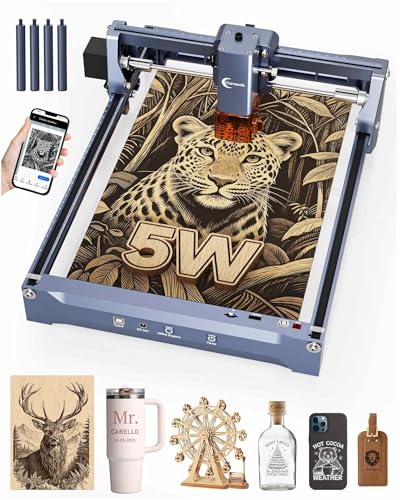
The Carverall K15 Pro offers a true 5W output, enabling robust engraving and cutting on wood, metal coatings, and other substrates. It emphasizes 0.01 mm precision at speeds up to 15,000 mm/min, making it well-suited for jewelry, gifts, and detailed decor. The machine ships with safety glasses, test materials, and setup that claims a 90-second assembly with six screws, plus broad software compatibility (CutLabX, LightBurn, LaserGRBL) for Windows, Mac, Android, and iOS.
For projects requiring reliable performance on metal-related tasks, the K15 Pro stands out for its combination of genuine laser power, relatively large 200×300 mm workspace, and user-friendly software ecosystem. Users should evaluate material thickness and the need for post-processing when working with metal surfaces or coatings, as with any high-speed laser system.
Buying Guide: Key Purchase Considerations
Power and material compatibility: Higher wattage lasers generally handle metal coatings and thin sheets more effectively. For uncoated metal, verify material thickness limits and required pass counts. Look for laser spot size (smaller is usually better for detail).
Working area: Larger workspaces enable bigger designs and batch projects. Consider whether you need a compact setup for home use or a larger, more versatile bench for a studio or workshop.
Precision and speed: Look for stated engraving accuracy (often 0.01 mm) and maximum engraving speeds. For intricate metal work, accuracy takes priority over raw speed.
Software ecosystem: Compatibility with LightBurn, LaserGRBL, and CutLabX can simplify workflow. Ensure the device supports your preferred platform (Windows, Mac, Linux) and any offline or network capabilities you may require.
Safety and usability: Preassembled or beginner-friendly units reduce setup time. Check included safety features, protective enclosures, and eye protection. For metal-related work, ensure proper ventilation and heat management, especially with high-powered units.
Upgrade paths and accessories: Consider optional rotary modules, risers, and additional lenses or focusing options. Verify availability of spare parts and service support in your region.
Total cost of ownership: Higher-power models may demand more robust power supplies and ventilation. Balance upfront cost with expected project throughput and maintenance needs.