When labeling pipes in industrial on-site environments, durability, legibility, and easy integration with existing workflows matter most. This guide highlights five robust pipe labeling solutions designed for heavy-duty use, from compact desktop units to portable printers. Each option supports clear identification, compliance-ready labeling, and efficient in-house production to keep facilities safe and organized.
| Product | Brand | Key Benefit | Approximate Use |
|---|---|---|---|
| LabelTac Ammonia Pipe Marking Industrial Label Printer | LabelTac | Rugged, compact industrial label printer with in-house software | Warehouse and office environments |
| Brady S3100 Sign and Label Printer | Brady | Automated setup with durable signage and labeling | Wires, panels, circuit boards, industrial items |
| BradyPrinter i3300 Industrial Label Printer | Brady | Smart calibration and fast changeovers | Pipe markers and facility signs |
| LabelTac 5S Industrial Label Printer | LabelTac | Space-saving design with 5S workflow support | Office and warehouse labeling |
| DYMO Rhino 4200 | DYMO | Hot keys and quick access for fast labeling | Job sites and heavy-duty labeling |
LabelTac Ammonia Pipe Marking Printer
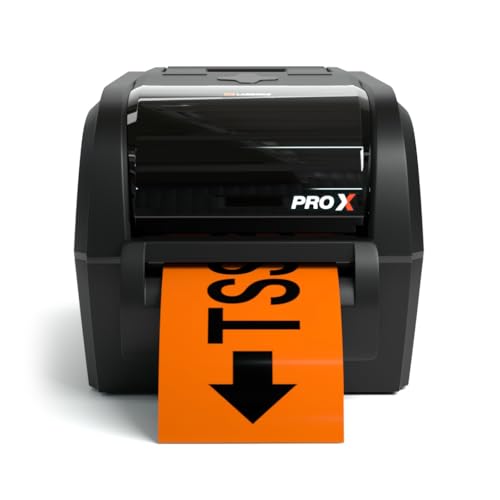
The LabelTac Pro X system emphasizes space-saving durability designed for tight workspaces, matching industrial resilience with a compact footprint. It integrates seamlessly into standard PC setups via Ethernet and USB, and ships with LabelSuite Software to produce in-house signage and barcodes. An intuitive color LCD keeps essential information visible, while quick-swap supplies streamline ongoing labeling tasks. It supports LabelTac materials ranging from ½” to 4″ wide, making it suitable for pipe markers, safety signs, and facility identifiers.
Brady S3100 Sign and Label Printer

The Brady S3100 focuses on desktop reliability for industrial labeling, enabling multi-line signs and labels to clearly identify components such as wires, panels, and circuit boards. It features automatic label setup that reduces calibration time, ensuring quick deployment. Compatibility with Brady B30 Series Continuous Labeling Tape allows for varied styles and widths, supporting durable, legible pipe and equipment labeling in streamlines settings.
BradyPrinter i3300 Industrial Label Printer

The Brady Printer i3300 includes the Brady Workstation SFID software suite for rapid creation of pipe markers and safety labels. It offers auto calibration and smart print integration, helping ensure label quality and consistency. Quick 20-second changeovers with foolproof drop-in label rolls and ribbons reduce downtime in high-demand labeling environments.
LabelTac 5S Industrial Label Printer
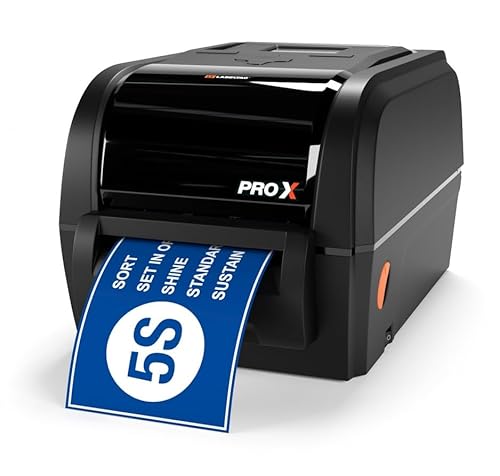
The 5S model emphasizes a compact, tidy footprint to support 5S organizational principles in workplaces. It offers USB and Ethernet connectivity and comes with LabelSuite Design and Print Software to create labels that support ongoing organizational improvements. The color LCD provides status visibility for proactive maintenance, and it supports LabelTac supplies from ½” to 4″ wide, enabling quick, interruption-free labeling cycles.
DYMO Rhino 4200 Industrial Label Maker

The Rhino 4200 emphasizes fast labeling through a QWERTY keyboard and one-touch hot keys for common wire and cable labeling tasks. It also includes a Favorites memory feature to recall frequently used labels and terms, which can improve consistency across pipe and equipment markings in demanding environments.
Buying Guide
- Label technology and durability: Consider printers that support weatherproof, chemical-resistant tapes or labels suitable for industrial pipe labeling to ensure long-term legibility in harsh environments.
- Print width and material compatibility: Choose a model that supports the required label widths (commonly ½” to 4″) and compatible tapes or heat-shrink materials for accurate, durable pipe markers.
- Software integration: Look for printers with integrated design software (LabelSuite, SFID, or similar) or compatibility with widely used labeling software to simplify template creation and batch labeling.
- Connectivity and workflow: USB and Ethernet are standard; consider wireless or mobile app options for field labeling. Portability may be important for on-site labeling tasks.
- Changeovers and maintenance: Quick-change label rolls, auto-calibration features, and user-friendly supply loading reduce downtime and training needs on busy sites.
- Support and training: Vendors offering robust technical support and clear documentation help minimize downtime when deploying new labeling systems.
- Regulatory compliance: For industrial facilities, ensure that labels meet relevant safety and identification standards and that the system can produce compliant markings at scale.
- Cost of ownership: Evaluate initial purchase, consumables, and long-term software or maintenance fees to determine total cost of ownership over several years.