The following selections highlight equipment designed for high-volume kitchens, food production facilities, and professional processing operations. From commercial dehydrators to heavy-duty meat grinders and vacuum sealers, these machines are chosen for durability, throughput, and sanitation—key factors in industrial food processing. Below is a quick overview of five top-performing units, followed by an in-depth look at each model and a practical Buying Guide to help compare options.
| Product | Brand | Key Strength | Capacity |
|---|---|---|---|
| Cercker 22-Tray Commercial Dehydrator | Cercker | Large capacity; dual-plug 110V/220V | 121 L drying space |
| #12-840LB/H Meat Grinder | FOHERE | High hourly throughput; commercial-grade motor | 840 lbs/hr |
| Septree 18-Tray Dehydrator | Septree | Industrial-grade, 24/7 capable | 34.42 ft² |
| Avid Armor USV20 Vacuum Sealer | Avid Armor | Leak-free sealing; marinating capability | 11.5″ chamber bar |
| VEVOR 550LB/h Meat Grinder | VEVOR | Efficient 1100W motor; durable stainless build | 550 lbs/hr |
Cercker 22-Tray Commercial Dehydrator

The Cercker 22-Tray Dehydrator provides a high-capacity option for drying fruits, vegetables, and proteins in commercial settings. It features a dual-plug setup to accommodate 110V or 220V installations, addressing different regional electrical standards. With 121 liters of usable space across 22 trays, this model supports large batches while maintaining straightforward operation. A thickened viewing window helps monitor the drying process, and a 2500W heating system delivers efficient performance for busy kitchens and small processing plants. A 3-year warranty offers extended after-sales support.
Key considerations include energy management, tray organization, and cleaning. This unit emphasizes a balance between capacity and practical maintenance. The optional dual-plug configuration enables flexible deployment in facilities that operate across different power supplies. The design prioritizes robust construction and visibility during drying, helping operators optimize timing and product quality.
FOHERE #12 Meat Grinder (840 LB/H)
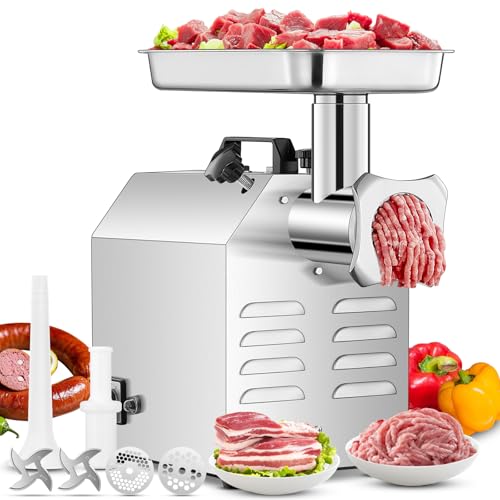
The FOHERE #12 Commercial Meat Grinder is designed for high-volume meat processing, delivering up to 840 pounds per hour with a 1.2 HP motor. The unit includes two stainless-steel blades and two grinding plates, enabling versatile texture and grind sizes. Built for continuous operation, it supports extended production runs in restaurants, butchers, and food production facilities. The design emphasizes easy cleaning, with a detachable, dishwasher-safe approach for most components. Important notes include avoiding dishwasher cleaning for accessories and ensuring thorough drying after cleaning.
Operational benefits include a powerful copper motor for reliable performance, smooth heat dissipation, and a wide 54 mm feeder tube to minimize pre-grinding prep. The unit supports a range of meats, including venison, pork, poultry, and lamb, aligning with diverse processing needs. While maintenance is straightforward, regular inspection of seals and blades is advised to sustain peak output in busy environments.
Septree 18-Tray Commercial Dehydrator

The Septree dehydration system combines a large tray count with stainless steel construction suitable for heavy daily use. It includes 18 trays and a visible glass front for monitoring progress. The device offers a 34.42 ft² drying area and a digital control panel with a precise temperature range from 70ºF to 190ºF, plus a 0.5-24 hour timer with automatic shutoff. Overheat protection helps guard against operational faults during extended cycles. The unit is designed for continuous operation, including a 24/7 capability claim, making it a strong fit for commercial kitchens, meat shops, and small processing facilities. Trays and liners are dishwasher safe for efficient cleaning.
Considerations for this model include the reliability of the digital controls, the ease of cleaning, and the overall footprint. The stainless steel construction supports sanitation standards, while the inclusion of hanging racks and hooks adds flexibility for jerky and wide-drying applications. Capacity planning should account for peak-load periods to maximize throughput without sacrificing product quality.
Avid Armor USV20 Vacuum Sealer

The Avid Armor USV20 is a chamber vacuum sealer designed for liquid-rich foods and marinating applications. It provides high vacuum pressure to maintain leak-free seals on soups, sauces, and marinades, extending shelf life and preserving flavor. The machine supports ease of use with one-touch controls and includes an 11.5-inch sealing bar along with dual sealing wires for faster packing. The chamber design makes it suitable for businesses seeking efficient batch sealing, whether for pre-portioned ingredients or ready-to-store products. This model emphasizes reliability and sanitation in wet-food handling scenarios.
Key selection considerations include the seal quality under varying moisture levels, ease of cleaning the chamber, and potential compatibility with marinating workflows. For facilities handling frequent liquid products, the ability to marinate in the vacuum cycle can add value, reducing prep time and enabling consistent product quality across batches.
VEVOR 550LB/h Meat Grinder

The VEVOR meat grinder offers a robust 1100W motor capable of processing up to 550 pounds of meat per hour, making it suitable for mid-sized commercial kitchens and small processing plants. Constructed from food-grade stainless steel, it emphasizes durability and ease of cleaning, with a wide 54 mm feeder tube that reduces prep time. The unit features straightforward operation with a single-button start and efficient heat dissipation through well-ventilated design. Users can grind a variety of meats, including bones, depending on attachment selection, which supports diverse production needs.
In evaluating this model, operators should consider the noise level, maintenance requirements, and the availability of compatible grinding plates and blades. The stainless steel exterior and interior reduce corrosion risk, an important factor for facilities with frequent washdowns. Regular inspection of blades and seals will help sustain performance in high-volume environments.
Buying Guide: Key Purchase Considerations for Industrial Food Processing Machines
When selecting equipment for an industrial or commercial kitchen, several factors influence long-term value and productivity. The following considerations help compare dehydration, grinding, and sealing machines across brands and models:
- Capacity and throughput: Align machine capacity with daily production targets. For dehydration, examine tray count, total drying area, and cycle times. For grinders, evaluate pounds per hour and continuous operation capability. Sealers should be assessed by sealing speed and chamber size.
- Energy use and power configuration: Dual-plug dehydrators offer flexibility for varying power supplies. Check voltage requirements, energy efficiency, and how equipment affects utility costs in large operations.
- Sanitation and materials: Food-grade stainless steel and BPA-free components support compliance with safety standards. Look for dishwasher-safe trays and easy-to-clean designs to minimize downtime.
- Durability and maintenance: Industrial equipment should tolerate frequent use. Consider motor quality, heat dissipation, and the availability of replacement parts. Don’t overlook warranties and after-sales support.
- Versatility and workflow integration: Some devices enable multifunction use (e.g., vacuum marinating in sealers, or multi-species grinding). Assess whether equipment fits existing workflows and space constraints.
- Safety features: Automatic shutoffs, overheating protection, and clear operating instructions reduce risks in busy facilities. Ensure that all safety standards are met for the intended application.
- Cleaning and downtime: Accessibility of components and dishwasher-safe parts shorten maintenance windows. Plan cleaning schedules to maintain product quality and compliance.
- Cost of ownership: Upfront price is only part of the total cost. Consider energy usage, maintenance, spare parts, and expected product yield over time to determine true value.
Across these five selections, facilities can equip a range of processing tasks—from dehydrating and curing jerky to slicing and sealing packaged goods. The emphasis remains on robust construction, predictable throughput, and sanitation readiness, ensuring that operations scale efficiently while maintaining consistent product quality.