Finding reliable in-ear protection for shooting helps safeguard hearing without compromising situational awareness. Below are five highly capable options that balance noise reduction, sound clarity, and comfort for range days, hunting, and training sessions.
| Product | Brand | NRR / Sound Features | Type |
|---|---|---|---|
| Safariland Pro Impulse | Safariland | Impact noise reduction with patented filter tech | In-ear plugs with case |
| PROHEAR Electronic Ear Protection | PROHEAR | NRR 23 dB, 4x amplification, smart suppression | Electronic earmuffs |
| ACT FIRES Bluetooth Shooting Ear Plugs | ACT FIRES | Voice amplification, three sound modes, Bluetooth | Electronic earplugs |
| ISOtunes Sport ADVANCE BT 2.0 | ISOtunes | NRR 26 dB, Bluetooth, fast response | Electronic ear buds |
| TACTIC STAR Shooting Earplugs | TACTIC STAR | NRR 23–35 dB, silicone and safety design | Silicone earplugs |
Safariland Pro Impulse In-Ear Hearing Protection

The Safariland Pro Impulse in-ear plugs feature battery-free operation with automatic protection activated by patented filter technology. This design instantly reduces dangerous sound levels while still allowing speech and other audio to be heard clearly, a critical balance for hunting and range use. The device guards against impulse and impact noises, making it suitable for shotgun hunting, clay sports, and standard range practice. Its compact form and keychain storage case enhance portability for on-the-go shooters who need reliable protection without bulk.
PROHEAR Electronic Ear Protection With Amplification
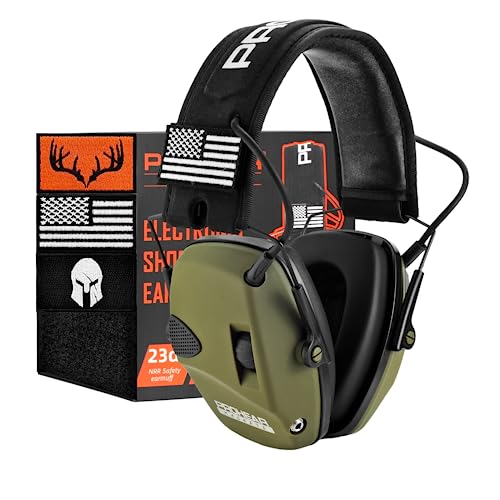
PROHEAR offers smart technology that suppresses harmful noises such as gunshots in under 0.01 seconds while amplifying low-level sounds up to four times. The headset runs on two AAA batteries with approximately 300 hours of life, reducing the need for frequent recharging. Wide, cushioned ear cups and a padded, telescoping headband provide a secure, comfortable fit for most head sizes, enabling long practice sessions. The device meets ANSI S3.19 standards with an NRR of 23 dB, supporting protection across gun ranges, hunting, woodworking, and other noisy environments. A compact foldable design makes storage easy between sessions.
ACT FIRES Bluetooth Shooting Ear Protection Ear Plugs

ACT FIRES delivers Bluetooth-enabled shooting earplugs designed to reduce gunshot noise while preserving speech clarity. Three switchable sound modes include Clear, Ambient, and Quiet, enabling users to hear voices, environment, or music without removing the earplugs. The voice amplification feature assists in communication during a session, and the compact design emphasizes comfort and mobility for shooters who need to stay connected or listen to audio on the range. The included 24-hour charging case supports extended use between charges.
ISOtunes Sport ADVANCE BT 2.0

ISOtunes ADVANCE BT 2.0 provides up to eightfold amplification to maintain situational awareness while protecting hearing, with an ultra-fast sub-2-millisecond response to gunshots. ANSI-rated 26 dB NRR, plus a 33 dB SNR, ensures strong sound reduction without losing critical ambient cues. The headset uses TRILOGY hot-swap memory foam ear tips and Bluetooth 5.4 with Auracast for modern connectivity. Dual pairing and compatibility with radios make it suitable for dynamic shooting environments and team communication. It is designed for comfort during long wear with light weight and a snug fit.
TACTIC STAR Shooting Earplugs

TACTIC STAR offers silicone, reusable ear protection with a banded design to prevent loss, featuring a noise reduction range from 23 to 35 dB depending on fit and activity. Made from medical-grade silicone TPE, the banded plugs emphasize comfort for extended wear and reduce ear irritation. The three-flange design helps create a secure seal for effective sound dampening, making them a practical solution for shooting ranges, hunting, and training where prolonged use is common.
Buying Guide: Key Purchase Considerations
- Noise Reduction Rating (NRR) and Sound Quality: Higher NRRs typically offer stronger noise reduction, but balance with the ability to hear range commands, conversations, and ambient sounds. Look for models that advertise speech intelligibility or amplification features if communication matters during shooting.
- Type and Use Case: In-ear plugs, electronic earmuffs, and Bluetooth ear buds each suit different scenarios. In-ear options are compact and discrete; electronic muffs offer strong suppression with ambient sound control; Bluetooth ear buds help with communication and audio without removing protection.
- Amplification and Safety Features: Some models provide selective amplification of low-level sounds or voice, which can improve situational awareness. Fast-response suppressors (under a few milliseconds) are essential for immediate gunshot attenuation.
- Fit and Comfort: Adjustable headbands, cushioned cups, and soft ear tips reduce fatigue during long sessions. Banded designs prevent loss and are useful for active shooters.
- Power and Battery Life: For electronic models, consider battery type, life per charge, and charging options. Long-life batteries reduce interruptions on the range.
- Durability and Maintenance: Durable shells, water resistance, and easy cleaning extend product life. Gel pads and memory foam tips affect comfort and performance over time.
- Size and Weight: Lighter options reduce fatigue, especially for extended hunts or training days. Consider the trade-off between protection level and weight for your specific use case.
- Connectivity and Compatibility: If you rely on radios or need to listen to audio, check Bluetooth capabilities, pairing options, and whether the device supports multi-device connections.
In selecting the best in-ear protection for shooting, users should map their typical activities—range days, hunting, training, or competitions—and weigh comfort, protection level, and communication needs. The options above cover a spectrum from battery-free plugs to advanced electronic protection with amplification and Bluetooth.